From Ruin to Restoration: Byzantine Greek Monastery Transformed into Art Reliquary
From ruin to restoration – On the Aegean island of Andros, a unique cultural shift is unfolding within the ancient walls of the Holy Monastery of Panachrantos and Saint Panteleimon. Once a crumbling relic of the 10th century, this historic site now serves as both a spiritual beacon and a vibrant gallery showcasing contemporary Greek art. The monastery, perched at 600 meters on the northern slopes of Mount Gerakones, has been meticulously restored, transforming it into a place where the past and present converge in a celebration of faith and creativity.
A Testament to Resilience
The monastery’s origins trace back to 961 AD, established by Nikephoros Phokas after his return from a Byzantine campaign in Crete. Known as the oldest surviving monastery in the Aegean Sea, its architecture and location reflect centuries of devotion and perseverance. For years, it stood as a silent witness to time, its once-majestic structure reduced to ruins. But thanks to the dedication of its abbot, Elder Evdokimos, and the support of local benefactors, including a prominent shipowner, the site has undergone a remarkable revitalization.
“When I first arrived, the monastery was in ruins. There were no rooms, no dining hall, and no kitchen,” Elder Evdokimos shared with Euronews. “Thanks be to God, with the help of many people and a generous shipowner, we managed to restore it. Today, it is beautiful and well cared for.” His words underscore the collaborative effort that brought this spiritual haven back to life, blending historical preservation with modern innovation.
A Spiritual and Artistic Nexus
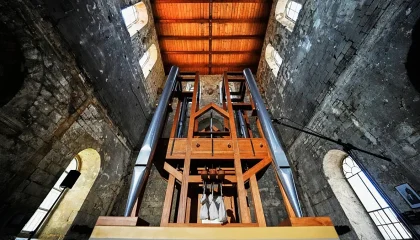
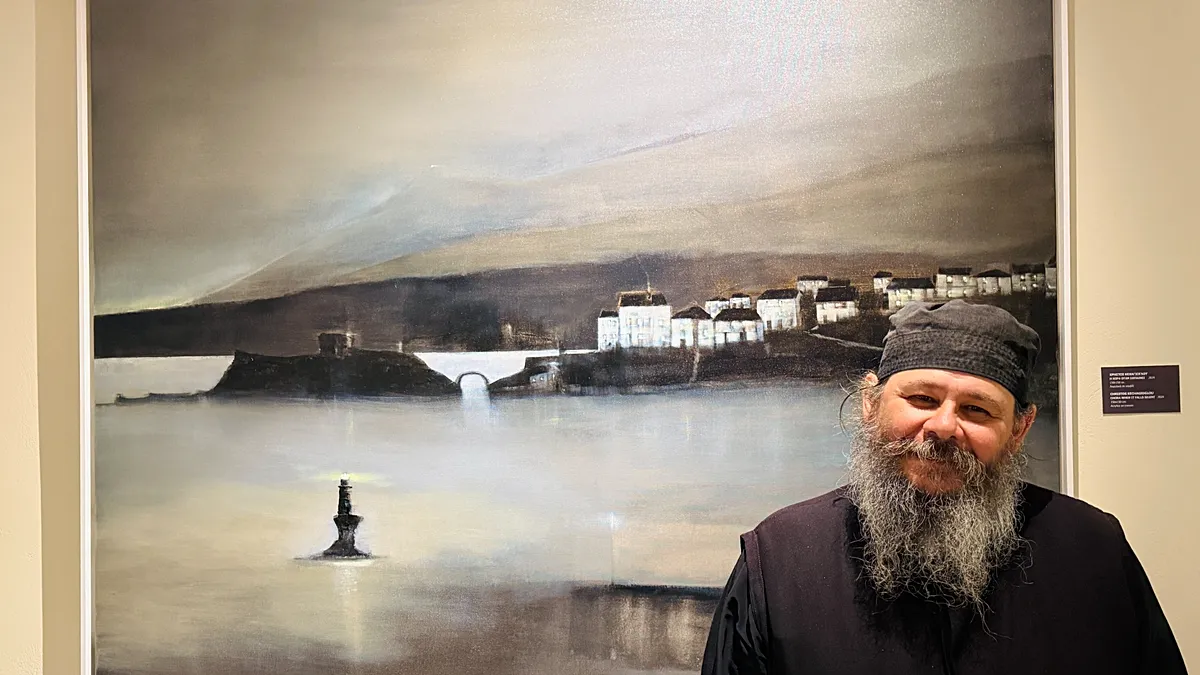
Now, the monastery’s restored tower houses “The Art Treasury – A Gallery Dedicated to Spirituality and Contemporary Creation,” a space that redefines its purpose. While its roots lie in religious tradition, the gallery now acts as a bridge between ancient faith and modern artistic expression. Inside, visitors encounter a collection of around 60 works by Greek artists, each piece reflecting a spectrum of styles and techniques. Among the featured creators are Eos Angeli, Yannis Moralis, Christos Bokoros, and Alekos Fassianos, whose contributions highlight the evolving dialogue between spirituality and contemporary art.
“In the past, the monastery was like a hospital, and people loved it dearly. It was an institution serving the wider community, not merely a place for monks,” Elder Evdokimos added. “Those who came here sought comfort, healing, and hope during times of hardship. The monastery was more than a sanctuary—it was a living embodiment of faith and care.” This perspective reveals how the site once functioned as a hub for both spiritual and practical needs, a role that has now expanded to include artistic appreciation.
Curating the Sacred
The curation of the Art Treasury is entrusted to Christos Kehayioglou, a painter whose vision merges tradition with modernity. “It may seem like something unconventional or even daring,” said Father Philaretos, a key figure in the project. “But in reality, the Church has always been willing to embrace the language of each era in order to communicate the Gospel’s message of love.” His statement reflects a broader philosophy: that art and religion are inherently intertwined, with each generation finding new ways to express spiritual truths through creative mediums.
“Art and religion have always been closely connected. Throughout history, faith traditions have used the artistic expressions of their time.”
Father Philaretos emphasized that the initiative aims to foster a dialogue between the Church, spirituality, and contemporary creators. “Our goal is to strengthen the monastery’s relationship with its visitors. Those who come here have the opportunity not only to experience the artworks but also to engage in meaningful conversations with the monks,” he explained. This approach invites visitors to reflect on both the historical and artistic significance of the site, creating a dynamic space for contemplation and connection.
The Art Treasury’s collection is a testament to the monastery’s role as a spiritual and cultural crossroads. Each artwork, carefully selected by Kehayioglou, draws from the monastery’s deep-rooted heritage while introducing fresh perspectives. The inclusion of pieces like the miraculous icon of the Virgin Mary—believed to have been painted by Saint Luke the Evangelist—adds a layer of reverence, pairing sacred relics with contemporary interpretations. This duality is central to the monastery’s new identity, where the past is honored without overshadowing the present.
Reviving a Legacy
Visitors to the monastery today are greeted by a landscape that blends natural grandeur with human ingenuity. The towering structure, once a symbol of decay, now stands as a beacon of renewal. Its restoration not only preserves the architectural legacy of the Byzantine era but also creates a platform for modern artists to explore themes of faith, identity, and resilience. The gallery’s presence has reinvigorated the site’s appeal, attracting thousands of pilgrims and art enthusiasts alike.
“This initiative is about more than displaying art—it’s about reimagining how spirituality can be experienced,” Father Philaretos noted. “The monastery is no longer just a place of worship; it’s a living museum of devotion and creativity.” This transformation aligns with the broader cultural narrative of Andros, where historical preservation and artistic innovation coexist. The island, known for its rugged beauty and rich heritage, now offers a unique experience that transcends its traditional role as a spiritual retreat.
The Art Treasury also serves as a tribute to the enduring power of faith. While its roots are deeply embedded in the Byzantine tradition, the gallery’s modern offerings demonstrate the adaptability of spiritual expression. The miraculous icon of the Virgin Mary and the holy skull relic of Saint Panteleimon remain central to the monastery’s identity, but their presence now complements a new collection that challenges and inspires visitors. This balance between the sacred and the contemporary ensures that the monastery remains a relevant and resonant space for both locals and travelers.
For Elder Evdokimos, the transformation is a source of pride and hope. “The monastery has always been a place of healing,” he said. “Now, it continues that mission by offering something even more profound: the opportunity to engage with the soul of our culture through art.” His vision for the site reflects a commitment to preserving its historical essence while embracing the future. The collaboration between monks, artists, and community members exemplifies this ethos, turning the monastery into a space where tradition and innovation thrive together.
As the Art Treasury gains recognition, it stands as a symbol of Andros’s cultural revival. The island’s history, from Byzantine campaigns to modern art movements, is now encapsulated in its monastic halls. This journey from ruin to restoration not only honors the past but also paves the way for new spiritual conversations. In a world where the boundaries between art and faith are increasingly blurred, the monastery’s revival offers a compelling example of how heritage can inspire contemporary creativity, ensuring its legacy endures for generations to come.