From Pompeii to Évora: Invisible Solar Panels for Heritage Sites
Invisible Innovation in Pompeii
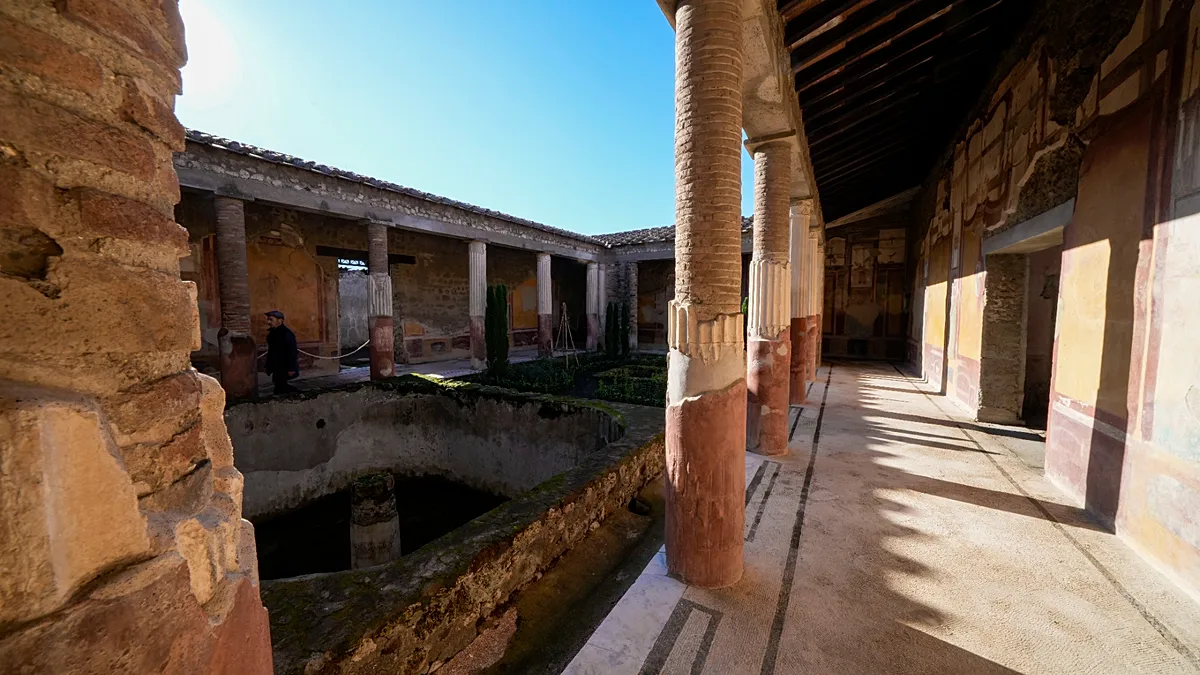
From Pompeii to Évora – Every year, countless travelers journey to the ancient ruins of Pompeii, a city frozen in time by the eruption of Mount Vesuvius in 79 AD. While most visitors are captivated by its well-preserved frescoes and architectural marvels, a subtle but groundbreaking advancement is quietly reshaping the site’s energy landscape. Hidden beneath the surface of the iconic Roman Villa of the Mysteries, solar technology has been integrated into the building’s roof in a way that blends seamlessly with its historical design.
“From the front, it appears indistinguishable from traditional Roman tiles, but upon closer inspection, the tile reveals its hidden function as a solar panel,” said Gabriel Zuchtriegel, director of the Pompeii Archaeological Park. This innovative approach ensures that the structure’s aesthetic remains unaltered while harnessing renewable energy. Zuchtriegel further noted, “It generates electricity to illuminate this villa, and a significant portion of the energy required here is sourced directly from the roof installation.”
The project, which has gained traction in Pompeii, demonstrates how modern infrastructure can coexist with ancient heritage. By embedding photovoltaic cells within the roof tiles, the city has managed to avoid the stark visual contrast of conventional solar panels. This method not only preserves the historical integrity of the site but also aligns with broader sustainability goals. As the park explores expanding this solution to other parts of the archaeological site—areas far from the electricity grid—the technology has sparked interest across Europe.
Évora’s Blend of Tradition and Sustainability
In the heart of Portugal, the city of Évora has embraced a similar strategy to modernize its historic architecture without compromising its cultural essence. The City Hall’s rooftop features a unique array of semi-transparent solar shingles, designed to harmonize with the city’s medieval skyline. According to Humberto Queiroz, head of the EDP R&D Centre and project manager, these materials represent a significant leap in sustainable design.
“These shingles are not your typical roofing materials,” Queiroz explained. “They consist of a semi-transparent epoxy compound with photovoltaic cells embedded in the core. This allows the building to generate its own electricity while maintaining a visually cohesive appearance.” The installation provides approximately 20 kilowatts of power, a figure that underscores its role in supporting Évora’s commitment to eco-friendly practices.
Évora’s historic district, recognized as a UNESCO World Heritage Site since 1986, faces the dual challenge of preserving its centuries-old character and adapting to contemporary environmental needs. The adoption of solar shingles exemplifies the city’s effort to balance these priorities. By integrating technology into the built environment, Évora not only reduces its carbon footprint but also ensures that its architectural heritage remains intact for future generations.
Europe’s Path to Sustainable Heritage
The European project POCITYF, which aims to promote sustainable urban development in historic cities, has played a pivotal role in these innovations. It has provided a platform for cities like Évora and Pompeii to explore technologies that meet both aesthetic and functional demands. “Évora is a World Heritage city, and like many European historic centers, it carries the responsibility of preserving its legacy while addressing modern sustainability challenges,” remarked Nuno Bilo, EU project coordinator at Évora Municipality.
Bilo emphasized the importance of adapting to the evolving needs of society without erasing the past. “Historic cities cannot remain static. We must innovate to tackle pressing issues such as decarbonisation, ensuring that our cultural heritage thrives in a sustainable future,” he stated. The POCITYF initiative has tested various solutions, including glass roofs with photovoltaic panels and solar canopies in the courtyards of schools within Évora’s historic core. These trials are part of a broader effort to create replicable models for other European cities.
One of the key technologies driving these advancements is developed by a small family-owned company in the north-east of Italy, Dyaqua. Matteo Quagliato, who works for the firm, detailed the process behind the invisible solar tiles. “The first layer is a resin compound, which forms the outer shell. Inside, we place pre-soldered photovoltaic cells, ensuring they are protected by a second layer of specially formulated material,” he explained. “The final step involves curing the mixture, resulting in a tile that is both durable and aesthetically seamless.”
This method has allowed heritage sites to adopt solar energy without altering their visual appeal. In Évora, for instance, the shingles are designed to complement the surrounding architecture, blending modern functionality with historical charm. The city’s collaboration with Alkmaar in the Netherlands highlights the cross-border exchange of ideas, as both locations assess the potential of these innovations to be applied in other parts of Europe.
Global Implications and Future Prospects
As these projects progress, they send a powerful message about the feasibility of integrating renewable energy into culturally significant spaces. Zuchtriegel’s observation that the technology can succeed in Pompeii—a site of immense historical value—suggests its scalability. “If it can work here, in a place so fragile and meticulously preserved, then it can work anywhere,” he said, reflecting on the broader impact of such solutions.
These advancements are particularly relevant in regions where heritage conservation is paramount. The invisible solar panels in Pompeii and the semi-transparent shingles in Évora illustrate how cities can meet their energy needs without sacrificing the visual continuity of their historic environments. For example, the use of solar canopies in schools and glass roofs in public buildings demonstrates a versatile approach to energy generation that can be adapted to diverse settings.
While the challenges of preserving heritage sites are unique, the solutions developed through POCITYF offer a blueprint for sustainable urban transformation. By prioritizing materials that are both functional and discreet, these initiatives help bridge the gap between historical preservation and modern innovation. As more cities across Europe adopt similar technologies, the potential for global replication becomes increasingly tangible. The success of these projects not only highlights the importance of renewable energy but also reinforces the idea that sustainability and tradition can coexist without compromise.
The integration of solar technology into heritage sites is more than an engineering feat—it is a cultural statement. It ensures that the legacies of ancient civilizations like Pompeii and historic cities like Évora are not only preserved but also enhanced through contemporary practices. As the world continues to seek ways to reduce reliance on fossil fuels, these examples serve as a reminder that even the most iconic landmarks can play a role in the transition to a greener future.
With the POCITYF project acting as a catalyst, cities across Europe are now rethinking how they can incorporate sustainable technologies into their architectural heritage. The invisible solar panels in Pompeii and the semi-transparent shingles in Évora exemplify this shift, proving that innovation need not come at the cost of history. As these solutions continue to evolve, they may inspire other regions to adopt similar strategies, ensuring that the past and future can coexist in harmony.