King s Swan Upping 2026: Healthy Cygnets and Rising Litter on the Thames
King s Swan Upping on the Thames – The annual King s Swan Upping returned to the River Thames this week, offering a beautiful blend of tradition and modern environmental awareness. On Monday, July 13th, 2026, the Vintners’ and Dyers’ livery companies began their five-day journey along the historic waterway. Dressed in ceremonial robes and hats, these members of ancient guilds traveled by traditional skiff from Sunbury Lock in Middlesex to Abingdon Bridge in Oxfordshire. The King s Swan Upping has been conducted for nearly nine centuries, making it one of Britain’s oldest continuous traditions.
Counting the Crown’s Swans
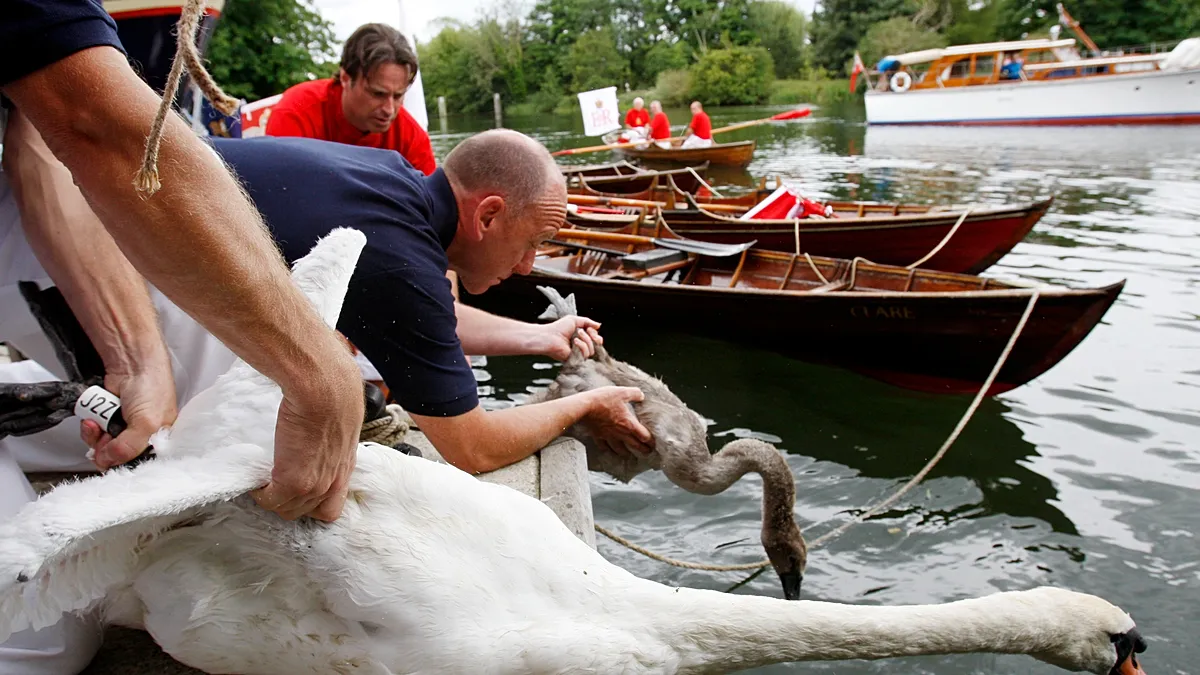
During the King s Swan Upping, participants catch and weigh each cygnet they encounter. David Barber, King Charles’ Chief Swan Marker since 1993, leads this meticulous process. He carefully measures the young swans before releasing them back into the river. Recent footage from Staines captured this traditional practice in action, showing the gentle handling of the birds near Windsor Castle. The census covers a remarkable distance along the Thames, with each swan belonging either to the Crown or to one of the two livery companies.
Barber expressed satisfaction with the current swan numbers while voicing concern over environmental challenges facing the river ecosystem.
A Thriving Population
This year’s King s Swan Upping has revealed encouraging results for the Thames swan population. According to Barber, the number of healthy cygnets continues a positive trend seen in recent seasons. The five-day event, running through July 17th, allows participants to assess the wellbeing of hundreds of swans. Each bird is carefully examined for signs of injury or illness before being returned to the water. The tradition ensures that both the Crown’s swans and those belonging to the livery companies remain healthy and well-documented.
However, the celebration is not without its concerns. Despite the healthy cygnets, Barber noted troubling signs regarding pollution and waste in the river. During the King s Swan Upping, Swan Uppers discovered that several young swans had sustained injuries from discarded fishing tackle and other rubbish floating in the water. This growing litter problem poses a serious threat to the birds and other wildlife that depend on the Thames for their survival.
Environmental Concerns Mount
The contrast between thriving swan numbers and increasing pollution creates a complex picture for conservationists. The King s Swan Upping not only counts birds but also highlights environmental issues affecting the river. Participants have observed more plastic waste, fishing nets, and other debris than in previous years. These hazards endanger not only the mute swans but also ducks, otters, and fish that share the waterway. The rising litter problem requires ongoing attention from river users, local authorities, and environmental organizations.
As the King s Swan Upping draws to a close, participants gather for a traditional toast to the King at Windsor. This final ceremony honors both the monarch and the enduring relationship between the Crown and the Thames swans. The event continues to adapt to modern concerns while maintaining its deep historical roots. Through this ancient practice, communities remain connected to their natural heritage and to the ongoing stewardship of one of England’s most iconic rivers.