Venezuela’s Gold Dilemma: An Unlikely Alliance Forms Over 31 Tonnes Locked in London
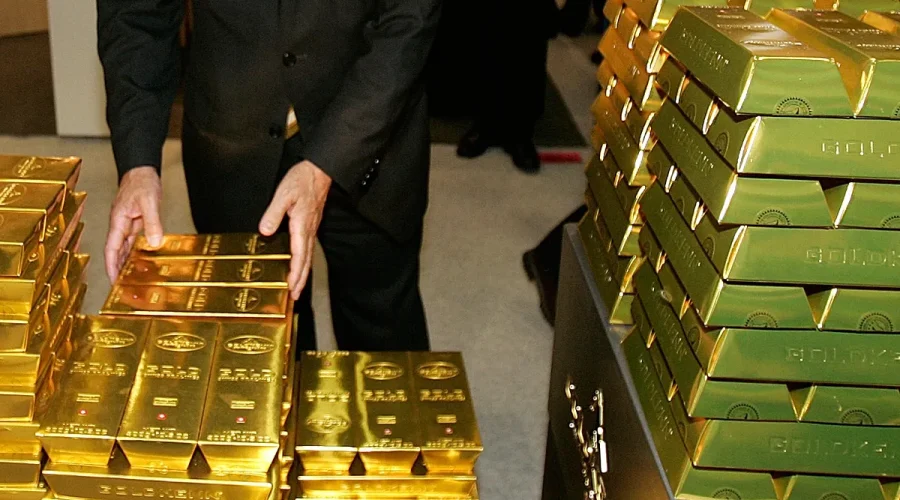
Usagevpn.com – Nearly eight years after the United Kingdom ceased recognising Caracas’s leadership, a pile of gold bars worth roughly €4 billion still sits in the vaults beneath Threadneedle Street, inaccessible to the country that deposited them. Now, in the aftermath of the devastating 24 June earthquakes that killed more than 6,000 Venezuelans, the interim government of Delcy Rodríguez and factions of the opposition have found themselves on the same side of the table — united by a single, urgent objective: getting that metal back home.
The convergence was formalised in a joint statement issued Wednesday by both delegations participating in the ongoing dialogue roundtables. The document frames the gold not as a political prize but as reconstruction capital, earmarked for rebuilding housing, health centres, and schools in the hardest-hit regions. For a nation whose infrastructure has been hollowed out by decades of fiscal mismanagement, corruption, and the weight of American sanctions, the timing could hardly be more consequential.
Conditions, Controls, and the Question of Trust
MP Ramón López, a member of the 2015 National Assembly delegation seated at the negotiation tables, addressed a national television channel to outline the guardrails attached to any eventual release. Under the framework he described, the gold would not simply flow into state coffers. Instead, proceeds would be channelled into accounts held at the US Treasury Department and subjected to periodic audits conducted by independent international firms. Disbursement, he stressed, would be contingent on
“all the necessary planning and control mechanisms”
being fully operational before a single bar moves. López was equally explicit about what the deal does not cover: the agreement is not a quid pro quo tied to reform of Venezuela’s Supreme Court of Justice. That judicial overhaul, alongside measures to strengthen the electoral authority, was tabled separately during the technical working sessions.
On the opposition side, a source briefed the Financial Times on the arrangement’s oversight architecture. The source confirmed that dedicated “transparency mechanisms” would be embedded in the process specifically to stop the funds
“from ending up being stolen by the government”
and added, with pointed candour, that
“there is no naivety”
about the character of the interim administration currently holding power. The remark underscores how fragile the trust architecture remains, even when both sides agree on the destination of the money.
An Economy Under Siege
The urgency behind the gold push is arithmetic, not rhetoric. Venezuela’s central bank reported that the earthquake disaster pushed monthly inflation to 19.9% in July, up sharply from 13.8% the previous month. Economists tracking the broader trajectory place annual inflation in the vicinity of 575%, a figure that renders conventional budgeting nearly meaningless. Against that backdrop, the sovereign debt load — estimated at approximately $240 billion — makes the restructuring currently under negotiation the largest in the country’s recorded history.
Since the capture of Nicolás Maduro, Venezuela has begun clawing back fragments of its international financial standing. In July, $350 million was released from a tranche previously deposited at the International Monetary Fund. Rodríguez’s team is now pressing for access to an additional $4.6 billion in Special Drawing Rights, the IMF’s reserve assets that member states may exchange for hard currencies. The opposition had already conceded that point in earlier, ultimately aborted, rounds of negotiation.
London, Washington, and the Legal Maze
The British Foreign Office has been careful to distance itself from the litigation that will ultimately determine who controls the bars. Officials reiterated that the UK government is not a party to the court case and reaffirmed its backing
“for a democratic transition of power in Venezuela that reflects the will of the Venezuelan people.”
The Bank of England itself, which is awaiting a judicial ruling before it will physically release the metal, declined to comment. Rodríguez, meanwhile, had written directly to King Charles the previous month to request the bars’ return — a diplomatic gesture that signals how high the stakes have climbed.
In Washington, the picture is shifting in Caracas’s favour. The United States has suspended a tranche of sanctions and is working closely with Rodríguez — who served as Maduro’s vice president before the current interim arrangement — to open Venezuela’s vast natural-resource endowment to foreign capital. That overture gives the gold question added leverage: the interim government can argue that cooperation on reconstruction is the price of continued engagement.
The Fractures That Remain
Not everyone at the table is represented. María Corina Machado, the Nobel Peace Prize laureate and the opposition’s most widely supported figure, is absent from the roundtables. She has been based in Washington since late last year and was barred from re-entering Venezuela after the earthquakes, a restriction that has deepened resentment among her supporters. The exclusion has widened existing fissures within the opposition coalition and, conversely, emboldened hard-line elements inside the ruling party who view any concession to the opposition as a betrayal of the post-Maduro settlement.
What emerges from the Wednesday statement, then, is less a resolution than a narrow corridor: a shared interest in reconstruction funding, wrapped in layers of audit, Treasury oversight, and conditional disbursement. Whether that corridor can accommodate the full weight of a $240 billion debt restructuring, a 575% inflation spiral, and a fractured political landscape remains the central question of Venezuela’s next chapter.
Related Reading
Frequently Asked Questions
What is Venezuela seeks return of 31 tonnes?
Venezuela seeks return of 31 tonnes is the main topic of this guide. The article explains the context, practical details, and next steps readers should understand.
Why does Venezuela seeks return of 31 tonnes matter?
Venezuela seeks return of 31 tonnes matters because readers are looking for a useful answer, not just a short summary. Good content should match search intent and help them decide what to do next.