Russia’s planned budget puts war spending ahead of social support
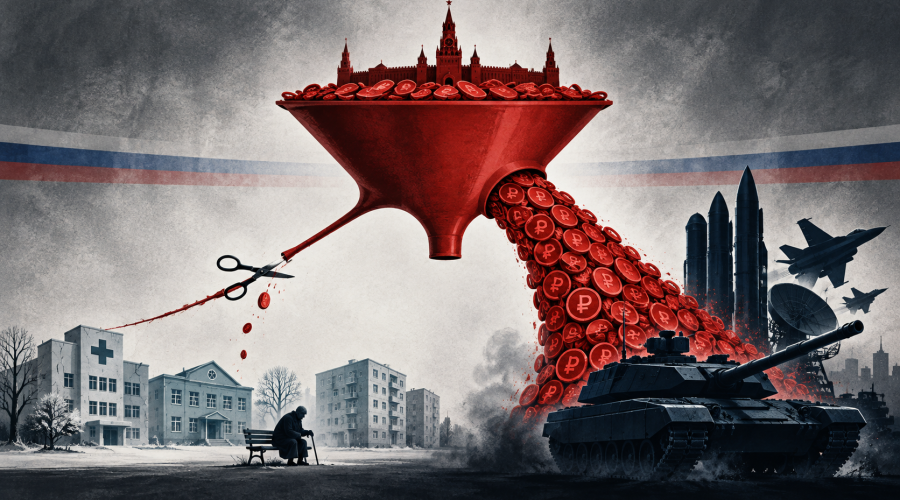
Usagevpn.com – Russia is preparing to devote an unprecedented share of federal spending to defence and security in 2027, underscoring the financial burden of its continuing full-scale war against Ukraine. The draft budget sets aside 44% of all federal expenditure for those areas, roughly twice the proportion intended for social programmes.
The State Duma is expected to begin considering the 2027–2029 budget proposal on 22 October. With President Vladimir Putin’s United Russia party holding a constitutional majority after September’s parliamentary elections, substantial changes to the plan appear unlikely before its expected approval.
The scale of military spending has grown far beyond earlier projections. Russia’s defence expenditure this year has reached 17 trillion roubles, or about €181 billion, compared with the 12.1 trillion roubles (€129 billion) initially allocated. The rising total reflects the expanding cost of the invasion launched in February 2022, now entering its fifth year.
Social spending faces reductions
The Finance Ministry describes meeting citizens’ social obligations as the leading priority of the budget. Yet the proposed figures point to a decline in support. Social-policy expenditure is set to fall by 7% in 2027, dropping from 7.1 trillion roubles (€76 billion) to 6.65 trillion roubles (€71 billion).
That category covers pensions, maternity payments, assistance for veterans and other forms of public support. The government has said that such payments will be adjusted for inflation, but the value of that promise is under pressure. Official inflation has remained above 8% for much of the past two years, while independent economists have argued that households are experiencing faster price growth.
“Fulfilling social obligations to citizens”
That phrase appears as the Finance Ministry’s stated priority, but the spending balance illustrates how strongly the budget has shifted towards the war. Moscow has also announced a three-year children’s programme worth 10 trillion roubles (€107 billion), covering maternity support, child benefits and housing initiatives. Defence spending is expected to exceed that amount by around five times.
Payments for soldiers and their families are included in the national-defence section rather than in social-policy spending. Funding in that section is due to increase by approximately one-quarter next year, further widening the divide between military and civilian priorities.
Regional budgets are also being redirected
The pressure is not limited to the federal government. Russian regions are responsible for part of the spending connected to the war, including payments tied to military service. Many regional authorities are already operating with budget deficits, leaving civilian programmes vulnerable to cuts.
In late September, Arkhangelsk region reassigned more than 63 million roubles from social support to one-time military payments and compensation for deaths. About two-thirds of the money had been intended for foster parents, while the remainder was allocated for large families.
Days earlier, Tula region moved 54 million roubles away from programmes for foster children, low-income families, households raising disabled children, orphan housing repairs and labour veterans. The funds were redirected to servicemen’s pay and death compensation.
St Petersburg has prepared legislation that would reduce funding for education, transport repairs and medical projects while raising spending on payments for military personnel. These decisions show how the cost of the war is reaching local budgets that finance many day-to-day public services.
Death compensation has been reduced in several regions
Regional one-off payments to the relatives of troops killed in action have declined across Russia since autumn last year. Often referred to informally as “coffin money”, these regional supplements sit alongside a federal payment for bereaved families. Many regions sharply increased the sums in 2022 and 2023 while trying to attract recruits, but several have since reduced them.
In Ulyanovsk region, the payment was once 1 million roubles (€10,700). It was cut in half by February and then reduced again to 50,000 roubles (€533). Bashkortostan lowered an initial payment of 2 million roubles (€21,300) to no more than 100,000 roubles (€1,100).
Kirov and Omsk regions reduced their payments from 1 million to 500,000 roubles (€5,300). Kemerovo lowered its amount from 3 million roubles to 1 million. In Saratov, families who had received 1 million roubles until late September now receive only one-tenth of that sum.
The compensation system has also drawn allegations of fraud. In Primorsky Krai, a warrant officer was accused of arranging marriages between contract soldiers going to the front and local women, with participants allegedly sharing compensation if the soldiers died. In Khabarovsk, six people were detained in February over suspected similar schemes involving notarised powers of attorney and access to soldiers’ bank accounts. The alleged losses in that case reached 2.4 million roubles (€25,600).
For some families, compensation remains unavailable altogether. Relatives of soldiers classified as missing or as deserters, rather than officially confirmed dead, cannot receive the one-time payment. Families of those killed have said such classifications can be used to deny them support.
Healthcare is also expected to receive less funding
Healthcare expenditure is projected to fall to 7 trillion roubles (€75 billion) next year. Independent Russian media calculations put the reduction at 6.8%, although the Finance Ministry disputes that assessment.
The proposed budget offers a clear picture of the Kremlin’s priorities as the war continues: military and security spending are taking a record share of national resources, while social programmes, regional services and healthcare face growing constraints. For households already dealing with persistent inflation, the shift could deepen the gap between state promises of support and the funding available to deliver it.
Related Reading
Frequently Asked Questions
What is Russia funnels nearly half its budget?
Russia funnels nearly half its budget is the main topic of this guide. The article explains the context, practical details, and next steps readers should understand.
Why does Russia funnels nearly half its budget matter?
Russia funnels nearly half its budget matters because readers are looking for a useful answer, not just a short summary. Good content should match search intent and help them decide what to do next.