Washington Tightens Grip on the International Criminal Court with New Sanctions Package
Usagevpn.com – The already strained relationship between the United States and the International Criminal Court took another sharp turn on Tuesday, when the State Department unveiled a new round of sanctions aimed squarely at two of the court’s most visible figures. The move marks the latest escalation in a campaign that the Trump administration has openly framed as an effort to dismantle the tribunal’s operational capacity.
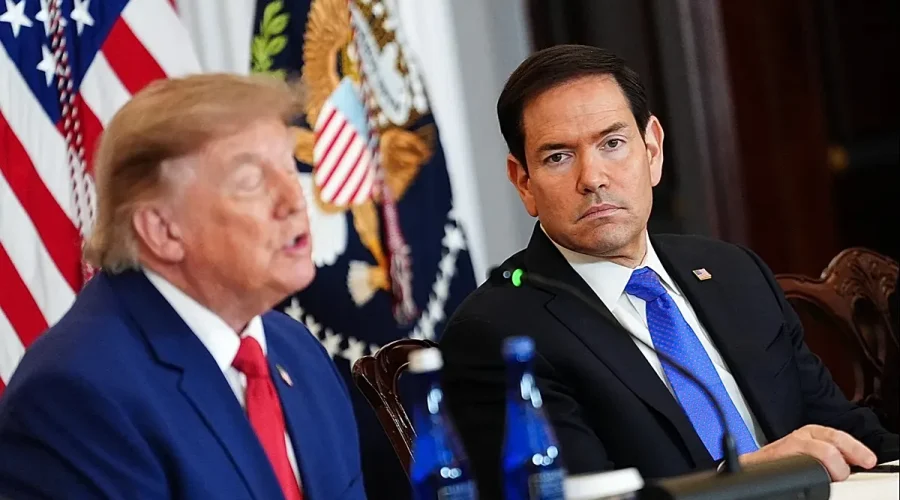
Among those placed under the new restrictions are ICC President Tomoko Akane, who has led the court since 2023, and Abdoulaye Seye, a senior trial lawyer within the organisation. US Secretary of State Marco Rubio announced the measures in a written statement, framing the sanctions as a direct response to what he described as the court’s overreach into matters where sovereign states have not granted it authority.
“[They are] directly engaging in efforts by the ICC to investigate, arrest, detain, or prosecute officials whose government has not consented to ICC jurisdiction,” Rubio wrote.
Rubio went further, deploying language that few senior diplomats typically reserve for rival states. He labelled the ICC a “corrupt and fatally politicised supranational court” and accused it of having “maliciously abused its authority and exceeded its mandate.” In his telling, the tribunal has “repeatedly attempted to assert authority over nationals of the United States and other countries that have not consented to its jurisdiction or ratified the Rome Statute.”
A Long-Running Institutional Clash
The Rome Statute, adopted in 1998 and entered into force in 2002, established the ICC as a permanent court with jurisdiction over genocide, crimes against humanity, war crimes, and the crime of aggression. The United States, under President Bill Clinton, signed the treaty in 2000 but never ratified it, and successive administrations have maintained that the court’s reach should not extend to American citizens absent explicit consent. That position has now hardened into active institutional opposition.
Washington’s grievances have intensified since November 2024, when the ICC issued an arrest warrant for Israeli Prime Minister Benjamin Netanyahu in connection with the war in Gaza. The US has repeatedly characterised the court’s actions as “politicised” and has accused it of singling out Israel for scrutiny while overlooking other conflicts. For the current administration, the Netanyahu warrant became a symbolic flashpoint that crystallised a broader institutional critique.
The ICC Pushes Back
The court did not remain silent. In a statement responding to the new sanctions, the ICC characterised the measures as an attack on the foundations of international justice.
“[The sanctions] undermine the rule of law. When judicial actors are threatened for applying the law, it is the international legal order itself that is placed at risk.”
The court’s language signals that it views the sanctions not as a routine diplomatic disagreement but as a structural threat to the post-1945 legal architecture. By targeting the president of the court and a senior trial lawyer, Washington has effectively placed individuals at the apex of the judicial hierarchy under financial and travel restrictions, a step that goes well beyond the earlier measures aimed at individual judges.
From Sanctions to Systematic Disablement
The Tuesday announcement is not an isolated act. In July, the State Department laid out a broader strategy it described as a campaign to bring down the court and “systematically disable” its “ability to operate.” The menu of tools outlined at that time included expanded sanctions, revocation of visas held by court personnel, and travel bans. The August measures against Akane and Seye represent the first concrete implementation of that blueprint at the highest levels of the institution.
Before this latest round, Washington had already imposed sanctions on several ICC members, including a number of sitting judges. Each successive wave has widened the circle of affected personnel, moving from peripheral staff toward the court’s leadership and its prosecutorial apparatus.
Implications for International Justice
The practical consequences of sanctioning a sitting court president are significant. Financial restrictions can complicate the administration of ongoing cases, while travel bans may limit the president’s ability to participate in international conferences, coordinate with national courts, or perform diplomatic functions that sustain the court’s legitimacy. For states that have ratified the Rome Statute, the episode raises questions about whether the ICC can continue to function independently when one of the world’s most powerful economies treats its leadership as adversaries.
Legal scholars have noted that the ICC derives its authority from treaty consent, not from the approval of any single state. Yet the sheer economic weight of US sanctions means that even treaty-based institutions must navigate the practical realities of dollar-denominated finance, visa access, and diplomatic reciprocity. The court’s response — framing the issue as one of rule-of-law survival rather than mere institutional grievance — underscores the stakes it perceives.
As the administration continues to articulate its goal of dismantling the court’s operational capacity, the coming months will test whether the ICC can absorb repeated institutional pressure or whether the cumulative effect of sanctions, visa actions, and travel restrictions will erode its ability to investigate and prosecute. The answer will shape the future of international criminal accountability for years to come.
Related Reading
Frequently Asked Questions
What is ICC hits back after US announces?
ICC hits back after US announces is the main topic of this guide. The article explains the context, practical details, and next steps readers should understand.
Why does ICC hits back after US announces matter?
ICC hits back after US announces matters because readers are looking for a useful answer, not just a short summary. Good content should match search intent and help them decide what to do next.