Families Seek Accountability After Deadly Peshawar School Collapse
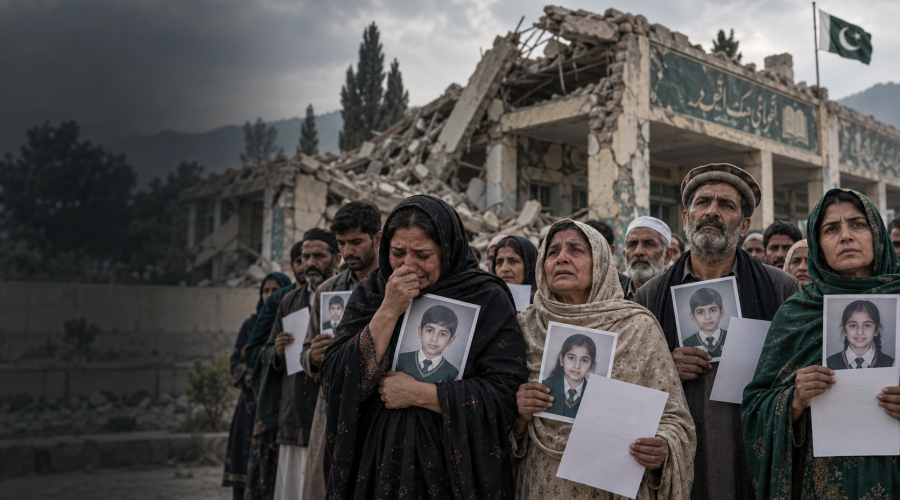
Usagevpn.com – Grieving families gathered outside a school in Peshawar on Friday, demanding accountability after a roof collapse killed a teacher and 34 pupils, most of them under the age of 14. The disaster struck on Thursday morning in the northwestern Pakistani city, leaving relatives to confront an immense loss and renewing concerns about unsafe buildings used by children.
The victims were a woman teacher and 34 students. By the following day, mourners had assembled near the school, sharing memories of children whose ordinary school day ended in tragedy. Officials have linked the collapse to the poor condition of the structure, while the school owner has been detained.
Parents Remember Children Lost in the Rubble
Muhammad Wahab, a tailor, said his 11-year-old nephew Hammad was among those killed. He appealed for the families to receive justice and described the boy as someone who had been succeeding at school before his death.
“The parents of all these children must receive justice.”
Wahab also directed an appeal to Pakistan’s leaders, saying the catastrophe should not be treated as a private sorrow for the affected families alone. For relatives, the deaths have raised painful questions about whether the school building should have been considered safe enough for pupils and staff.
One father held up a photograph stored on his mobile phone, showing his daughter wearing red and gold clothing. Another relative, Asadullah, said the collapse took the lives of his son, his nephew and three other close family members.
“The children were good students and often achieved top positions in their classes. They happily went to school every day.”
Those accounts underline the scale of the loss within individual households and neighbourhoods. The children were not simply names in a casualty count: they were students with routines, ambitions and families who expected them to return home after class.
Rescuers Faced Panic and Destruction
The collapse triggered chaotic efforts to reach children buried beneath broken sections of the building. Residents joined rescuers as people rushed toward the school after news spread through the area.
Sohail said his niece made it out of the building and arrived home to tell relatives that it had fallen. He recalled the panic that followed as family members and neighbours headed to the site.
“Everyone began screaming in panic.”
When he reached the school, Sohail said he saw roughly 10 to 15 children trapped beneath debris, with rubble piled as high as their necks. He said those nearby moved quickly to pull them free.
“When I arrived at the scene, I saw around 10 to 15 children trapped beneath the rubble, with debris piled up to their necks. We quickly pulled them out.”
Emergency-service images showed workers in high-visibility clothing shifting dirt, shattered material and larger pieces of wreckage. Such rescue scenes illustrate how little time there can be after a structural failure, particularly when people are confined inside a school building.
Investigation Focuses on Building Condition
A senior official in Peshawar said early findings pointed to weak infrastructure as the likely cause of the roof failure. The official, who was not authorised to speak publicly, said the school owner had been taken into custody.
The inquiry will be closely watched by families seeking answers over the building’s condition, the standards applied to it and whether warning signs were missed. Establishing responsibility matters not only for those mourning the victims, but also for parents and educators concerned about the safety of other school premises.
Pakistan’s Prime Minister Shehbaz Sharif expressed deep sorrow over the deaths in a post on X. President Asif Ali Zardari called the incident a heartbreaking tragedy. Their statements reflected the national shock caused by the deaths of so many children in a place meant for learning and protection.
A Persistent Safety Challenge
Building failures have occurred repeatedly in Pakistan, where weak safety enforcement and inferior construction materials have contributed to deadly collapses. The country has a population of more than 240 million people, and aging or poorly constructed buildings can place residents, workers and students at risk when structural weaknesses are not addressed.
The Peshawar tragedy follows other fatal incidents involving collapsed roofs and buildings. In June, a roof failure at a tutoring centre in Lahore, in eastern Pakistan, killed more than a dozen children. In 2025, a five-storey building collapsed in Lyari, a low-income area of Karachi in the south, killing 27 people and injuring 10 others.
For the families gathered in Peshawar, those earlier disasters add to a broader pattern that makes their demand for justice especially urgent. Their immediate grief is accompanied by a call for meaningful action: a clear determination of what happened, responsibility for failures that may have contributed, and greater protection for children entering classrooms each day.
As the community mourns, the damaged school remains a stark reminder that safety failures can turn a routine morning into a catastrophe. The investigation into Thursday’s collapse will determine the next formal steps, but relatives have already made their central message clear: the children who died must not be forgotten, and their deaths must lead to accountability.
Related Reading
Frequently Asked Questions
What is Families of 34 children killed in Pakistan?
Families of 34 children killed in Pakistan is the main topic of this guide. The article explains the context, practical details, and next steps readers should understand.
Why does Families of 34 children killed in Pakistan matter?
Families of 34 children killed in Pakistan matters because readers are looking for a useful answer, not just a short summary. Good content should match search intent and help them decide what to do next.