Oslo Talks Offer a Tentative Reset Between Kyiv and Washington
Usagevpn.com – Efforts to contain a widening dispute between Ukraine and the United States took centre stage in Oslo on Tuesday, where President Volodymyr Zelenskyy met US envoy Steve Witkoff alongside European leaders.
The discussions appeared to produce an important practical result for Kyiv: Zelenskyy said the United States had resumed sharing early-warning intelligence related to Russian ballistic missiles. Such information is vital for Ukraine’s ability to alert civilians and prepare air-defence systems during missile attacks.
Washington also reiterated support for robust security guarantees for Ukraine after the war, Zelenskyy said. The details of those guarantees remain unclear, but the commitment was presented as a significant reassurance after tensions between Kyiv and Washington had intensified.
Witkoff did not join the subsequent press conference, leaving Zelenskyy and the European participants to outline the outcome in public. His next destination is St. Petersburg, where he is expected to present proposals developed by Ukrainian and European negotiators to Russian officials.
Peace Process Described as Back on Track
Finnish President Alexander Stubb suggested that the most meaningful movement had occurred away from the cameras. He said progress had been made “under the radar” and argued that negotiations were now “back on track”.
Whether Russia takes the same view will become clearer during Witkoff’s meetings in St. Petersburg. The envoy is also expected to press for the release of Stephen Hubbard, an American citizen accused of serving as a mercenary for Ukraine.
The Oslo meeting highlighted the difficult balancing act facing European governments. They remain determined to keep the United States engaged in negotiations, even as their assessments of Russia and the terms of a possible settlement increasingly diverge from Washington’s approach.
For Kyiv, continued American involvement carries consequences well beyond diplomacy. Intelligence cooperation, military support and credible post-war security arrangements are all central to Ukraine’s ability to resist Russian pressure and eventually negotiate from a position of strength.
European Frustration With Washington
The underlying political strain was openly voiced in Brussels while the Oslo talks were taking place. EU foreign policy chief Kaja Kallas accused American negotiators of trying to force Ukraine into an agreement that would favour Vladimir Putin.
“American negotiators have been trying to push Ukraine into surrender for already almost two years, one and a half years now.”
“Ukraine hasn’t surrendered on Putin’s terms because Europe has been supporting Ukraine.”
Her remarks reflected growing unease in European capitals over what critics describe as Donald Trump’s more accommodating stance toward Moscow. Kallas’s intervention was particularly blunt in comparison with the more restrained criticism voiced by European Commission President Ursula von der Leyen.
Von der Leyen is expected to address the European Parliament on the conclusions of last week’s EU summit and on further support for Ukraine. Attention will focus on whether she signals another package of sanctions targeting Russia, particularly after objections to Washington’s unilateral easing of some restrictions.
Despite the frustration, European leaders have shown little appetite for pursuing a separate peace track without the United States. Oslo demonstrated why: retaining a place in negotiations involving Washington is still seen as essential, even if transatlantic agreement on Russia has become increasingly fragile.
The concern is that these differences could become more consequential if negotiations approach a final settlement. Decisions on territorial arrangements, enforcement mechanisms, sanctions and security guarantees would require close coordination among allies at a moment when their strategic priorities may no longer align.
Hungary Blocks Further Progress on Ukraine’s EU Path
Ukraine faced a separate setback in its effort to join the European Union. Hungary blocked the opening of the final two negotiating clusters in Kyiv’s accession process, despite the other 26 member states being prepared to proceed.
The move surprised diplomats because Budapest had agreed earlier this month to open the clusters after Ukraine’s parliament passed legislation concerning minority-language education. Hungary’s representative did not explain the reversal during the meeting, leaving uncertainty over whether new demands will be attached to the process.
The blocked areas cover connectivity, agriculture and cohesion policy. Ukraine’s application is paired with Moldova’s, meaning the impasse also delays Chisinau’s progress toward membership.
EU accession negotiations are divided into clusters covering major policy areas and require unanimous support from member states at key stages. Hungary’s intervention therefore has implications beyond a procedural delay: it underscores how national political disputes can slow a broader European strategy intended to anchor Ukraine more firmly within the EU.
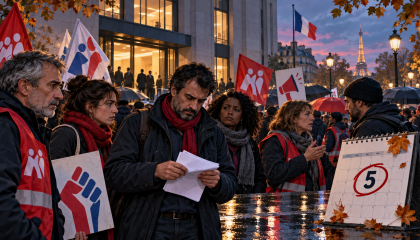
France Prepares for Further Cost-of-Living Protests
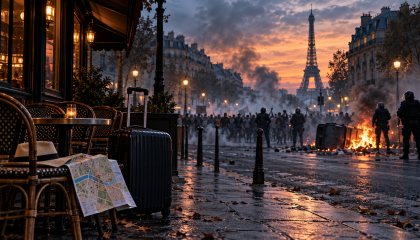
Elsewhere in Europe, France is preparing a major security response ahead of expected demonstrations on Saturday following violent cost-of-living protests over the weekend.
Prime Minister Sébastien Lecornu said a “massive” security operation would be put in place. Interior Minister Laurent Nuñez told parliament that troops from Operation Sentinelle would be deployed to take over mainly static protection duties, allowing police officers and gendarmes to focus on maintaining public order.
“To replace internal security forces mainly on static guarding duties” in order to “free up police officers and gendarmes to carry out public-order missions.”
Operation Sentinelle was launched in January 2015 and has 10,000 soldiers deployed throughout France. Its use in the coming days illustrates the scale of official concern over the potential for renewed unrest.
Related Reading
Frequently Asked Questions
What is Diplomatic damage control in Oslo as Zelenskyy?
Diplomatic damage control in Oslo as Zelenskyy is the main topic of this guide. The article explains the context, practical details, and next steps readers should understand.
Why does Diplomatic damage control in Oslo as Zelenskyy matter?
Diplomatic damage control in Oslo as Zelenskyy matters because readers are looking for a useful answer, not just a short summary. Good content should match search intent and help them decide what to do next.