Beijing Slams US Comments on Tiananmen Square Crackdown as ‘Smear’ of China
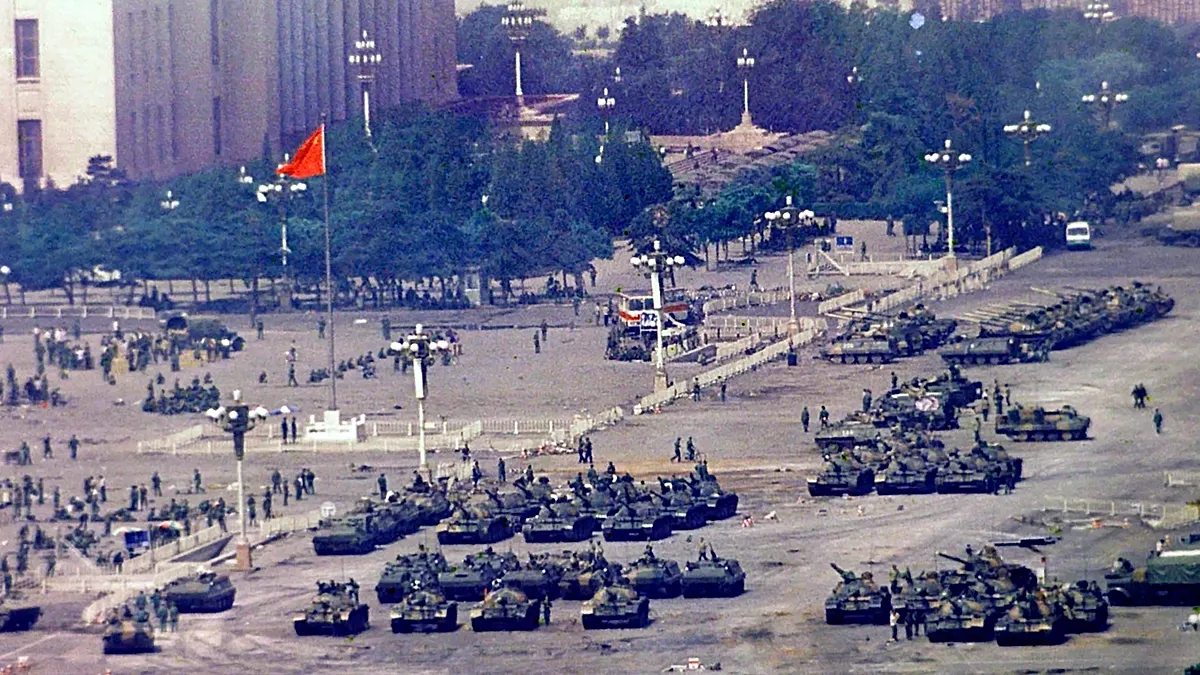
Beijing slams US comments on Tiananmen – In a recent diplomatic confrontation, China criticized the United States for misrepresenting historical events, specifically the 1989 Tiananmen Square crackdown. The accusation came after Secretary of State Marco Rubio, during a news conference, emphasized that censorship could not erase the memory of the incident. His remarks highlighted the government’s actions to suppress dissent, framing the event as a pivotal moment in China’s political history. The Chinese authorities have long maintained their version of events, describing the protests as a “counter-revolutionary riot” orchestrated by a “very small number of people” to challenge the stability of the nation.
A Nation’s Defining Moment
On June 4, 1989, the Chinese government deployed military forces to quell demonstrations that had gathered in Beijing’s central square. The protests, which called for political reforms, were met with swift and decisive action, resulting in an estimated loss of life ranging from 200 to over 2,000. While the exact number remains unclear, the government has consistently defended its use of force as necessary to restore order and protect the socialist system. Censorship of the incident has since become a key element of China’s public narrative, with discussions about the event tightly controlled within the mainland.
US Remarks and China’s Counterattack
Rubio’s comments sparked a strong reaction from Beijing, which denounced them as an attempt to tarnish China’s political reputation. At a press briefing, a Chinese foreign ministry spokeswoman, Mao Ning, asserted that the United States had distorted historical facts by labeling the crackdown as a “smear.” She argued that the American remarks undermined China’s internal affairs and its development trajectory, portraying the country’s governance as flawed. “The Chinese government has long since reached a clear conclusion regarding that political turmoil,” she stated, adding that the U.S. had “interfered in China’s internal affairs” by promoting a narrative that did not align with the nation’s official stance.
“Those who sacrificed to uphold their unalienable rights of free expression and peaceful assembly will be vindicated someday,” Rubio declared, insisting that the events of 1989 would not be forgotten. His speech underscored the enduring impact of the protests, even as the Chinese government sought to minimize their significance through state-controlled media and historical revisionism.
China’s response to the U.S. criticism was swift and unequivocal. Officials reiterated their position that the crackdown was a necessary measure to preserve the country’s political system and prevent chaos. They emphasized that the protests were not spontaneous but part of a broader movement led by a minority, which they claimed threatened the foundations of socialism. This perspective has been reinforced through education systems and state propaganda, ensuring that the event is remembered as a turning point in China’s modern history.
Suppression of Commemoration in Hong Kong
In recent years, Beijing has intensified efforts to suppress public remembrance of the 1989 incident, particularly in Hong Kong. The city had long hosted an annual candlelight vigil at Victoria Park, a tradition that symbolized the region’s autonomy and the collective memory of its citizens. However, the imposition of a national security law in 2020 marked a significant shift, as authorities began clamping down on gatherings and commemorations. This year, the crackdown extended to the Wan’an Cemetery, where families of those who died in 1989 were reportedly barred from visiting graves. Amnesty International described the move as “a heartless act,” highlighting the emotional toll on survivors and their loved ones.
On Wednesday and Thursday, heightened police activity was observed near Victoria Park, the former site of the vigil. Dozens of officers patrolled the area, with roadblocks and plainclothes enforcers detaining activists. Chan Po-Ying, a former leader of the League of Social Democrats, was among those arrested. As she was escorted to a police van, she held a yellow paper rose, a symbol of remembrance, and was urged by officers to conceal it. “What we can do now is very, very little,” she told reporters, expressing her hope that the collective memory of Hong Kongers would endure despite the restrictions. Her words echoed the sentiments of many who had gathered to honor the past, even as they faced increasing pressure to remain silent.
“Victoria Park holds 37 years of Hong Kongers’ collective memory. I hope that we won’t forget this collective memory,” Chan said before her detention.
While seven individuals were taken into custody for further investigation, they were later released without charges. This leniency contrasted with the strict measures imposed on public discourse, as authorities sought to erase any visible traces of the 1989 events from Hong Kong’s social landscape. Alfred Tian, a 29-year-old from the Chinese mainland, traveled to the park to pray for the victims. “As a Chinese, when you learn that history… it really strikes you because most Chinese people don’t really know much about it,” he reflected. “It’s like a fire in the heart, the pursuit for democracy, for freedom of speech.” His visit underscored the emotional resonance of the incident, even among those who may not have been directly involved.
The ongoing suppression of commemorations reflects a broader strategy to control historical narratives. By limiting access to memorials and restricting discussions, the government aims to shape public perception and maintain ideological unity. Despite these efforts, the event’s legacy continues to influence both domestic and international perspectives, with critics arguing that the U.S. comments serve as a reminder of the global scrutiny China faces. The clash between the two nations highlights the tension between historical memory and political control, as the past remains a powerful symbol in the present.