FIFA Reverses Course on Private Investment Scheme Following Widespread Opposition
Leadership Announces Withdrawal of Controversial Proposal
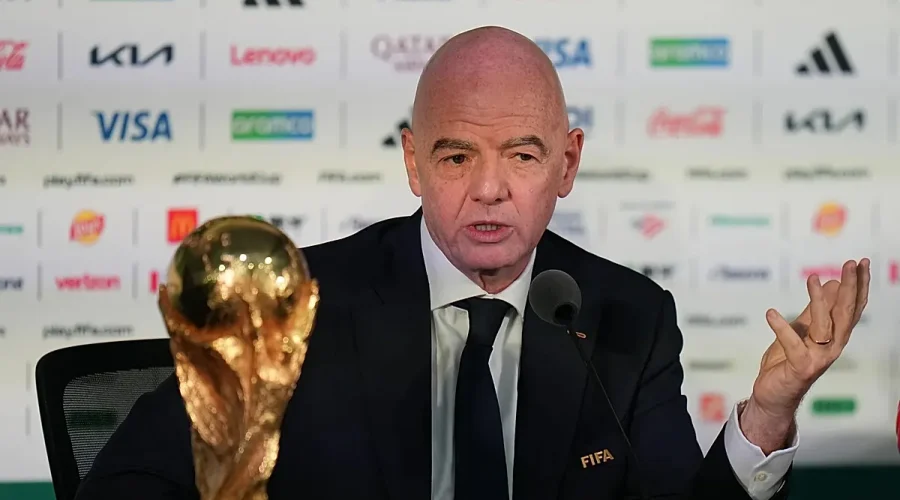
Usagevpn.com – The international football governing body has officially abandoned its ambitious plan to introduce private capital into major tournaments after facing intense criticism from across the football community. In a formal declaration, President Gianni Infantino acknowledged that the initiative had generated significant internal discord, stating that the divisions created were no longer serving the original goals of the project. He emphasized that unity and improvement remain the organization’s core mission, confirming that the proposal will not move forward as originally intended.
The initiative, which was first unveiled toward the end of July, sought to establish a new commercial subsidiary designed to manage FIFA’s commercial activities and tournament operations, including the prestigious World Cup. This entity, known as the FIFA Forward Enterprise, was positioned as a vehicle to unlock what Infantino characterized as the sport’s extraordinary commercial potential. By welcoming external investors to acquire minority stakes without gaining control, FIFA hoped to secure additional revenue streams that would ultimately benefit its 211 member associations worldwide.
According to FIFA’s projections, the FFE structure could potentially generate as much as $4.2 billion in funding, based on an initial equity assessment valuing the enterprise at $20 billion. The model was designed to allow third-party investors to participate in the growth of football’s commercial ecosystem while maintaining the sport’s traditional governance structure.
European Federation Welcomes Decision and Calls for Accountability
UEFA, the European football governing body, issued a statement on Saturday expressing its approval of FIFA’s decision to pause the investment scheme. The organization indicated that it would now collaborate with its member associations and other continental confederations to develop mechanisms preventing similar situations from arising in the future. UEFA’s statement was particularly pointed in its criticism of the process, arguing that secret arrangements developed on accelerated timelines by unnamed individuals offered questionable benefits to the sport.
“We cannot keep going on like this with secret schemes on fast track timescales, cooked up by faceless individuals and of dubious benefit to the game. We must identify those responsible and hold them to account,” UEFA declared in its official statement.
The European body further noted that the current FIFA administration had not only lost the trust of UEFA but also that of numerous other stakeholders within the global football family. This loss of confidence came after UEFA and its 55 member associations had threatened to withdraw from FIFA competitions entirely, arguing that the World Cup should not be commodified as a financial instrument.
UEFA’s ultimatum, communicated on Thursday, made clear that no European national teams would participate in any FIFA tournament while the proposals remained active, unless the organization completely withdrew the plan and provided binding guarantees that private ownership would never again be introduced to FIFA’s governance or competitions.
Global Response and Internal Reckoning
The backlash extended well beyond Europe. CONCACAF, representing football associations across North, Central America, and the Caribbean, formally rejected the investment proposal and demanded enhanced transparency and improved governance standards following the controversy. Similarly, the Asian Football Confederation publicly expressed solidarity with both UEFA and CONCACAF, voicing serious concerns about the direction FIFA was taking with its commercial ambitions.
The controversy has placed considerable pressure on Infantino, who initially assumed the presidency in 2016. The fallout has already resulted in significant personnel changes, including the resignation of Carlos Cordeiro, one of Infantino’s most senior advisors. Kevin Lamour, FIFA’s chief operating officer, was particularly vocal in his criticism, describing the investment plan as essentially the creation of a single individual rather than a collective organizational vision.
“Not only must this project not go ahead … but the time has now come for football political leaders to ask themselves the right questions and make the right decisions,” Lamour told the Associated Press earlier this week.
Adding to the challenges facing the FIFA leadership, Infantino had already been navigating criticism regarding the organization’s management of several incidents connected to the 2026 World Cup, which was hosted across the United States, Mexico, and Canada. Among the most notable controversies was the decision to lift a suspension for American striker Folarin Balogun, which drew widespread attention and debate within the football community.
As FIFA moves forward, the organization must now rebuild trust with its member associations and demonstrate that it has learned from this experience. The withdrawal of the private investment plan represents not just a policy reversal, but a potential turning point in how FIFA approaches commercialization while maintaining the integrity and unity of the global game.
Related Reading
Frequently Asked Questions
What is FIFA bins controversial private investment plan?
FIFA bins controversial private investment plan is the main topic of this guide. The article explains the context, practical details, and next steps readers should understand.
Why does FIFA bins controversial private investment plan matter?
FIFA bins controversial private investment plan matters because readers are looking for a useful answer, not just a short summary. Good content should match search intent and help them decide what to do next.