Anteater Prediction: How World Cup Oracle Taio Tips Germany’s Opening Match
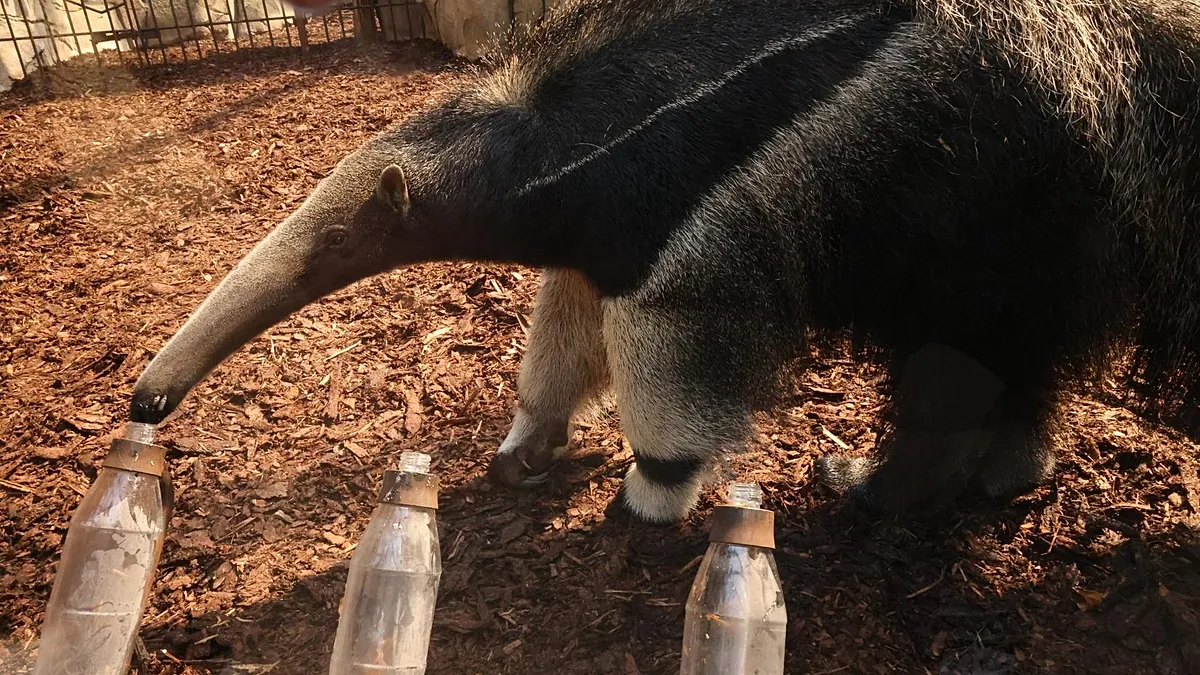
Anteater prediction – Thousands of miles away from the World Cup host nation, the United States, a quiet but anticipated event has unfolded at Münster’s Allwetterzoo. Before Germany’s first match against Curaçao on Sunday, the zoo introduced its new animal oracle, Taio, an anteater whose first prediction has already sparked global curiosity. The anteater’s decision-making process, involving a selection of food-filled bottles symbolizing potential outcomes, has become a spectacle in itself. Despite the high stakes, Taio’s choice—a draw—has left fans and analysts debating its significance. This unique method of forecasting, rooted in the animal’s natural instincts, has drawn attention to both the sport and the zoo’s conservation mission.
The Anteater’s Role in a World Cup Tradition
Taio, the star of Münster’s Allwetterzoo, is not just any ordinary anteater. Born in 2024, he represents a rare achievement: the first giant anteater to be born at the zoo. His species, classified as endangered, makes him an ideal ambassador for the institution’s efforts to protect biodiversity. The zoo’s decision to appoint Taio as the World Cup oracle was deliberate, aiming to highlight the importance of wildlife conservation through a lens of international excitement.
“We keep and breed many endangered species here at Allwetterzoo. The anteater is one of them. Taio is one of our offspring and a good representative of the many other species that need protection,” said Simone Schehka, the zoo’s director, when announcing the oracle’s role.
Schehka emphasized that the choice of Taio was also a strategic move to leverage the World Cup’s massive audience. “A football World Cup attracts a lot of attention, interest and emotion. The zoo wants to harness that and use the oracle to draw attention to our vital conservation work,” she added. This blend of entertainment and education has positioned Taio as a symbol of hope, not just for football fans but for those advocating for the preservation of endangered animals.
The Prediction Process: A Test of Instinct
Unlike traditional methods of prediction, Taio’s approach relies on his natural behavior. The zoo staff presented him with several bottles, each containing a different type of food representing the possible results of the match: a win for Germany, a draw, or a victory for Curaçao. The anteater’s method is simple yet captivating—by choosing the bottle that appeals to him the most, the zoo interprets his preference as a forecast. This technique, while whimsical, has gained traction as a way to engage the public with the World Cup in a novel manner.
Taio’s initial prediction, which pointed to a draw, has left many puzzled. The zoo’s decision to use food as a decision-making tool reflects an effort to make the process relatable. Food, a fundamental driver of animal behavior, allows for an organic and intuitive method of forecasting. While some may argue that this is more of a gimmick than a scientific approach, the popularity of such oracles—like the legendary octopus Paul from 2010—suggests that the public is more than willing to embrace the charm of animal prediction.
A Legacy of Animal Oracles: From Paul to Taio
Germany’s tradition of animal oracles dates back to the 2010 World Cup, where the octopus Paul became an unexpected global icon. Known for his 8 consecutive correct predictions, including all of Germany’s matches and the final, Paul’s success rate of 100% made him a household name. His fame grew so rapidly that international media outlets, such as The Guardian and Le Monde, reported on his abilities, and his prediction for the semi-final was even broadcast live on television.
Paul’s legacy, however, was not without controversy. Before his World Cup success, he had already made predictions during the 2008 UEFA European Championship, where he got two out of six outcomes wrong. Notably, he incorrectly foresaw Germany’s loss to Spain in the final, a prediction that ironically coincided with the team’s actual victory. Despite this, Paul’s World Cup performance solidified his status as a cultural phenomenon. His death a few months later in his home at Sea Life Oberhausen marked the end of an era, leaving a void in the world of animal forecasting.
The Rise of New Oracles: A Quest for Immortality
In the wake of Paul’s passing, Germany’s zoos and wildlife centers have sought to continue his legacy. The 2014 World Cup saw a flurry of animal oracles, each vying to replicate Paul’s success. Among them was Armadillo Taka from Erfurt Zoo, who was tasked with predicting the outcome of Germany’s opening match against Ghana. Taka, who also served as the official mascot for the 2014 FIFA World Cup, made his prediction in a way that left fans in suspense. The forecast, however, was released after the match had already begun, leaving the public to wonder whether Taka had truly supported Germany or Ghana.
Another notable contender was Octopus Regina from Berlin’s Sea Life. Though not as celebrated as Paul, Regina was often considered a potential successor. Her predictions for the opening match, which Germany won 4-0 against Portugal, were accurate. However, her performance in the group stage was less impressive. While she correctly foresaw the draw between Germany and Ghana, she failed to predict two other outcomes, underscoring the challenges of maintaining a perfect record in football forecasting.
The 2014 World Cup also saw the emergence of a unique rivalry between animal oracles. While Taka and Regina were prominent figures, other zoos in cities like Konstanz, Munich, and Speyer also participated in the competition. The goal was to crown the most accurate oracle, with the winner being recognized as the true successor to Paul. Despite the enthusiasm, no animal managed to replicate the octopus’s historic 8-8 streak, leaving the title of the greatest football oracle to remain with Paul.
Conservation and Connection: The Dual Purpose of Taio’s Role
Taio’s appointment as the World Cup oracle is not just a novelty—it’s a calculated strategy to raise awareness for conservation efforts. The zoo’s decision to highlight the anteater’s endangered status ties the World Cup to a broader cause, encouraging fans to think beyond the game and consider the environmental impact of their support. This dual-purpose approach reflects a growing trend in using popular culture to promote ecological messages, turning moments of excitement into opportunities for education.
As Taio prepares to make his debut prediction, the world watches with a mix of anticipation and curiosity. The anteater’s snout, measuring around 30 centimeters, is believed to be a key factor in his ability to discern the correct outcome. While his methods are not based on scientific data, the symbolic value of his role cannot be overstated. In a world where traditional sports media often dominates, the presence of an anteater oracle offers a refreshing perspective, blending nature with human ambition.
The future of football forecasting may rest in the hands of animals like Taio, who are not only celebrated for their predictions but also for their contributions to conservation. With the World Cup drawing global attention, the zoo hopes that Taio’s role will inspire more people to support efforts aimed at protecting endangered species. Whether his prediction for the opening match proves accurate or not, the anteater has already become a symbol of the intersection between sports and wildlife, a role that few could have predicted in 2024.