
Hantavirus-hit cruise passengers arrive in Tenerife
Hantavirus-hit cruise passengers arrive in Tenerife
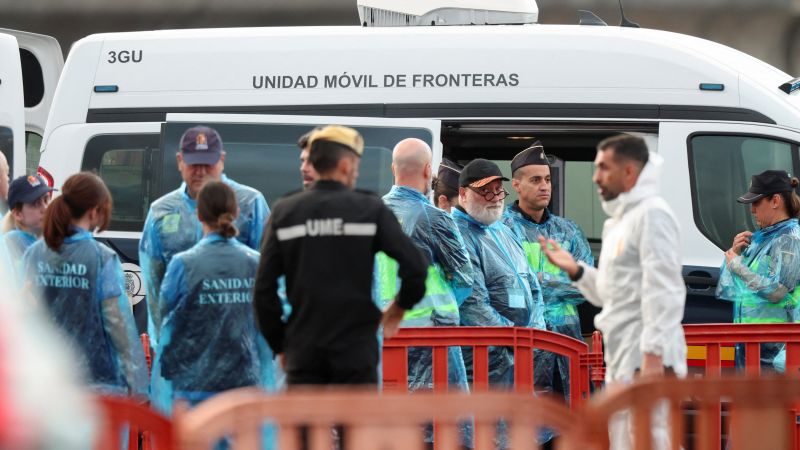
Hantavirus hit cruise passengers arrive in Tenerife – As the hantavirus outbreak gains international attention, passengers from the affected cruise ship have begun to disembark in Tenerife, Spain, following a coordinated repatriation effort. The MV Hondius, which had arrived at the island’s port on Sunday morning, was carrying 147 individuals when it became the focal point of a health crisis. The process of transferring passengers to the island involved small boats ferrying them from the anchored vessel to the mainland, where they were then transported via buses to the airport for further evacuation to their home countries.
The repatriation operation was meticulously organized, with medical teams boarding the ship early on Sunday to conduct tests on both passengers and crew members. Spain’s health minister, Mónica García, emphasized the importance of this step, stating that it was part of the plan to ensure the safety of those on board. The ship’s arrival in Tenerife marked a critical phase in managing the outbreak, as the vessel had already departed Argentina last month, raising concerns about the spread of the virus across multiple nations.
International Repatriation Efforts
Several countries, including the United States, Germany, France, Belgium, Ireland, and the Netherlands, have committed to evacuating their citizens from the MV Hondius. This collaborative effort involves aircraft being dispatched to Tenerife to transport passengers directly to their respective destinations. The tour operator, Oceanwide Expeditions, confirmed that the sequence of disembarkation would align with the arrival of these repatriation flights, ensuring a streamlined process for the affected travelers.
Passengers’ personal belongings will remain on the ship during the initial phase of the operation and be returned to them after they complete their quarantine. This logistical decision was made to minimize contamination risks and maintain the ship’s biosecurity status. The United States, in particular, has highlighted the role of its Centers for Disease Control and Prevention (CDC) in monitoring the health of its nationals. According to a CDC official, 17 American passengers, who currently show no symptoms, will be sent to the University of Nebraska Medical Center for evaluation by the National Quarantine Unit.
Health Protocols and Testing
Spain’s health ministry has outlined strict protocols for the disembarked passengers, particularly those from Spain. The first group to leave the ship will consist of 14 Spanish travelers, who will be required to wear FFP2 masks throughout the transfer process. This precautionary measure extends to all personnel involved in the logistics of the operation, as stated by García on Saturday. These individuals will be taken to a military hospital, where they will reside in individual rooms with no visitors permitted. Upon arrival, they will undergo PCR tests, followed by a second test seven days later to confirm their health status.
The two Dutch passengers on board will form the second group to disembark, as confirmed by García on Sunday morning. The departure of these groups is part of a broader strategy to isolate those at risk and provide them with specialized care. The ship is expected to continue its journey to Rotterdam, Netherlands, where the crew will disembark and the vessel will undergo a thorough disinfection process to eliminate any remaining traces of the virus.
Tensions in the Canary Islands
The MV Hondius’s docking in Tenerife has sparked tensions among local officials, who initially opposed the decision. Fernando Clavijo, the territory’s leader, expressed concerns about the potential health risks to the island’s population earlier in the week. These worries were compounded by protests from port workers, who criticized the lack of transparency regarding the virus’s spread and the risks associated with the ship’s presence. Despite these objections, the repatriation process has proceeded as planned, with the focus on containing the outbreak and ensuring the safety of passengers.
Clavijo’s resistance to the ship’s docking highlights the broader debate over how to handle health emergencies on a global scale. While the Canary Islands have played a crucial role in facilitating the evacuation, the situation has also raised questions about the coordination between international health authorities and local governments. The WHO, which was first informed of the outbreak on May 2, has stated that the risk to the general public remains low, though the virus’s transmission on the ship has been a point of concern.
Global Health Implications
The hantavirus outbreak on the MV Hondius has drawn significant attention due to its international reach. The virus, which is typically transmitted through exposure to infected rodents’ urine or feces, has been linked to three deaths since the ship departed Argentina. These cases have prompted health authorities in multiple countries to take swift action, ensuring that their nationals receive timely medical care. The CDC’s involvement underscores the severity of the situation, as the National Quarantine Unit is now tasked with monitoring 17 American passengers for a period of 42 days.
Medical professionals have emphasized the importance of daily monitoring during this time, with the CDC official noting that the first assessments at the unit will be followed by continued observation. This approach aims to detect any potential symptoms early and prevent further spread. Meanwhile, Spain’s health ministry has continued to manage the situation on the island, ensuring that all passengers are treated with the highest level of care. The coordinated efforts between the ship’s operator, local authorities, and international health organizations reflect the complexity of managing a cross-border health crisis.
The MV Hondius’s journey has not only tested the response capabilities of health agencies but also highlighted the challenges of communication in such scenarios. Port workers in Tenerife have called for more transparency, arguing that the public deserves clear information about the risks involved. As the ship prepares to depart for Rotterdam, the focus remains on containing the outbreak and preventing any further incidents. The repatriation operation is a testament to the global cooperation required in addressing health emergencies, even in the face of local resistance and logistical hurdles.
CNN has reached out to the Ports of Tenerife and Clavijo’s office for additional comments on the situation. The media outlet has also acknowledged the contributions of its journalists, including Adam Cancryn, Brenda Goodman, Jennifer Hansler, Deidre McPhillips, and Christian Edwards, who have been instrumental in tracking the developments. The ongoing story of the hantavirus outbreak serves as a reminder of the delicate balance between travel and public health, and how quickly a single incident can escalate into a multinational concern.