Iceland Says No Again — and the EU’s Enlargement Question Grows Sharper
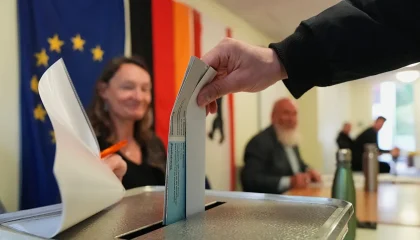
Usagevpn.com – Reykjavik’s voters delivered a clear signal on 29 August: 52.8 percent rejected the prospect of reopening talks to become a full member of the European Union. The result closes another chapter in a saga that stretches back more than a decade and leaves Brussels with a pointed question about the bloc’s long-term appeal beyond its traditional economic magnetism.
A Second Door Slammed
Iceland is not a newcomer to the accession process. The EU formally opened negotiations with the island nation in 2010, a move that surprised many observers given the country’s small size and its historically ambivalent relationship with continental institutions. Yet the talks never reached a conclusion. In 2015, following a change of government in Reykjavik, the new administration pulled Iceland out of the process entirely, citing concerns over fishing rights, sovereignty over natural resources, and a general reluctance to cede decision-making to distant bureaucracies.
The 2026 referendum was an attempt to revisit that decision. The margin — barely three percentage points — underscores how divided Icelandic society remains on the question of deeper integration with Europe. For the EU, however, the symbolic weight of the vote outweighs the arithmetic. Iceland is a wealthy, stable, English-speaking democracy with a functioning market economy. If such a country still finds the membership bargain unattractive, the bloc must reckon with the limits of its own gravitational pull.
Why Enlargement Matters Now
The geopolitical landscape has shifted dramatically since Iceland first applied. Russia’s full-scale war in Ukraine has redrawn the security map of the continent. Transatlantic ties, once assumed to be permanent, have grown strained as Washington recalibrates its priorities. Meanwhile, the ongoing conflict in the Middle East continues to test European diplomatic coherence and energy security. Against this backdrop, Brussels increasingly frames enlargement not as a distant ideal but as a strategic necessity.
A larger bloc commands greater weight at multilateral trade tables, in defence planning, and in diplomatic negotiations. Each additional member state adds a voice in the Council, a seat in the European Parliament, and a node in the common foreign and security policy architecture. Conversely, each candidate that joins surrenders a portion of its national sovereignty — legislative, judicial, and regulatory — to shared institutions in exchange for collective bargaining power, access to the single market, and eligibility for structural and cohesion funds.
The Price of Entry: Acquis and Reform
Membership is not a simple subscription. Candidate states are required to adopt the EU’s foundational principles and transpose the acquis communautaire — the accumulated body of legislation that constitutes the legal backbone of the Union — into domestic law. In practice, this means implementing sweeping reforms across 35 distinct policy chapters, spanning everything from competition policy and agricultural standards to judicial cooperation and environmental regulation. The objective is to build institutions robust enough to guarantee democratic governance, the rule of law, and a functioning market economy before the candidate is admitted.
Financially, new members contribute to the EU budget according to a formula tied to national income. In return, they gain access to a wide array of funding instruments, from cohesion funds aimed at reducing regional disparities to research programmes and rural development grants. The trade-off is real but structured: sovereignty is pooled, not surrendered wholesale, and each member retains veto rights in key areas of the Council.
The Current Candidate Pipeline
Seven countries currently have accession negotiations formally open. Montenegro sits at the head of the queue, having completed a substantial share of its chapter negotiations and made measurable progress in judicial and administrative reform. Behind it follow Albania, Serbia, and North Macedonia — all Western Balkan states whose paths have been shaped by decades of post-conflict reconstruction and EU conditionality. Moldova and Ukraine, both of which submitted formal applications in 2022 amid the shock of Russian aggression, round out the active negotiating group.
A seventh file remains frozen: Türkiye. Negotiations with Ankara stalled in 2018 and have not resumed, leaving the country in a prolonged limbo that complicates both bilateral relations and the broader architecture of EU neighbourhood policy.
What the Icelandic Vote Tells Us
The referendum outcome does not halt enlargement. The candidate pipeline continues, driven by geopolitical imperatives that Iceland’s small, self-sufficient economy does not face. Yet the result is a reminder that the EU’s value proposition must extend beyond the economic calculus. For wealthy, stable democracies that already enjoy open markets and strong institutions, the question is whether the political dividends of membership — collective security, diplomatic weight, shared purpose — outweigh the costs of pooled sovereignty. Iceland’s voters, by a narrow margin, answered no. The EU’s task now is to make the case compelling enough that the answer changes, not through coercion, but through the demonstrable strength of shared institutions in an era of renewed great-power competition.
Related Reading
Frequently Asked Questions
What is Why is the EU looking for new?
Why is the EU looking for new is the main topic of this guide. The article explains the context, practical details, and next steps readers should understand.
Why does Why is the EU looking for new matter?
Why is the EU looking for new matters because readers are looking for a useful answer, not just a short summary. Good content should match search intent and help them decide what to do next.