Unprotected Minors and Alleged Illegal Returns: Ceuta Crisis Deepens
Usagevpn.com – Unprotected minors and alleged illegal returns have become central concerns as the Spanish enclave of Ceuta confronts a mounting humanitarian emergency. Following the arrival of thousands of migrants in late July, reception centers across the territory have reached critical capacity. Many newcomers now sleep on streets while local residents and humanitarian organizations coordinate efforts to deliver essential supplies. The situation has grown increasingly complex with growing concerns about unaccompanied children who remain outside formal protection frameworks, alongside allegations that some migrants face illegal return procedures.
Halima Ahmed, spokesperson and social educator for Luna Blanca, a Ceuta-based non-governmental organization, characterized the current conditions as representing “complete vulnerability.” She explained that some individuals eat only once per day, relying entirely on humanitarian organizations or neighbors who prepare meals within their own homes. Luna Blanca mobilized quickly, distributing 3,500 food containers on its first day of operation and maintaining continuous cooking activities since then through volunteer contributions and community donations.
Children Without Protection
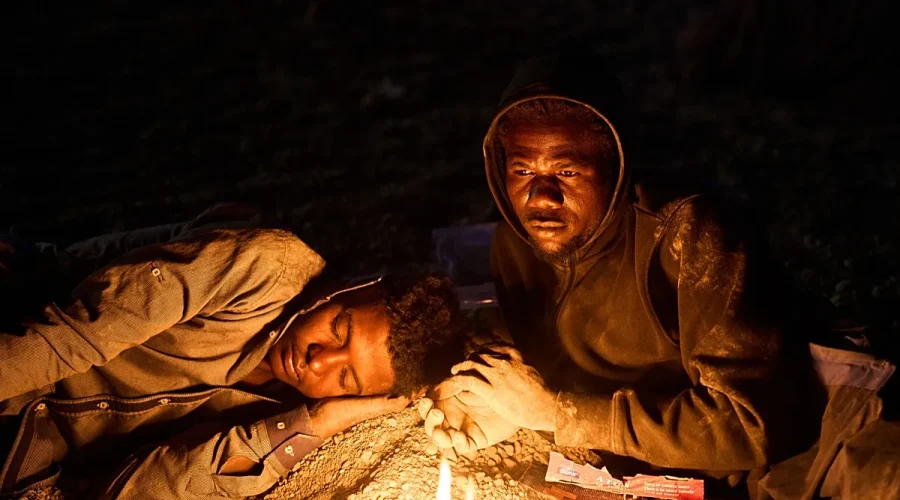
The most urgent issue involves children who have not yet entered the child protection system. Organizations working in Ceuta report that some youngsters remain hidden, afraid to approach official centers created by local authorities. Establishing accurate numbers remains difficult: while approximately 1,500 unaccompanied minors have been identified and placed within the protection system, Save the Children estimates that more than 4,000 remain unaccounted for across the territory.
Catalina Perazzo, Director of Advocacy and Territorial Development at Save the Children, highlighted the severe risks these children encounter. “Every night a boy or a girl spends on the street exposes them to serious dangers, from a risk of violence, trafficking or exploitation to psychosocial or even health risks,” she stated. The organization has received reports of violence and sexual assault through partner groups operating locally, though it has not managed these cases directly.
Overwhelmed Infrastructure
The pressure extends well beyond those sleeping outdoors. Reception centers designed for children already within the protection system operate at maximum capacity. Perazzo noted that given the resources available to the autonomous city, including its reception centers and support mechanisms, maintaining proper standards for children and adolescents has become impossible. Unicef confirmed this assessment, observing that many minors remain on the streets while protection centers are “totally saturated.”
José María Vera, executive director of Unicef Spain, told Euronews that “Right now not all children in Ceuta are protected, they are not safe; they are in a situation of neglect.” The agency’s immediate priority involves determining the total number of children present, identifying who they are, and locating where they are situated.
The Spanish Commission for Refugee Aid (CEAR) has also voiced concerns about unidentified minors. Verónica Laorden, national head of CEAR’s Advocacy, Research and Studies Service, pointed out that these children “are in situations of abandonment” and cannot fully access tailored protection services, including psychological support or legal guidance.
Political Tensions and Return Procedures
The humanitarian emergency has sparked a parallel political crisis. Ceuta maintains that it lacks the capacity to manage the situation independently. The transfer of minors to mainland Spain has created divisions among autonomous communities, while potential returns to Morocco have prompted questions about adequate safeguards accompanying any repatriation. NGOs have raised concerns that some returns may be occurring without proper legal procedures in place.
Amnesty International and other organizations argue that the debate should not be limited to which regions accept migrants. The intersection of humanitarian needs, child protection requirements, responsibility-sharing mechanisms, and aid limitations continues to shape the response as authorities work toward comprehensive solutions.
Frequently Asked Questions
How many unaccompanied minors are currently in Ceuta? While approximately 1,500 unaccompanied minors have been identified and placed within the protection system, Save the Children estimates that more than 4,000 remain unaccounted for in the territory.
What are the main concerns regarding illegal returns? NGOs have raised concerns that some migrants may be returned to Morocco without proper legal procedures and adequate safeguards being in place.
Which organizations are responding to the crisis? Key organizations include Luna Blanca, Save the Children, Unicef Spain, CEAR (Spanish Commission for Refugee Aid), and Amnesty International, all working to provide protection and assistance.
What immediate actions are being taken? Luna Blanca distributed 3,500 food containers on its first day and maintains continuous cooking operations. Authorities are working to identify and locate all children in the territory while expanding protection services.