Trump and Meloni continue to trade jabs after G7 meeting
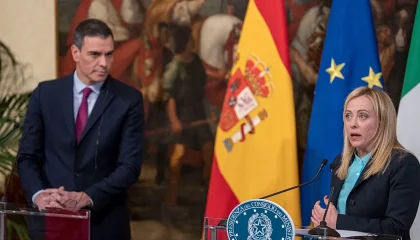
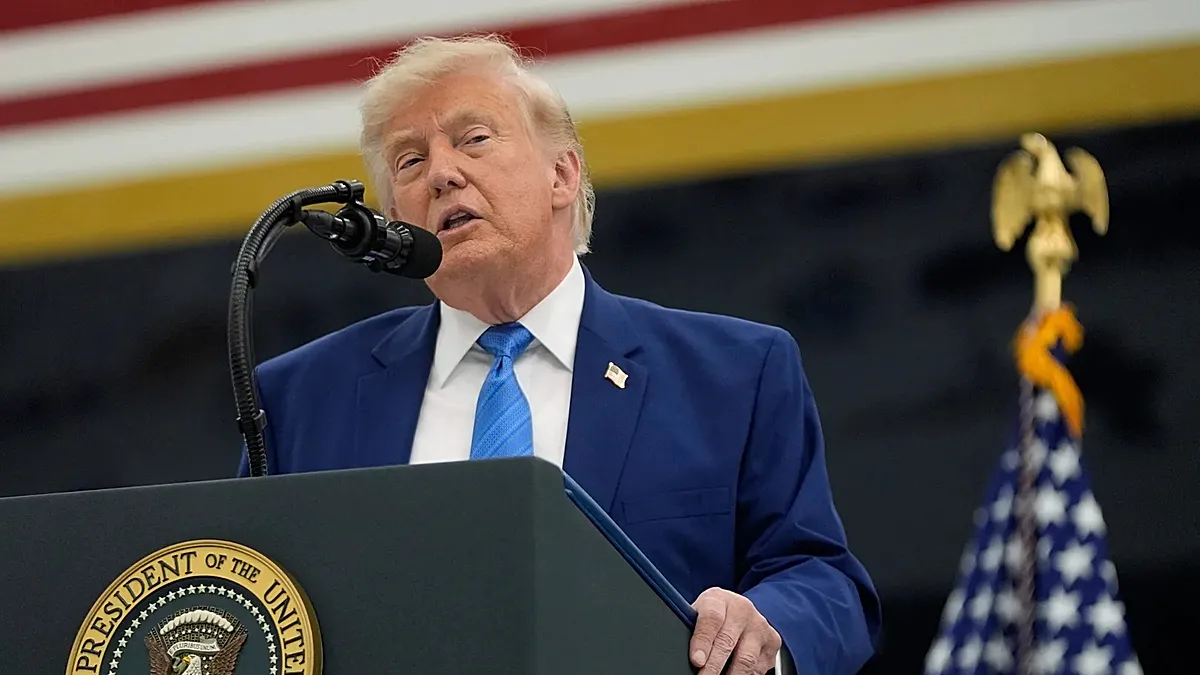
Trump and Meloni continue to trade – Following the recent G7 summit in France, U.S. President Donald Trump has intensified his critique of Italian Prime Minister Giorgia Meloni, asserting that she persistently requested a photograph with him during their meeting. This came as a follow-up to his earlier remarks, which had already sparked diplomatic friction. Trump’s latest comments, shared on his Truth Social platform, highlighted what he described as Meloni’s repeated insistence on capturing a moment of camaraderie. The incident, which occurred earlier in the week, has become a focal point for their escalating public rivalry.
Trump’s account of the event emphasized his personal frustration, stating that Meloni “begged me to take a picture with her” despite their political differences. He framed the interaction as evidence of her perceived dependence on U.S. favor, suggesting that her popularity in Italy might be declining due to her refusal to support American initiatives. The former president claimed that Italy’s alliance with the U.S. was a crucial factor in its national security, and he accused Meloni of prioritizing personal gestures over strategic cooperation.
“She is doing poorly in Italy with her level of popularity, possibly because she turned down the United States of America, a Country that truly loves and protects Italy, when it came to denying Iran from obtaining or developing a Nuclear Weapon,” Trump wrote.
Italian Prime Minister Giorgia Meloni swiftly rebutted Trump’s claims, dismissing them as entirely fabricated. In a video shared on social media, she asserted that neither she nor her government would ever “beg” for anything, challenging Trump’s narrative of her being overly eager for photo opportunities. The video, which was posted on Friday, included a direct message to Trump, stating, “These constant, unprovoked attacks are senseless.” She further clarified that her political standing was not contingent on her relationship with him, adding, “As for my popularity, being your friend certainly has not helped it, nor does it depend on my relationship with you.”
Trump’s comments have reignited tensions between the two leaders, who were once seen as allies. Their discord has been a growing concern in recent months, particularly after Rome decided not to endorse U.S. military operations in Iran. This decision, combined with Meloni’s defense of Pope Leo XIV, who faced criticism from the Trump administration for his stance on the war and immigration policies, has strained their alliance. The Pope’s remarks, which were perceived as supportive of U.S. policies, drew ire from Trump, who labeled him as “weak” in his earlier critiques.
The G7 summit, held in June, brought together leaders from major European economies and the U.S. to address global issues such as energy security, trade, and defense. Meloni’s presence at the event underscored Italy’s commitment to international collaboration, but Trump’s remarks have cast a shadow over the proceedings. He suggested that her actions during the summit were motivated by a desire to improve her image at home, even as she chose to distance herself from U.S. military support. This accusation has been met with sharp criticism from Meloni, who has consistently defended her decisions as necessary for Italy’s national interests.
Analysts have noted that the animosity between Trump and Meloni reflects broader ideological clashes between the U.S. and Italy. While Trump has emphasized the importance of a strong stance against Iran, Meloni has prioritized a more balanced approach, seeking to maintain Italy’s autonomy in foreign policy. This divergence has led to a public feud that extends beyond the summit, with both leaders using their platforms to challenge each other’s narratives. The conflict is seen as a microcosm of the larger tensions between American unilateralism and European multilateralism.
Additionally, Trump’s remarks have been interpreted as a veiled criticism of Meloni’s leadership style. He accused her of using personal gestures to mask policy disagreements, implying that her popularity might be a result of political manipulation rather than genuine public support. This line of reasoning has drawn backlash from Italian media, which has pointed out that Meloni’s approval ratings remain strong despite the recent controversy. The prime minister’s response on Instagram, which included a pointed retort, has been widely shared as a symbol of her resilience in the face of American criticism.
As the political landscape continues to shift, the dynamic between Trump and Meloni is expected to remain a topic of discussion. Their exchange has not only highlighted individual differences but also revealed the complexities of international diplomacy. With the U.S. and Europe navigating shared challenges and competing priorities, the leaders’ public sparring serves as a reminder of the fragile nature of alliances. The G7 meeting, once a platform for unity, now stands as a stage for ideological confrontation, with both Trump and Meloni using the opportunity to assert their positions.
Trump’s latest post on Truth Social, which he shared on Saturday, reiterated his belief that Meloni’s actions during the summit were driven by self-interest. He described her as seeking to “get her numbers up” by rekindling a friendly relationship with the U.S., following its military victory in Iran. This assertion has fueled speculation about the underlying motives of both leaders. Meanwhile, Meloni’s steadfast defense of her decisions has reinforced her image as a determined and independent figure, even in the face of sharp criticism from her American counterpart.
Historically, Trump and Meloni were seen as allies, with their partnership symbolizing a convergence of interests between the U.S. and Italy. However, their relationship has since deteriorated, marked by a series of public disputes and policy disagreements. The summit in France, which took place in early June, marked a pivotal moment in this evolution, as it became a venue for Trump to highlight what he perceived as Meloni’s inconsistency. His critique has been interpreted as a strategy to undermine her leadership, particularly in the context of growing domestic and international scrutiny.
Despite the recent clash, both leaders continue to project their respective visions for international cooperation. Trump’s focus on military strength and American leadership remains central to his policy agenda, while Meloni advocates for a more measured approach to global challenges. The exchange has not only impacted their bilateral relationship but also influenced the perception of Italy’s role in European and global affairs. As the G7 summit concludes, the debate over their alliance and its future is likely to persist, with each leader offering their perspective on the direction of U.S.-Italy relations.