A Viral Clip Shakes a Decades-Old Alpine Tradition
Usagevpn.com – For generations, the snow-dusted peaks of the French Alps have served as a summer refuge for Orthodox Jewish families seeking respite from the heat of the plains below. Two- and three-week stays at mountain resorts have become woven into the religious and social calendar of French-speaking Judaism. Yet that long-standing bond was rattled in late August 2026 when a short video captured at the Deux Alpes ski resort spread rapidly across social platforms, prompting an official investigation and reigniting anxieties about how local communities accommodate the cultural practices of visiting worshippers.
The Incident at the Refreshment Stall
The clip shows a shopkeeper leaning against the counter of a small food stand inside the resort. In the recording, she addresses an Orthodox Jewish man directly, her tone carrying a note of exasperation that viewers found unmistakable.
“The Jewish community, there are too many of you. At some point it gets on people’s nerves.”
The remark, brief as it was, landed with disproportionate force. Within days, authorities confirmed that a formal inquiry had been launched into the episode. By the start of the following week, the case had been transferred to the Grenoble public prosecutor’s office for further review, according to statements released by the prosecutor’s team.
Voices from the Resort Floor
Longtime visitors to Deux Alpes described a palpable shift in mood after the video circulated. Danièle, who has spent summers at the resort for years, characterized the aftermath bluntly.
“Let’s say it has created a bad atmosphere in the resort; Orthodox Jewish tourists don’t cooperate at all, they don’t take part in anything, not the restaurants, not the bars, not the activities – well, only the children’s activities, the games, that’s all.”
Her comment, while framed as a casual observation, underscored a recurring friction point: the degree to which observant Jewish families maintain separate dining, recreation, and social routines during their stays. For many local operators accustomed to mixed-use tourism, those separations can feel like a withdrawal from the communal life of the resort.
Hannah Lasry, a Jewish holidaymaker who has visited the Alps repeatedly, placed the Deux Alpes episode within a wider pattern she has witnessed over multiple seasons.
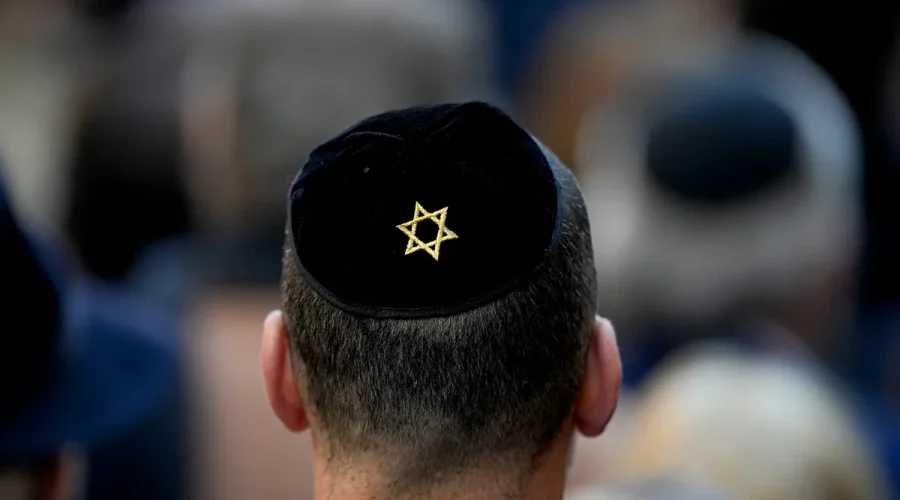
“There are other people who, even when we walk down the street with the children, speak badly to them because they are wearing kippot. That shows that people are frustrated that there are children around, that there are a lot of Jews, so in the end this is not an isolated situation.”
Official Response and Political Fallout
Interior Minister Laurent Nuñez moved swiftly to condemn the antisemitic language captured on camera, signaling that the government regarded the incident as more than a minor tourist dispute. The minister’s statement framed the remarks as incompatible with France’s commitment to protecting its Jewish citizens and visitors alike. The subsequent referral of the investigation to the Grenoble prosecutor’s office indicated that the matter would be examined under the full weight of the criminal code rather than dismissed as a local quarrel.
Navigating Cultural Difference at Altitude
Sébastien Merignargues, who directs the tourist office at the nearby Alpe d’Huez station, offered a more measured perspective on the underlying tensions. Drawing on his own experience at another Alpine resort, he acknowledged that differences in religious observance can produce practical frictions.
“When I was in Tignes, there were issues, for example with the swimming pool, about bathing – men, women – the lifeguards had to be the same sex as the swimmers, small things like that, and it’s true that these are ways of operating that we don’t have, so they can, I don’t know if ‘conflict’ is the right word, but in any case there is a need for adjustment and sometimes they are simply sticking points.”
His remarks highlighted a structural challenge faced by Alpine municipalities: how to accommodate strict gender-separation requirements in shared facilities such as pools, spas, and communal dining areas without alienating either the visiting religious community or the local workforce accustomed to mixed-use norms.
The Chabad-Lubavitch Connection and Its History
Deux Alpes has hosted, for several consecutive years, the Beth Loubavitch summer seminar, a major gathering affiliated with the ultra-Orthodox Hasidic movement Chabad-Lubavitch. The event draws hundreds of participants over a three-week span and has become one of the largest summer assemblies of French-speaking Judaism. Its presence in the resort is not incidental; it is the product of a migration pattern that began in the late 1960s, when hundreds of thousands of Jews from North Africa—Morocco, Algeria, Tunisia—settled in mainland France and carried with them a tradition of summer retreats in mountainous terrain.
Over the decades that followed, the seminar relocated from one Alpine station to another, following logistical considerations and community preferences. Its arrival at Deux Alpes cemented the resort’s role as a seasonal hub for observant Jewish life, complete with dedicated dining arrangements, prayer spaces, and children’s programming. The concentration of families, many with young children, over a multi-week period inevitably increases visibility and, occasionally, friction with residents who encounter the community for the first time.
Broader Implications
The Deux Alpes episode arrives at a moment when French society is grappling with renewed antisemitic sentiment and questions about how public spaces accommodate religious difference. A single viral clip, however brief, can crystallize grievances that have accumulated quietly over seasons of coexistence. For resort operators, municipal authorities, and the Jewish community itself, the coming weeks will test whether the investigation yields accountability, whether local attitudes shift toward greater accommodation, and whether the decades-old tradition of Jewish summer retreats in the Alps can continue without the shadow of that counter-side remark hanging over every subsequent stay.
Related Reading
Frequently Asked Questions
What is Tensions in the Alps after antisemitic?
Tensions in the Alps after antisemitic is the main topic of this guide. The article explains the context, practical details, and next steps readers should understand.
Why does Tensions in the Alps after antisemitic matter?
Tensions in the Alps after antisemitic matters because readers are looking for a useful answer, not just a short summary. Good content should match search intent and help them decide what to do next.