Switzerland Seeks Over $1 Billion in Extra Air-Defence Funding as Threat Landscape Shifts
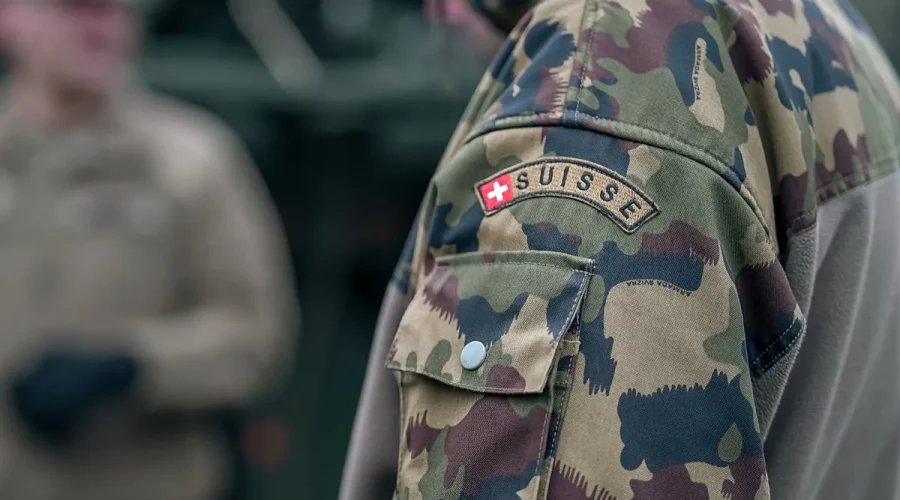
Usagevpn.com – Bern’s cabinet moved on Wednesday to request nearly one billion Swiss francs in supplementary air-defence spending for the 2026 fiscal year, a step that underscores how rapidly the Alpine republic’s security calculus is being rewritten by a more volatile neighbourhood. The additional 970 million francs (roughly $1.0 billion, or €860 million) would be layered on top of an already substantial armament programme, and it arrives amid what officials describe as stretched global supply chains and an arms market where buyers are competing for limited production slots.
A Budget Built on Escalating Risk
The government’s justification centres on two interlocking concerns: the nature of emerging threats and the practical difficulty of procuring countermeasures in a saturated market. In a statement issued after a ministerial session, officials framed the request around the need to lock in delivery windows before competitors absorb remaining capacity.
“To guarantee delivery times for air defence acquisitions,” the government stated, “will request an additional 970 million francs from parliament” for inclusion in the 2026 budget.
The figure sits atop a March request in which Bern had already sought 3.4 billion Swiss francs (€3.6 billion) for its annual armament programme. The supplementary ask therefore pushes total 2026 defence procurement well beyond four billion francs in a single year — an extraordinary concentration of spending for a country of roughly 9 million people that has not fought a conventional war on its soil since the Napoleonic era.
Hybrid Warfare and Long-Range Strike as Primary Dangers
Officials were explicit about what they consider the most probable forms of aggression. Rather than a full-scale invasion — a scenario Swiss planners have long treated as unlikely given the country’s geography and neutrality — the cabinet pointed to shorter, sharper forms of coercion.
“Hybrid operations and long-range attacks constitute the most likely threats to Switzerland,” the statement read, cautioning that “the armed forces do not have the necessary resources to ensure sufficient protection of the country against aerial threats.”
That language tracks a broader European trend. Since Russia’s full-scale invasion of Ukraine in February 2022, NATO and non-NATO states alike have accelerated investment in layered air and missile defence, drone countermeasures, and integrated surveillance. Switzerland, though not a NATO member, has felt the pressure to close gaps in its own air-space coverage, particularly given its position between major European theatres and its dense network of military installations spread across mountain valleys.
An Arms Market Under Strain
The timing of the supplementary request is not accidental. The government highlighted that global production lines for air-defence systems remain “saturated” for years ahead, with demand outpacing output. Manufacturers, it noted, are increasingly insisting on large upfront payments before committing slots to new buyers.
“Manufacturers are more and more frequently demanding substantial down payments, without which urgent acquisitions could be delayed for several years.”
For a small, cash-constrained defence budget, that dynamic is punishing. Waiting even eighteen months for a production slot can mean missing a window in which a regional conflict escalates. The 970 million francs is therefore earmarked specifically for down payments on short-range and medium-range ground-to-air defence systems, a medium-range semi-stationary radar, and mini-drone defence capabilities — items where lead times are longest and where Swiss requirements overlap with those of larger European buyers.
The F-35A Question and a European Complement
Switzerland’s most visible acquisition remains a fleet of American F-35A Lightning II fighters, ordered to replace the ageing F/A-18C Hornet fleet. Delivery, however, has been complicated by a pricing dispute between Bern and Washington, and the programme already faces schedule slippage. The government has not disclosed the size of the gap, but the friction has drawn domestic criticism that the purchase is consuming budget headroom needed elsewhere.
In parallel, the country is evaluating a European-made surface-to-air defence system to operate alongside the US Patriot batteries already on order — themselves delayed. Pairing a Western European medium-range system with American long-range interceptors would give Switzerland a layered architecture without over-reliance on a single supplier, a consideration that has grown in importance as European capitals seek to diversify their own procurement away from sole-source dependencies.
Parliamentary Hurdles and the Broader Fiscal Picture
The supplementary 970 million francs has not yet received legislative approval. Parliament must also weigh a significant value-added tax (VAT) increase running through 2040, a measure designed to underwrite the army’s longer-term spending priorities. Linking the two votes in the public debate has made the defence budget a flashpoint in Swiss politics, where consensus-based governance and fiscal conservatism traditionally resist large, open-ended commitments.
The long-run picture is substantial. The government outlined that countering the most probable threat scenarios will require cumulative weaponry investments of 24 billion francs (€25 billion) over the coming years. Separately, it plans to allocate another 100 million francs (€106 million) in the near term to harden security at more than 60 military sites, a task it insists must be completed “no later than the start of 2029.”
For a nation that has spent two centuries defining itself by neutrality, the scale of the shift is unmistakable. The question now before Bern’s legislature is not whether the threat environment has changed — officials argue it plainly has — but whether the fiscal instruments and political will exist to close the gap before the window narrows further.
Related Reading
Frequently Asked Questions
What is Swiss government eyeing boosting air defence?
Swiss government eyeing boosting air defence is the main topic of this guide. The article explains the context, practical details, and next steps readers should understand.
Why does Swiss government eyeing boosting air defence matter?
Swiss government eyeing boosting air defence matters because readers are looking for a useful answer, not just a short summary. Good content should match search intent and help them decide what to do next.