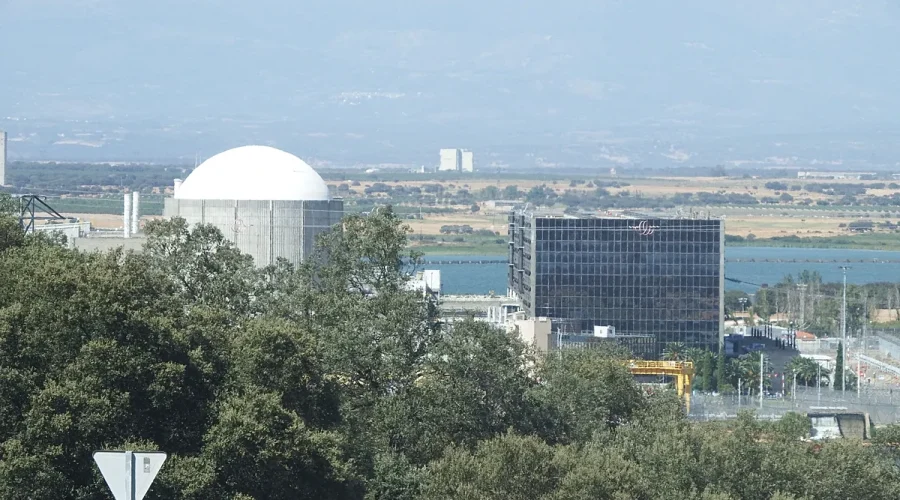
Spain Delays Nuclear Closure: Almaraz Plant to Operate Through 2030
Usagevpn.com – The Spanish Government has officially extended the operational lifespan of the Almaraz nuclear power station, allowing the facility to continue generating electricity until June 8, 2030. This significant policy adjustment responds to a formal request submitted by the plant’s ownership companies last autumn, effectively postponing the anticipated shutdown of both reactors in the Extremadura region by three additional years. The ministerial order authorizing this extension was published in the Official State Gazette under the authority of the Ministry for Ecological Transition.
A Historic Facility with Critical Energy Role
Almaraz holds a distinguished position as the most productive nuclear power plant in Spain’s history. Currently, the facility supplies approximately seven percent of the nation’s total electricity production, making it a cornerstone of the country’s energy infrastructure. Under the original schedule established in 2019 through negotiations between the Government and energy companies, Unit 1 was set to cease operations in November 2027, while Unit 2 would follow in October 2028.
The April 2025 blackout that affected the entire Iberian Peninsula reignited discussions about nuclear energy’s importance. This major power disruption brought nuclear power back to the center of political debate, highlighting the critical need to maintain existing generation capacity during Spain’s transition toward renewable energy sources.
Political Tensions and Local Opposition
The extension decision arrives amid evolving political dynamics. The current coalition government, which includes left-wing parties Podemos and later Sumar, had previously committed to an accelerated nuclear phase-out. This commitment called for the immediate closure of all nuclear facilities, with a gradual timeline designed to eliminate Spain’s seven reactors by 2035. The original schedule allocated specific closure dates: Almaraz I in November 2027, Almaraz II in October 2028, Ascó I and Cofrentes in 2030, Ascó II in 2032, and Vandellós II and Trillo in 2035.
However, ownership companies gradually shifted their position over time. Last autumn, the firms operating Almaraz formally petitioned the Government for a three-year extension, pushing the final closure date to June 2030.
European political pressure has also intensified regarding the plant’s future. In February 2026, a delegation of ten Members of the European Parliament, led by Bogdan Rzońca of the European Conservatives and Reformists group and chair of the European Parliament’s Petitions Committee, visited the Almaraz site. This visit followed a citizens’ petition against closure that gathered signatures from workers, local governments, residents, farmers, and regional associations.
Rzońca described the closure of the plant as “an ideological issue” for the Spanish Government and pointed out that more than 10,000 local residents opposed shutting it down, warning of a disconnect between local and national governments on this matter.
Technical Validation and Economic Implications
The Petitions Committee subsequently approved a report in May 2026 that explicitly urged the Spanish Government to reconsider its shutdown timeline. The committee concluded that the original decision rested on “purely political and ideological reasons, without sufficient technical basis,” and cautioned about serious economic, social, and energy consequences for both the region and Spain’s electricity system.
MEP Elena Nevado from the European People’s Party emphasized that “there is no comprehensive impact assessment that properly evaluates its consequences” and highlighted that the plant sustains approximately 4,000 direct and indirect jobs throughout the region.
The European Parliament’s position aligned with European Commission president Ursula von der Leyen, who has consistently advocated for maintaining nuclear power plants in operation. On July 16, the Nuclear Safety Council (CSN) issued a favorable report confirming that Almaraz meets all nuclear safety conditions for continued operation through 2030. The facility also satisfies requirements regarding energy supply security and zero additional costs for consumers as established by the Ministry for Ecological Transition.
The regulator’s positive assessment removed the primary technical justification the Government could have employed to maintain the original closure schedule, leaving the final decision firmly in the political domain. Notably, the plant has a counterpart in Virginia, USA—North Anna—which has already received authorization to operate for up to 80 years.
Local Support and Future Outlook
The announcement has been enthusiastically received by the citizens’ platform “Yes to Almaraz, Yes to the Future,” established in January 2025. This coalition has united more than one hundred municipalities, business organizations, chambers of commerce, workers, supplier companies, and associations from across the Cáceres province in defense of keeping the plant operational.
“At last we can breathe again and see light
This extension represents more than a simple delay in closure. It reflects a broader recognition that Spain’s energy security depends on maintaining reliable baseload power generation while renewable infrastructure continues to develop. The decision acknowledges that political timelines must accommodate technical realities and local economic needs, particularly in regions where nuclear facilities provide substantial employment and energy stability.
Related Reading
Frequently Asked Questions
What is Spain extends Almaraz nuclear plant operations?
Spain extends Almaraz nuclear plant operations is the main topic of this guide. The article explains the context, practical details, and next steps readers should understand.
Why does Spain extends Almaraz nuclear plant operations matter?
Spain extends Almaraz nuclear plant operations matters because readers are looking for a useful answer, not just a short summary. Good content should match search intent and help them decide what to do next.