Sánchez Slams Europe’s Lack of Solidarity Over Ceuta Crisis
Spanish PM’s Letter Highlights EU Divisions
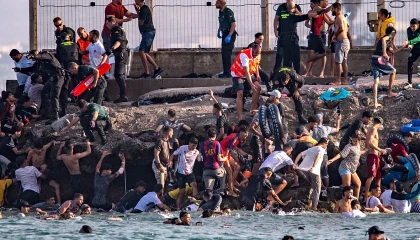
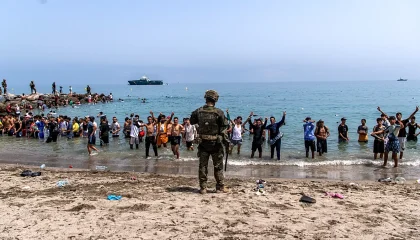
Usagevpn.com – Spanish Prime Minister Pedro Sánchez has criticized what he calls insufficient European unity regarding the migration crisis in Ceuta. In a letter to European Commission President Ursula von der Leyen, Sánchez outlined several issues fueling the situation, including misinformation, prejudices, and political maneuvering. The correspondence, sent Saturday and examined by Euronews, follows Sánchez’s description of roughly 50,000 Moroccan migrants crossing into Ceuta in one day as an “attack” on Spain’s territorial integrity after the double-fenced border was breached.
Within the letter, Sánchez noted that responses from some EU partners were “rather asymmetric.” He pointed out that while border violations usually prompt quick condemnation from member states and are often framed as hybrid attacks, several EU countries took a different path. Rather than showing solidarity, these nations pushed for tighter controls on Spain, urging Madrid to restore order without providing support.
“Most have shown us their support and solidarity, and have offered their assistance,” the Spanish premier writes. “Others, however, have chosen to attack Spain and to call for its temporary exclusion from the Schengen Area,” he added.
Italy’s Position Draws Criticism
Sánchez’s comments seem aimed at Italian Prime Minister Giorgia Meloni’s government, which announced Friday it would suspend freedom of movement with Spain. This move came while migrants were returning to Morocco. The real-world effects of this decision are still unclear. Meanwhile, Sánchez pushed back against Italy’s stance by noting that Spain maintains “one of the least porous external borders of the European Union,” citing Frontex data. He stressed that “in the current international context, the European Union cannot afford this kind of selfish, polarising and unlawful reaction.”
Regularization Debate Continues
The Spanish leader has encountered pushback from conservative and right-wing governments over his plan to regularize 500,000 people living in Spain without proper legal status. Madrid has defended this independent decision, made without EU consultation, arguing that these residents already contribute to Spanish society through employment and deserve social rights. European right-wing politicians have called the move imprudent, cautioning it could lead to more irregular arrivals. Still, Spanish officials argue that connecting the regularization process to Ceuta crossings shows short-sighted thinking, insisting these issues are separate.
Crisis Response and Future Outlook
In his letter, Sánchez also defended his government’s emergency management. He explained that border control was restored within 48 hours, humanitarian aid reached those who crossed, and nearly all who entered irregularly were returned. On Friday, the EU confirmed no illegal crossings had been recorded from Ceuta into mainland Spain or other member states. Sánchez mentioned these efforts were coordinated with Moroccan authorities, with only limited help from other European nations. The EU indicated readiness to send additional Frontex resources, though Spain had not formally requested this support.
Sánchez emphasized that these measures were implemented alongside Moroccan authorities, with minimal assistance from other European countries.
Looking Ahead
The Spanish prime minister recalled that Spain has previously stood by EU nations facing similar challenges, especially during the 2021 border crisis with Belarus and Eastern European countries, and the 2023 migrant wave on Italy’s Lampedusa island. The precise cause of the mass crossing of approximately 50,000 people from Morocco into Ceuta on Thursday is still unclear, despite border control failures. Rabat has denied claims of using migration for political goals, though similar incidents have occurred before during diplomatic disputes between the two countries. As border checks became overwhelmed, the EU praised Morocco’s cooperation.
Frequently Asked Questions
What happened in Ceuta?
Approximately 50,000 Moroccan migrants crossed into Ceuta in a single day after the double-fenced border was breached, prompting Spain to declare it an attack on its territorial integrity.
How did European countries respond?
While many EU nations offered support, some criticized Spain and called for stricter controls. Italy even proposed suspending freedom of movement with Spain.
What is Spain’s plan for migrants?
Spain intends to regularize the status of 500,000 undocumented residents, arguing they already contribute to society and deserve social rights.
When was the border restored?
Spain reestablished border control within 48 hours and returned nearly all irregular entrants.