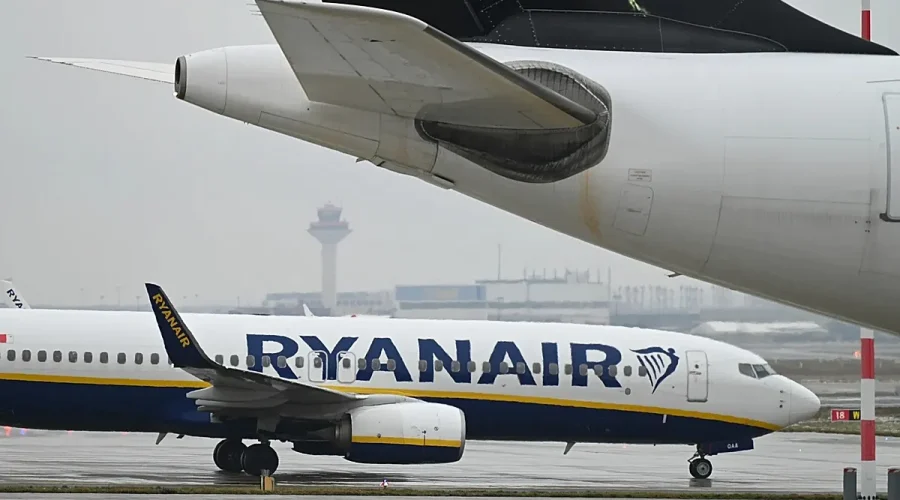
Engine Failure Sends Ryanair Passenger Through Broken Window in Thessaloniki Takeoff
Usagevpn.com – A commercial aircraft experienced a dramatic mechanical failure moments after departing from Greece, sending a passenger partially through a dislodged window as cabin pressure dropped. The incident, which occurred last month, has prompted a thorough investigation into the condition of the engine and potential contributing factors.
What Happened During Climb Out
The Ryanair flight was traveling from Thessaloniki toward Memmingen in Germany when the right-hand engine suffered a fan-blade-out failure during the climb phase. Fragments from the damaged engine tore through the aircraft’s fuselage, creating an opening that caused the cabin to depressurize. The flight crew made the decision to return to Thessaloniki airport, where they completed a smooth landing without further complications. All 155 people aboard the aircraft—two pilots, four cabin crew members, and 149 passengers—were accounted for following the emergency landing. Medical personnel assessed one passenger who sustained serious injuries during the incident.
A Passenger Nearly Pulled From the Aircraft
Ljubisa Karović, a Serbian national traveling on the flight, found himself in a precarious position when the pressure differential pulled him toward the broken window. He was nearly sucked head-first through the opening before fellow passengers managed to hold him in place.
The pressure pulled Ljubiša out; luckily he was strapped in, but half his body was sticking out of the plane.
His wife, Svetlana Grković, described her immediate reaction to the frightening situation.
I reacted immediately and grabbed his legs. I thought, ‘If we’re going to die, we’re going to die together’. It was awful.
The airline confirmed that the passenger window had become dislodged during flight and that the aircraft landed normally. Passengers were able to make their way to the terminal before a replacement service was arranged for those continuing to their destination.
Investigation Reveals Maintenance History
Greek aviation authorities delegated the complete investigation to the United States National Transportation Safety Board in the week following the incident. Investigators have uncovered important details about the engine’s recent maintenance record and operational history. Ultrasonic inspections of the fan blades had been conducted as recently as May, with inspectors reporting no findings that would indicate potential problems. This suggests the blades were in good condition at the time of their last thorough examination. However, flight crews had documented four suspected bird strikes involving the same engine over the twelve months leading up to the Thessaloniki incident. While routine maintenance checks did not record any damage from these encounters, investigators noted that bird remains were found in two of the four reported cases.
Understanding Fan-Blade-Out Failures
Fan-blade-out events represent one of the more serious types of engine failures in commercial aviation. When a blade breaks free from the fan assembly, it can travel at high velocity and cause significant damage to surrounding components. The debris can puncture the aircraft structure, damage hydraulic systems, and in rare cases, create openings large enough to affect cabin pressure. Modern jet engines are designed with redundancy to handle such failures, but the extent of damage depends on the size of the broken blade and its trajectory. The fact that the cabin depressurized indicates the breach was substantial enough to compromise the sealed environment of the aircraft.
Aviation Safety Implications
The investigation into this incident carries broader implications for aviation safety protocols. Bird strikes, while common, can sometimes cause cumulative damage that may not be immediately apparent during routine maintenance checks. The presence of bird remains in two of the four reported cases suggests that impacts may have caused internal stress or micro-fractures in the fan blades. Ultrasonic testing represents one of the most effective methods for detecting internal flaws in metal components without requiring disassembly. The fact that the May inspection showed no findings provides valuable data for investigators as they determine whether the failure was sudden or developed over time. Ryanair operates one of the largest fleets in Europe, with extensive operations through Greek airports. The airline has a reputation for maintaining tight schedules and efficient turnaround times, which places additional emphasis on thorough pre-flight checks and maintenance procedures.
What Comes Next
The NTSB investigation will likely examine multiple factors, including the exact sequence of events, the condition of the engine components, and whether the bird strikes contributed to the failure. Investigators may also review maintenance records, pilot reports, and any relevant operational data from the flight. Passengers affected by the incident, including those who were on the delayed flight, may receive compensation depending on the outcome of the investigation and applicable regulations. The seriously injured passenger will continue to receive medical attention while the investigation proceeds. The incident serves as a reminder of the complex systems that keep commercial aviation safe and the importance of rigorous maintenance protocols. As investigators piece together the full picture, their findings could influence future inspection requirements and maintenance schedules for similar engine models.
Related Reading
Frequently Asked Questions
What is Ryanair window smashed by engine debris?
Ryanair window smashed by engine debris is the main topic of this guide. The article explains the context, practical details, and next steps readers should understand.
Why does Ryanair window smashed by engine debris matter?
Ryanair window smashed by engine debris matters because readers are looking for a useful answer, not just a short summary. Good content should match search intent and help them decide what to do next.