Metropolitan Police Data Slip-Up Leaves Al-Fayed Abuse Survivors’ Emails Exposed
Usagevpn.com – The privacy of women who bravely stepped forward to report decades of sexual abuse by late billionaire Mohamed Al Fayed was compromised when London’s Metropolitan Police inadvertently broadcast their personal email addresses to a wider audience than intended. The force issued an apology after confirming that a routine monthly update sent to victims contained the contact details of 143 individuals in plain sight, visible to every other recipient on the distribution list rather than concealed behind a blind-carbon-copy field.
The blunder was attributed internally to what officers described as simple human error. Beyond the named complainants, an unspecified number of additional recipients also received the message, widening the circle of people who now hold personal contact information belonging to survivors still navigating an ongoing criminal investigation.
Victims’ Group Calls Incident “Appalling”
A collective representing women affected by Al Fayed’s alleged crimes reacted sharply to the disclosure. In a public statement, the group characterised the lapse as
“appalling.”
The reaction underscores how fragile trust can be for survivors who have already endured years of silence before choosing to speak out, and how a single administrative mistake can undo months of careful case management.
The Force’s Response and Regulatory Referral
In its own written statement, the Metropolitan Police acknowledged the problem was spotted quickly and that corrective steps followed without delay. The force stated:
“The issue was identified quickly and immediate action was taken.”
It added that every person whose details had been exposed received direct contact from officers to explain what happened and outline protective measures.
The Met went further, confirming it has referred the matter to itself before the UK’s data-protection regulator, the Information Commissioner’s Office. The force also said:
“The incident is being investigated as a matter of priority, and we are reviewing our processes to help prevent a similar breach from happening again.”
That self-referral signals an expectation that the ICO will scrutinise whether internal protocols around victim communications were adequate, particularly given the sensitive nature of the underlying allegations.
Who Was Mohamed Al Fayed?
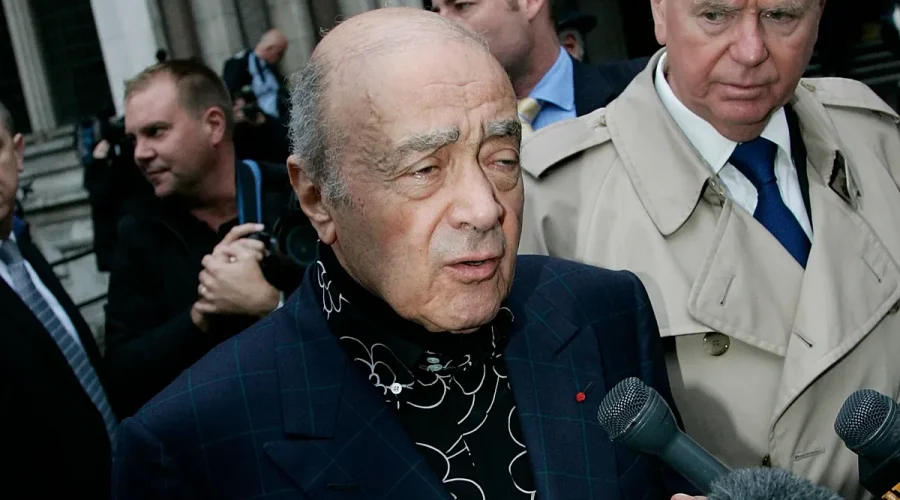
Mohamed Al Fayed was born in Egypt and built a sprawling commercial empire across two continents. He became internationally recognised as the owner of Harrods, the landmark London department store on Knightsbridge; Fulham Football Club, which he led through turbulent seasons in English football’s top flight; and the Ritz Hotel in Paris, one of the city’s most storied luxury addresses.
His personal life entered global consciousness in 1997 when his son Dodi Al Fayed died in a car crash on the Pont de l’Alma in Paris alongside Princess Diana. The tragedy dominated world headlines for weeks and cast a long shadow over the family name.
Mohamed Al Fayed himself died in 2023 at the age of 94. His passing, however, did not close the chapter on allegations against him. In the months following his death, hundreds of women came forward with accounts of rape, sexual assault, and trafficking they say occurred over many years, a substantial proportion of which they linked to his tenure as Harrods’ proprietor.
Investigation Status and Modern Slavery Recognition
The Metropolitan Police continues its inquiry into the allegations against Al Fayed’s estate and into individuals who may have facilitated or enabled his offending. To date, six people have been questioned in connection with the investigation, though no arrests have yet been made.
In a parallel development earlier this month, at least five women who identified themselves as victims of Al Fayed were formally recognised by the UK Home Office as victims of modern slavery. That designation carries practical consequences: it can unlock access to state-funded support services, legal aid, and immigration protections that would otherwise be unavailable to survivors whose cases have not yet reached court.
It is worth noting that while some complaints against Al Fayed were lodged before his death, he never faced formal criminal charges during his lifetime. The posthumous investigation therefore operates under different procedural constraints, with prosecutors relying on witness testimony, documentary evidence, and the cooperation of institutions that may have held records of employment or transactions at Harrods.
Why This Breach Matters Beyond the Headline
Data-protection failures in criminal investigations carry consequences that extend well past an administrative apology. For survivors of sexual violence, having their contact details circulated among dozens of unknown recipients can reignite fears of being identified, contacted by associates of the accused, or subjected to secondary trauma through unwanted correspondence. It can also chill willingness among other potential witnesses to come forward, if they perceive that the institutions meant to protect them cannot keep basic information secure.
The ICO’s involvement adds a layer of external accountability. The regulator can examine whether the Met’s internal data-handling procedures met the standards set out in UK GDPR and the Data Protection Act 2018, and it retains powers to issue enforcement notices or impose fines where systemic failings are found.
For the women at the centre of this story, the question now is whether the investigation’s momentum will survive the distraction of a preventable administrative error, and whether the institutions tasked with protecting them can demonstrate, in practice rather than in press releases, that their privacy remains a priority worth defending.
Related Reading
Frequently Asked Questions
What is Police apologise after Al Fayed sex abuse?
Police apologise after Al Fayed sex abuse is the main topic of this guide. The article explains the context, practical details, and next steps readers should understand.
Why does Police apologise after Al Fayed sex abuse matter?
Police apologise after Al Fayed sex abuse matters because readers are looking for a useful answer, not just a short summary. Good content should match search intent and help them decide what to do next.