Citizen Science Transforms Marine Research in Macaronesia
Usagevpn.com – The waters surrounding the Canary Islands have become a living laboratory where everyday divers and students contribute to groundbreaking scientific discovery. Through the RedPROMAR initiative, more than 85,000 validated observations have been catalogued, documenting over 5,000 distinct species across this vibrant region of the North Atlantic. Often referred to as the “Lucky Islands,” Macaronesia has emerged as a crucial hub for understanding marine biodiversity through the power of collective observation.
Every Diver Becomes a Scientist
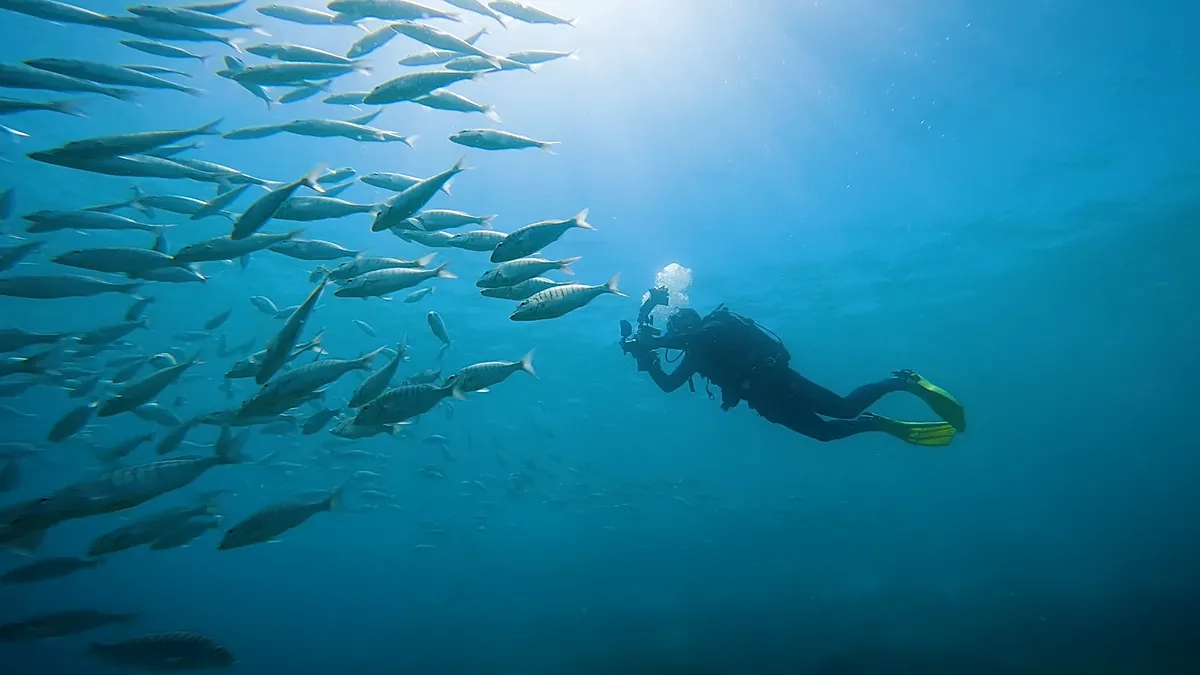
Dennis Rabeling, who works as a diving instructor with Euro-Divers Lanzarote, exemplifies how ordinary enthusiasts can become vital contributors to marine science. His daily excursions beneath the waves yield thousands of photographs that feed directly into the RedPROMAR database. This European initiative receives co-funding from the Government of the Canary Islands, enabling its extensive reach across multiple archipelagos.
With RedPROMAR, if you upload your photos, you become another pair of eyes on the water. In this way, scientists can identify new species that we did not previously know lived here. Today, during a thirty-minute dive, we saw around twenty or thirty species, perhaps even more.
Rabeling’s personal contributions have been particularly significant. He has helped document three species never before recorded in Canarian waters, including one scientifically named in his honor: Gibberula Dennisi. His work demonstrates how consistent citizen participation creates a comprehensive picture of marine life that professional scientists alone could never achieve.
Bridging Classrooms and Oceans
The project has successfully connected academic learning with real-world ocean conservation. Secondary school students from IES Yaiza, under the guidance of teacher Juan Francisco Rodríguez García, have engaged deeply with marine ecology. Their curriculum included studying human impacts on ocean ecosystems, creating a podcast examining tropicalisation and its environmental consequences, and conducting an educational excursion to Órzola in northern Lanzarote.
During this field trip, students observed marine species firsthand while learning how the RedPROMAR platform operates. The experience left a lasting impression on participants like Aroa, who shared her enthusiasm for what she had learned.
I didn’t even know most of the species. I hadn’t heard those names before at all. Take the manatee, for example. When an animal tries to bother it, it releases a kind of purple ink to scare it away. It’s really amazing.
Data as a Collective Puzzle
Marc Martín Sola, a marine biologist working with Gesplan and serving as a RedPROMAR technician, describes the citizen science approach as assembling a complex jigsaw. Individual observations may seem insignificant in isolation, but when aggregated, they reveal patterns essential for scientific understanding and policy-making.
The platform functions as an early-warning mechanism for detecting alien species and monitoring organisms affected by climate change or human activity. Marc explains that certain periods generate concentrated reports of specific species, often correlating with “arribazones”—mass strandings of marine life, both living and deceased, along coastal areas.
In 2024, we had more than a hundred sightings in just a few months. Citizen science enables us to detect and record these sudden surges that might otherwise go unnoticed by the scientific community and thus keep a record of when and where they have occurred.
Investment and Expansion
With a total budget approaching two million euros, RedPROMAR demonstrates strong commitment to marine research. Eighty-five percent of funding comes from the European Cohesion Policy, while the remaining fifteen percent is provided by the Canary Islands Government. What began as a Canarian initiative has since grown to encompass Cape Verde, Madeira, and the Azores, creating a network of interconnected marine monitoring across the Atlantic.
Each photograph uploaded to the platform receives verification from expert teams, ensuring data reliability. This rigorous process transforms casual underwater photography into scientifically valuable records that inform conservation strategies and deepen our understanding of ocean ecosystems in an era of rapid environmental change.