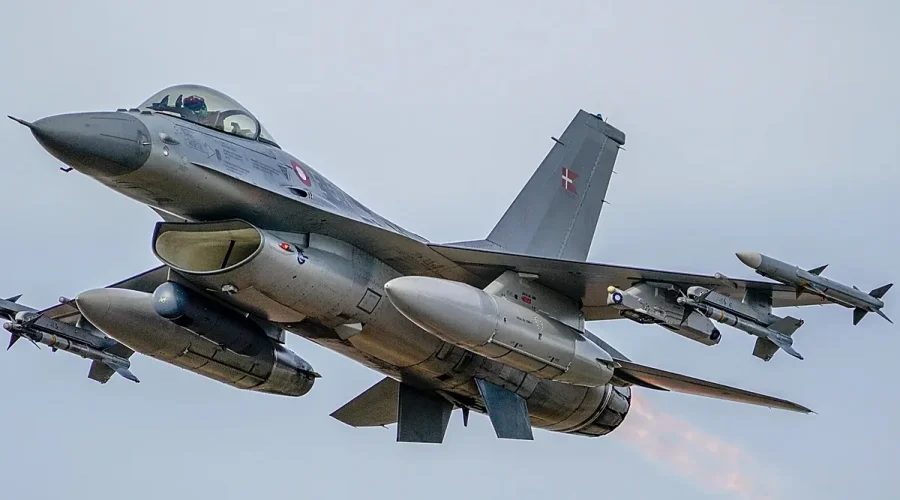
NATO Intercepts Foreign Drone in Latvian Skies Amid Rising Eastern Flank Tensions
Usagevpn.com – Latvian military forces confirmed that fighter aircraft participating in NATO’s Baltic Air Policing operation successfully brought down an unidentified drone within the nation’s airspace on Friday. The armed forces released an official statement indicating the aerial intruder had penetrated Latvian territory following Russian electromagnetic warfare activities. The interception occurred above the Balvi district, situated in the eastern portion of the country.
Following the incident, military authorities dispatched supplementary air defense formations to strengthen Latvia’s eastern frontier. Officials emphasized that continuous surveillance of the national airspace would remain a priority. The military’s statement noted that as long as Moscow’s military campaign in Ukraine persists, similar incidents involving foreign drones approaching or entering Latvian airspace could recur. Additional potential airspace threats were detected across several municipalities including Augšdaugava, Preiļi, Rēzekne, Balvi, and Alūksne, though these situations have since been resolved.
Broader Regional Security Concerns
This latest interception represents part of a growing pattern of drone incursions into NATO territory along the alliance’s eastern boundary. The region faces heightened vulnerability to security threats stemming from Russia’s ongoing conflict in Ukraine, which escalated dramatically when Moscow initiated its comprehensive military invasion in February 2022. The Baltic states, as NATO members bordering Russia, have become increasingly exposed to such aerial threats.
The drone incidents are not isolated to Latvia. In July, Romanian fighter aircraft downed three separate drones within a three-day period, marking a significant surge in aerial incidents across the country. Romanian prosecutorial authorities determined that at minimum one of these intercepted drones matched the Shahed model deployed by Russian forces during their campaign against Ukraine. This type of drone has become a recognizable element of Russian aerial operations in the region.
Threats to Critical Infrastructure
Maritime security has also come under pressure from drone activity. Romanian military divers eliminated two Gerbera-type drones in the Black Sea on Tuesday, operating near the Neptun Deep natural gas facility. The destruction was conducted through controlled detonation to protect both shipping routes and ongoing operations at the platform. Romanian Defence Minister Radu Miruță explained the decision at the time, emphasizing the need to safeguard critical energy infrastructure.
Earlier in June, a Ukrainian maritime drone detonated within the port of Constanta after Romanian military officials stated the vessel had deviated from its intended path due to Russian electronic warfare interference. Similar incidents have affected neighboring Bulgaria, where another drone exploded near a compressor station serving the Trans-Balkan gas pipeline last week. These events underscore how drone activity has expanded beyond airspace to threaten vital energy corridors across Eastern Europe.
NATO’s Coordinated Response
NATO member states convened on Wednesday to address the recent wave of drone incursions and related incidents. Alliance representatives expressed their complete solidarity with and support for the nations most directly affected. In an official statement, NATO affirmed that member states had reiterated Russia’s full responsibility for these airspace violations, characterizing them as dangerous and unacceptable developments that reveal Moscow’s growing willingness to accept risk.
The alliance emphasized that it remains prepared to deter and defend against any aggression directed at its territory. This collective response highlights the interconnected nature of security challenges facing the eastern flank, where incidents in one country can quickly resonate across the entire alliance.
Baltic Air Policing Mission Background
NATO’s Baltic Air Policing operation represents a long-standing commitment to regional security. The mission involves allied nations deploying fighter aircraft in four-month rotational assignments to air bases located at Šiauliai in Lithuania and Ämari in Estonia. These aircraft can be rapidly activated by the NATO Combined Air Operations Centre based in Uedem, Germany, when threats emerge.
Latvia, Lithuania, and Estonia serve as host nations for the mission, providing essential air command and control infrastructure along with qualified personnel. The operation was originally established in 2004 and underwent significant expansion in 2014 following Russia’s unlawful annexation of the Crimean Peninsula. This historical context demonstrates how the mission has evolved in response to changing security dynamics in the region, with the Baltic states playing a central role in NATO’s eastern defense architecture.
The increasing frequency of drone incidents across the region suggests that the Baltic Air Policing mission may face even greater demands in the coming months. As electromagnetic warfare capabilities continue to develop and drone technology becomes more sophisticated, the ability of NATO forces to detect, intercept, and neutralize aerial threats will remain critical to maintaining security across the alliance’s eastern perimeter. The coordinated response from multiple nations, combined with enhanced air defense deployments, reflects a broader strategy of strengthening collective security in the face of persistent Russian pressure.
Related Reading
Frequently Asked Questions
What is NATO Baltic Air Policing jets shoot?
NATO Baltic Air Policing jets shoot is the main topic of this guide. The article explains the context, practical details, and next steps readers should understand.
Why does NATO Baltic Air Policing jets shoot matter?
NATO Baltic Air Policing jets shoot matters because readers are looking for a useful answer, not just a short summary. Good content should match search intent and help them decide what to do next.