Mark Carney to Address European Parliament
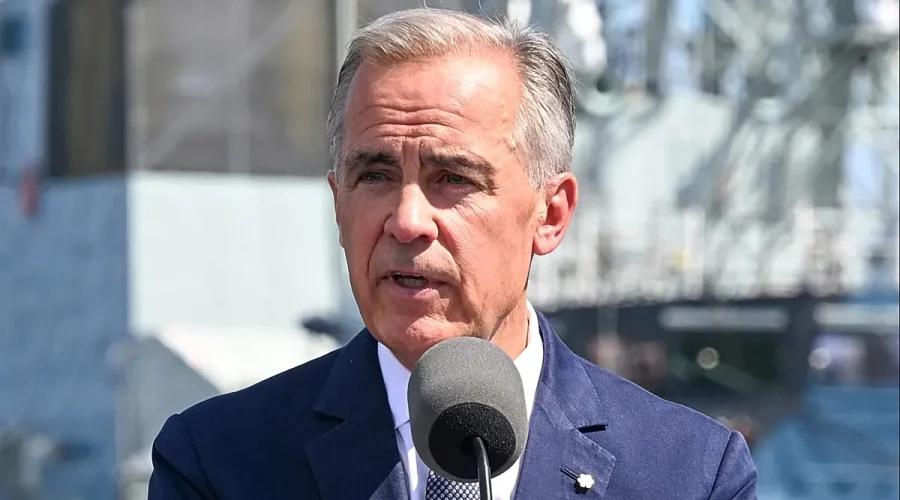
Usagevpn.com – Mark Carney to address European Parliament on September 17 represents one of the most consequential diplomatic moves by a North American head of government in decades. As tariff warfare between Ottawa and Washington escalates into what both capitals now call a historic confrontation, the Canadian prime minister will step into the Strasbourg plenary not for a ceremonial handshake but to negotiate substantive policy alignment with the bloc. The timing is deliberate: it lands in the same week that months of bilateral trade negotiations between the two neighbours collapsed outright.
The day before his parliamentary speech, Carney will sit in the chamber for European Commission President Ursula von der Leyen’s annual State of the Union address, the autumn keynote that charts the bloc’s legislative and industrial priorities for the year ahead. A Canadian prime minister occupying that seat the evening before speaking to Members of European Parliament signals how tightly the two agendas have fused since the transatlantic rupture.
A Trade War That Redrews Alliances
The diplomatic backdrop sharpened sharply last week when negotiations between the two North American neighbours broke down. Ottawa accused Washington of overstepping sovereign boundaries — demanding concessions tied to the status of French as an official language, seeking to constrain Canada’s ability to strike independent trade deals with third countries, and pressing for terms that, in the Canadian government’s assessment, far outstripped anything offered in return.
The commercial stakes are enormous. The United States has imposed duties reaching as high as 50 per cent on Canadian goods representing roughly $20 billion (€17 billion) in annual trade flows, with additional levies on key industrial sectors signalled as still on the table. Ottawa answered with reciprocal counter-tariffs calibrated “dollar for dollar,” an escalation without precedent in the long bilateral trade history between the two countries. Trump administration officials, for their part, framed the standoff in different terms, arguing that Canada already benefits from the American security umbrella, has historically underspent on defence relative to GDP, and that Carney’s negotiating posture amounted to what they characterised as “tough guy” theatrics aimed at domestic political advantage.
From Ottawa to Strasbourg: A Strategic Pivot
Beyond the tariff schedule, the Trump administration’s language about Canada has taken on a territorial tenor that has unsettled Ottawa and drawn scrutiny in European capitals. On Tuesday, the US president stated he was considering renaming Lake Ontario “Lake America,” extending a pattern that began with his decision to rebrand the Gulf of Mexico as the Gulf of America. He has repeatedly described Canada as a US state and questioned the legitimacy of the shared border, suggesting it was drawn arbitrarily rather than through centuries of treaty and negotiation. For European policymakers watching the exchange, such rhetoric raises pointed questions about the durability of existing multilateral frameworks spanning NATO logistics, Five Eyes intelligence sharing, and transatlantic supply chains.
Carney, who served as Governor of the Bank of Canada before entering politics, has spent the past year articulating a “middle powers” vision in which mid-sized democracies coordinate to preserve open trade rules. The parliamentary visit slots directly into that architecture: a Canadian leader positioning his country not as a junior partner of Washington but as an independent node in a broader Western alignment that, in Ottawa’s current calculus, can no longer take American goodwill for granted.
“The Prime Minister’s important visit will be an opportunity to deepen EU-Canada ties and strengthen our bond,” European Parliament President Roberta Metsola wrote on X on Wednesday.
Metsola’s framing — “deepen” and “strengthen” — positions the Parliament as an active node in a widening alliance structure rather than a passive host. The invitation departs from recent cycles in which the plenary tended to centre civil-society voices and the humanitarian costs of the war in Ukraine. Carney’s presence this September marks a shift toward hard-policy alignment at the highest institutional level.
Frequently Asked Questions
When will Mark Carney address European Parliament? The parliamentary speech is scheduled for September 17 in Strasbourg. He will attend the State of the Union address the evening before, on September 16.
What triggered the shift in Canadian trade policy toward the EU? The breakdown of US-Canada trade negotiations last week, combined with American tariffs of up to 50 per cent on roughly $20 billion in Canadian goods, prompted Ottawa to pursue deeper alignment with Brussels as a hedge against continued escalation with Washington.
What is the “middle powers” vision Carney has outlined? It is a framework in which mid-sized democracies — including Canada, EU member states, and other partners — coordinate to sustain open trade rules and multilateral institutions, reducing dependence on any single great power for economic and security guarantees.