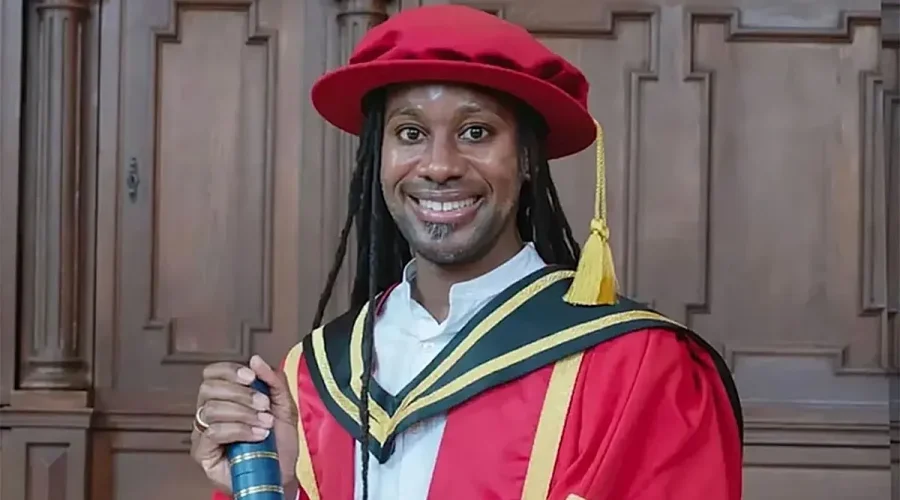
Tragedy Strikes Cambridge: Professor Jason Arday Dies Following Plagiarism Controversy
A Life Cut Short in South London
Usagevpn.com – The academic community has been left reeling following the sudden death of Jason Arday, a distinguished scholar whose career at one of Britain’s most prestigious universities was marked by both remarkable achievement and intense controversy. The 41-year-old professor was discovered unresponsive at his residence in the Battersea district of south London on Friday afternoon, according to emergency service officials.
Metropolitan Police representatives confirmed that paramedics and other first responders were called to the address where Arday was found. Despite their efforts, the professor could not be revived. Sky News and several other British media organizations relayed the information, noting that the circumstances surrounding his passing have not yet been fully detailed by authorities.
Battersea, situated along the River Thames, is a vibrant area of London known for its cultural venues and residential character. The location of Arday’s home in this part of the capital places him within a community that has seen significant transformation over recent decades, reflecting broader patterns of urban development in the city.
Rising Through the Academic Ranks
Arday’s appointment as Cambridge University’s youngest black professor in 2023 represented a significant milestone for the institution and for diversity in British academia. The University of Cambridge, founded in 1209, stands as one of the world’s oldest and most respected universities, with a reputation for academic excellence that attracts scholars from across the globe.
His position encompassed dual roles: as a professor specializing in the sociology of education and as a fellow at Jesus College, one of Cambridge’s constituent colleges. Jesus College, established in 1496, has a long history of supporting academic research and teaching, and its fellows play important roles in both scholarly work and the governance of the college.
Arday’s academic trajectory had been viewed as exemplary by many within the university community. His research and teaching focused on understanding educational systems and their social dimensions, areas of study that have gained increasing importance as societies grapple with questions of equity and access in education.
The Plagiarism Storm
However, Arday’s career trajectory was dramatically altered when a series of allegations emerged concerning academic integrity. The controversy centered primarily on claims that portions of his doctoral thesis had been improperly borrowed from other sources without adequate attribution. These accusations began to accumulate, creating what observers described as a snowballing effect.
Compounding the plagiarism concerns were questions raised about certain achievements Arday had publicly claimed. Critics suggested that some of his professional accomplishments might have been overstated or misrepresented. The combination of these issues created a perfect storm of scrutiny that threatened to undermine his academic standing.
What made the controversy particularly complex was the dimension of racial dynamics. Arday and his supporters argued that the intensity and nature of the investigation reflected underlying racial biases within the academic establishment. They contended that a white professor in similar circumstances might have faced less aggressive questioning of his credentials and achievements.
Resignation and Reflection
Under mounting pressure, Arday announced his resignation from both his professorship and his fellowship at Jesus College, effective immediately. The timing was significant, coming shortly after Cambridge University publicly committed to investigating the various accusations leveled against him.
In a letter that was subsequently published online, Arday explained his decision with characteristic clarity. He characterized his departure as “the only way” to conclude what he described as a “difficult period” in his life and career. Crucially, he emphasized that his resignation should not be interpreted as an admission of guilt regarding the allegations.
“It is simply the decision of someone who has reached the limits of what any person should reasonably be expected to endure,” he wrote in his resignation letter.
His statement reflected a sense of personal exhaustion that went beyond the specific academic disputes. The letter suggested that the cumulative weight of public scrutiny, media attention, and institutional investigation had taken a significant toll on his wellbeing.
University Defense and Broader Implications
Cambridge University had mounted a robust defense of Arday during the height of the controversy. In June, university officials characterized the allegations as part of “a vile campaign to undermine his credibility.” They pointed out that the plagiarism claims concerning both his thesis and his journal publications had been formally investigated and dismissed by the appropriate academic bodies and publishing journals.
The university’s position highlighted an important distinction: while public perception and media narratives can create substantial pressure on academics, formal institutional investigations often reach different conclusions than public opinion might suggest.
The circumstances of Arday’s death have prompted reflection within the academic community about the pressures faced by scholars, particularly those from underrepresented backgrounds who may find themselves navigating complex intersections of professional achievement, public scrutiny, and institutional expectations.
As investigations into the exact circumstances of his death continue, the academic world mourns a colleague whose career exemplified both the possibilities and the challenges of modern scholarship. His story will likely be remembered as one of remarkable achievement shadowed by controversy, and ultimately, by tragedy.
Related Reading
Frequently Asked Questions
What is Jason Arday former Cambridge University professor?
Jason Arday former Cambridge University professor is the main topic of this guide. The article explains the context, practical details, and next steps readers should understand.
Why does Jason Arday former Cambridge University professor matter?
Jason Arday former Cambridge University professor matters because readers are looking for a useful answer, not just a short summary. Good content should match search intent and help them decide what to do next.