Ireland Weighs Nuclear Option as Data Centres Devour a Quarter of the Grid
Usagevpn.com – The island nation that once wrote nuclear power into its statute book as permanently forbidden is now quietly reopening that conversation. Behind the decision sits a single, relentless number: data centres in Ireland already swallow between 21% and 22% of the country’s total electricity output, and analysts expect that share to climb toward 31% by the early 2030s as artificial-intelligence workloads multiply. For a small European economy whose grid was never designed for such concentrated, round-the-clock loads, the arithmetic is forcing a rethink that stretches well beyond wind turbines and solar panels.
A Ban Written in 1999, Now Under Pressure
Ireland has never generated a single megawatt of nuclear electricity. In 1999, the Oireachtas passed legislation explicitly prohibiting domestic nuclear generation, a move framed at the time as a response to the international record of reactor accidents. That statutory wall still stands. Yet the political climate around it has shifted noticeably over the past year.
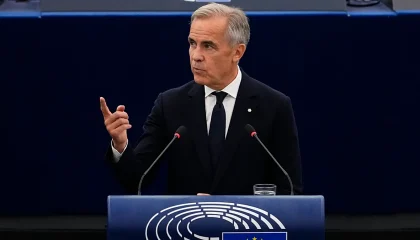
In May, Taoiseach Micheál Martin signalled what he described as a new “openness” toward the possibility of nuclear generation, speaking shortly before calling on the Irish public to end what he called the “demonisation of data centres.” The remark did not overturn the 1999 law, but it broke a long silence and gave momentum to a debate that had previously been confined to think-tank papers.
“There is a need to consider all options (with decarbonising potential) in the long-term,” a spokesperson for the Irish Department of Climate, Energy and the Environment told Euronews.
The Scale of the Problem
The pressure on the grid is not merely an Irish story. Across the European Union, data centres consumed an estimated 70 terawatt-hours of electricity in 2024. Projections put that figure at 115 TWh by 2030 — roughly enough to power 32.9 million European households for a full year. Ireland, which has become a preferred landing zone for hyperscale cloud and AI infrastructure, sits at the sharp end of that curve.
The government’s stated near-term strategy remains anchored in renewables: onshore wind, solar, battery storage, interconnector capacity, and the country’s first offshore wind projects. Officials stress that these technologies can be deployed on timelines compatible with the next decade’s demand growth. Nuclear, by contrast, would require building an entirely new regulatory architecture from scratch — covering site licensing, construction oversight, operational safety, decommissioning, and radioactive-waste management — none of which currently exists in Irish law.
“Nuclear power could not practically be part of our electricity system until at least the 2040s,” the government official acknowledged.
That timeline means nuclear would not solve the immediate squeeze. Dublin nonetheless does not wish to close the door beyond that horizon. A technical study commissioned by the state is now examining thirty distinct technologies capable of contributing to electricity-system decarbonisation, nuclear among them. The assessment will weigh each option on cost, technological readiness, deployment speed, and public acceptability.
Political and Economic Crosscurrents
The question is no longer purely technical. In May, Fianna Fáil legislator James O’Connor tabled a private-member bill that would repeal the 1999 prohibition and legalise nuclear energy on the island, formally inaugurating a parliamentary debate that had been absent for decades.
On 2 June, Minister for Enterprise, Tourism & Employment Peter Burke (Fine Gael) presented an economic impact study showing that the data-centre sector generates €2.2 billion in annual economic activity and sustains roughly 19,500 jobs. The governing coalition framed the report as confirmation that the sector is a structural pillar of the Irish economy rather than a transient boom.
“The report highlights that the continued development of data centre capacity must be aligned with Ireland’s economic, energy and climate objectives,” Burke said. “Through our new Large Energy User Plan, all new data centres must provide their own energy generation onsite or nearby, 80% of which must be from renewable sources.”
Tom Parlon, chair of the Irish Data Centre Supplier Alliance, welcomed the findings. He pushed back against a narrative he said circulates in public discourse.
“We routinely hear claims that the data centre sector creates no jobs and provides little benefit to the Irish economy, yet this report shows these claims couldn’t be further from the truth,” Parlon stated.
Public Backlash and the Water Question
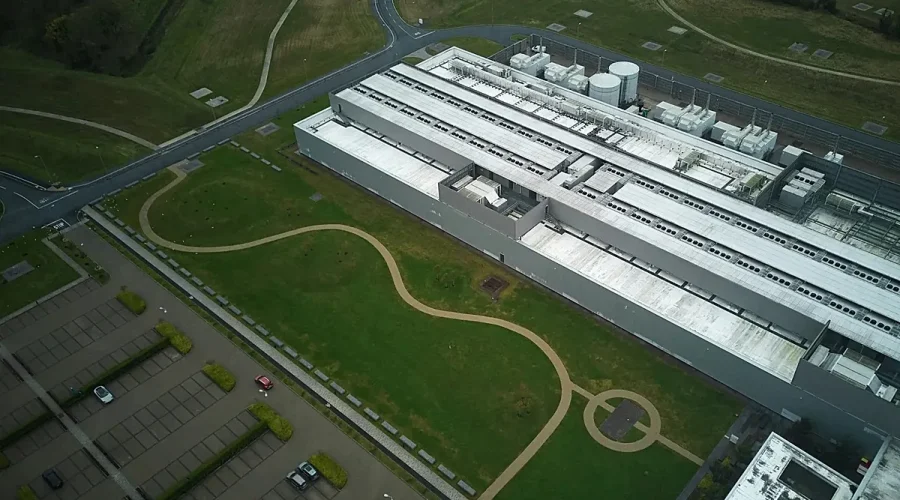
For all the economic arguments, the general public has not embraced the sector with equal enthusiasm. Critics point out that a single hyperscale facility can draw as much electricity as a mid-sized city and consume millions of litres of water daily for cooling. In several locations, that water is abstracted directly from local aquifers and rivers in communities already strained by recurring drought. The social licence to build, in other words, remains contested even as the economic case is reinforced.
At the European level, a new regulatory instrument designed to compel data centres to disclose their true energy costs and to reduce their emissions footprint is being challenged by Big Tech lobbying groups. If it survives the legal challenge, the data-centre rating scheme is expected to take effect from 15 August 2027, with the first sustainability labels issued that autumn. For Ireland, where grid prices already sit at the top of the EU ranking — ahead only of Cyprus — any credible mechanism to curb wasteful consumption carries direct household-level consequences.
What Comes Next
The practical upshot is a two-track strategy. In the near term, Dublin will lean on renewables, storage, and interconnectors to meet the next wave of data-centre demand, while the Large Energy User Plan forces new facilities to generate their own power, predominantly from clean sources. In the longer term, the thirty-technology study will determine whether nuclear — or some other advanced option — earns a place in the post-2040 mix. The 1999 ban has not been repealed, but the political conversation it once sealed has been reopened, and the energy math of the AI era makes it difficult to close again.
Related Reading
Frequently Asked Questions
What is Ireland keeps nuclear door open as data?
Ireland keeps nuclear door open as data is the main topic of this guide. The article explains the context, practical details, and next steps readers should understand.
Why does Ireland keeps nuclear door open as data matter?
Ireland keeps nuclear door open as data matters because readers are looking for a useful answer, not just a short summary. Good content should match search intent and help them decide what to do next.