Chancellor Merz Faces Hostile Crowd at Hürtgen Forest Fire Site
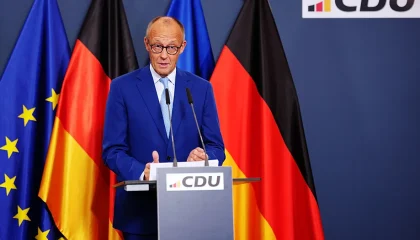
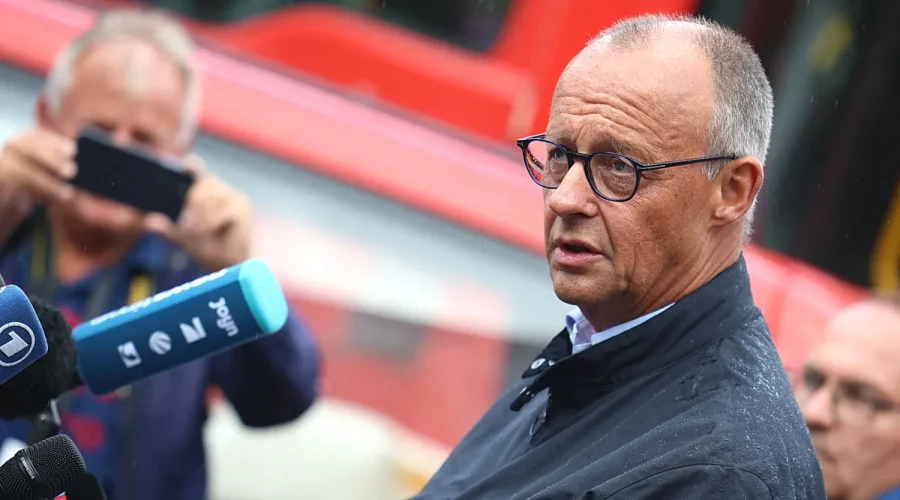
Usagevpn.com – Friedrich Merz returned to public life after his summer recess to find himself the target of sustained booing and whistling in a small Rhineland village. The CDU chancellor’s first official appearance since the break came two days after the last flames were finally knocked out in the Hürtgen Forest, and the reception he received in the village square of Gey made clear that many residents felt he had arrived far too late to matter.
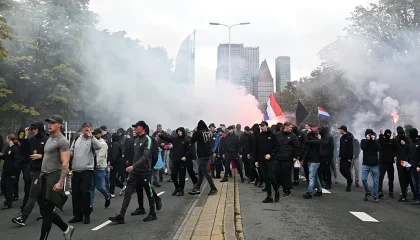
Merz had travelled to Hürtgenwald-Gey ostensibly to express gratitude to the emergency crews who had spent roughly a week battling what authorities now call the largest forest fire in the history of North Rhine-Westphalia. Yet the atmosphere on the square was anything but celebratory. Onlookers packed the area where the chancellor stepped down from his vehicle, and at several points his remarks were rendered unintelligible beneath the noise of the crowd.
A Firefighter’s Rebuke
One member of the Hürtgenwald volunteer fire brigade, visibly frustrated by the jeering, offered a pointed remark to the assembled onlookers:
“Those who are shouting and whistling should turn that negative energy into positive energy and become members of the fire brigade or of the THW.”
The comment underscored the tension between those who had spent days and nights on the ground and those who felt the federal government’s response had been sluggish.
Merz Defends His Timing
Addressing the criticism directly, the chancellor explained that he had deliberately postponed the trip until the blaze was fully contained, reasoning that his presence might have disrupted ongoing operations. He added that he had received continuous briefings throughout the crisis and had pressed local authorities on what additional support was required to bring the fire under control as rapidly as possible.
Turning to the crowd itself, Merz was blunt:
“I am not impressed by those who stand there shouting. I talk to the people who are not shouting, but who are working. I talk to those who help and to those who act in the interests of the community.”
He framed his visit primarily as a gesture of thanks toward the firefighters, rescue workers, and military personnel who had been deployed in force.
Scale of the Disaster
The fire, which ignited during the recent heatwave, spread with alarming speed through parched soils and dense woodland. North Rhine-Westphalia’s agriculture ministry estimated that between 300 and 400 hectares of forest—roughly the area of 420 to 560 football pitches—were damaged or destroyed. At the peak of the operation, approximately 1,400 emergency personnel and around ten firefighting helicopters were committed to the effort. Four armoured vehicles were pressed into service to cut firebreaks and reinforce ground crews.
The nearby village of Gey was evacuated at intervals during the worst of the blaze. In total, around 1,800 residents were affected by evacuation orders and disruption. After approximately one week of sustained effort, the fire was declared fully extinguished.
Political Fallout and the Climate Question
The timing of Merz’s appearance has become a flashpoint in German politics. While the flames were still consuming forest, no member of the federal government was present on the ground. Merz was on personal summer holiday at the time, though his office maintained that he remained briefed and available to intervene if circumstances demanded. By contrast, North Rhine-Westphalia’s state premier Hendrik Wüst, also of the CDU, cut short his own holiday to visit the affected area while the emergency was still active.
Opposition voices, particularly from the Greens, seized on the contrast to question whether the chancellor’s absence signalled indifference to a crisis of this magnitude. The federal government pushed back, noting that Merz had been kept informed throughout and could have deployed resources at any point.
Merz himself linked the disaster to climate change, describing the large-scale fire in Hürtgenwald and the adjacent High Fens as a consequence of a warming planet. He stopped short, however, of specifying which concrete policy measures should follow from that diagnosis.
Looking Ahead: Cabinet Retreat and Extreme-Weather Planning
The debate is unlikely to fade with the last ember. Next week’s cabinet retreat at Neuhardenberg Castle, scheduled for Tuesday, 25 August on the federal government’s official calendar, will place heat protection, climate adaptation, and strategies for managing increasingly frequent extreme-weather events squarely on the agenda. For the residents of Gey and the wider Hürtgenwald community, the question is whether that agenda translates into tangible protection before the next heatwave arrives.
Related Reading
Frequently Asked Questions
What is German Chancellor Merz visits Hürtgen Forest?
German Chancellor Merz visits Hürtgen Forest is the main topic of this guide. The article explains the context, practical details, and next steps readers should understand.
Why does German Chancellor Merz visits Hürtgen Forest matter?
German Chancellor Merz visits Hürtgen Forest matters because readers are looking for a useful answer, not just a short summary. Good content should match search intent and help them decide what to do next.