France’s Anti-Religious Acts Surge, Government Warns of Rising Hatred
France sees as sharp rise in anti – The French Interior Ministry has released a detailed analysis of religious hate incidents spanning from 2010 to 2025, emphasizing a notable uptick in anti-Jewish, anti-Christian, and anti-Muslim acts, particularly in the last year. The report outlines how these incidents, often tied to individuals’ or groups’ religious identity, have become increasingly prevalent across the nation. It notes that the data reflects a troubling trend, with hostility directed at all three major monotheistic faiths growing significantly in recent times.
According to the ministry’s findings, the number of anti-religious acts experienced a slight decline during 2020, largely due to pandemic-related restrictions on movement and social gatherings. However, this trend reversed sharply in the wake of Hamas’s October 7, 2023, attack on Israel, which sparked a wave of anti-religious violence. The report attributes this resurgence to a dramatic increase in antisemitic acts, alongside a smaller but still significant rise in anti-Muslim incidents. The data underscores how the Israel-Hamas conflict has intensified tensions, leading to a broader sense of religious hostility.
“After a slight dip in 2020, partly attributable to the Covid-19 pandemic and restrictions on movement, anti-religious acts have increased significantly following Hamas’s terrorist attack of 7 October 2023 and the Israel-Hamas conflict, driven by the rise in antisemitic acts and, to a lesser extent, anti-Muslim acts,” the report states.
The ministry warns that these acts not only threaten freedom of conscience but also challenge the stability of French society. It highlights how the frequency of such incidents has grown to an alarming level, with 21% more anti-religious acts recorded between 2015 and 2025 compared to earlier years. The report stresses that the figures may be understated, as many victims do not report their experiences, leaving the true scale of religious discrimination unknown.
Religious Affiliation as a Target
From 2010 to 2015, the majority of anti-religious acts were directed at Christians and Jews, with 43% and 41% of cases respectively. Anti-Muslim incidents, by contrast, accounted for about 14% of the total during this period. However, the balance shifted dramatically in recent years, with antisemitism becoming the dominant form of religious hostility. By 2025, antisemitic acts represented 53% of all anti-religious incidents, a 203% rise since 2022.
The report details that antisemitic attacks surged immediately after the October 7, 2023, Hamas assault, increasing by over 1,200% between September and October. Of the 1,676 antisemitic incidents documented in 2023, 1,242 occurred within the month following the attack, underscoring its immediate impact. While the number of antisemitic acts dipped slightly in 2025, they remained at a historically high level, according to the ministry.
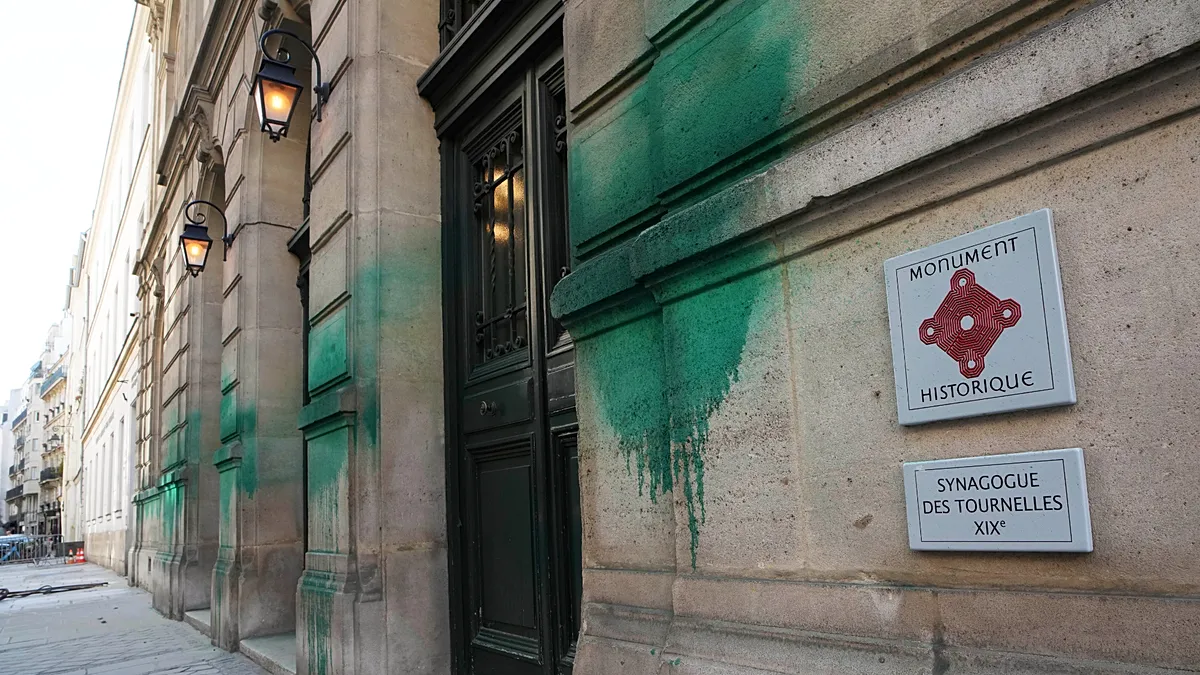
Most antisemitic acts target individuals, with 890 incidents recorded in 2025, representing 67% of all such cases. These include verbal threats, physical assaults, and vandalism, with 576 incidents involving threatening remarks, 402 linked to graffiti, 126 physical attacks, and 117 acts of property damage. The ministry attributes the persistence of antisemitism to the spread of aggressive speech on social media, particularly among younger generations, who have become more exposed to extremist ideologies.
Rising Tensions Across Faiths
Anti-Christian acts have also seen a steady increase since 2010, peaking in 2018 with 1,063 incidents reported. The pandemic caused a temporary slowdown, with numbers easing between 2019 and 2021, but the trend reversed in 2024. In 2025, the total count rose by 9% compared to 2024, driven by a 70% jump in individual-targeted attacks. These incidents include both assaults and threats, with physical violence against Christian leaders seeing a doubling in 2025, reaching 23 cases from 11 the previous year.
The report highlights that 14 of these attacks were specifically directed at religious leaders, marking a fourfold increase in a single year. While property damage still accounts for 87% of reported anti-Christian acts, the shift toward personal attacks indicates a deepening of religious intolerance. The ministry also notes that the Catholic community remains the primary target, with 817 incidents recorded in 2025, underscoring the ongoing challenges faced by France’s Christian population.
Anti-Muslim acts, though less frequent than antisemitism or anti-Christian violence, have shown a consistent upward trajectory. The ministry points to the broader social climate as a contributing factor, with the Israel-Hamas conflict amplifying existing prejudices. However, these acts constitute only 14% of the total anti-religious incidents, highlighting the disparity in how different faiths are perceived and targeted.
“Physical assaults targeting members of the Christian community doubled in 2025, with 23 incidents recorded, compared with 11 in 2024,” the report notes. “They consist mainly of physical attacks on leaders of places of worship (14 incidents), whose number quadrupled in a single year.”
France’s government has also drawn attention to the growing threat posed by anti-Muslim acts. While they remain a smaller portion of the overall statistics, their rise reflects a broader pattern of hostility toward religious minorities. The report underscores that the combined impact of antisemitism and anti-Christian violence has created a fractured societal landscape, where religious identity is increasingly seen as a point of conflict.
One particularly poignant example from 2025 was the murder of Ashur Sarnaya, a 45-year-old Iraqi Christian, in Lyon on September 10. His death, which occurred during a time of heightened tensions, illustrates the real-world consequences of religious hatred. The ministry also recorded an 86% increase in incidents disrupting religious services and threatening worshippers, with 54 such cases reported in 2025 compared to 29 in 2024.
Looking back at the broader context, the report reveals that the proportion of anti-religious acts has shifted over time. Christianity and Judaism have historically been the primary targets, but the data suggests that Islam is now gaining ground in terms of perceived hostility. This trend raises concerns about the evolving nature of religious discrimination in France, as the country grapples with the legacy of the 2023 conflict and its societal ripple effects.
The Interior Ministry’s findings serve as a stark reminder of the challenges facing religious minorities in France. By highlighting the specific causes and consequences of these acts, the report aims to galvanize public awareness and encourage measures to combat rising religious intolerance. Its message is clear: the hostility directed at France’s faith communities is no longer a passing phenomenon but a persistent threat to national unity and social harmony.
In conclusion, the surge in anti-religious acts underscores a deepening divide in French society, with each faith community experiencing unique pressures. The government’s call to action is urgent, emphasizing the need to address the root causes of religious hatred, including the influence of extremist narratives on social media. As the data shows, the trajectory of these acts is alarming, with the potential to reshape the cultural and religious fabric of the nation in the years ahead.