Finland Charges Mother with Trafficking Over Syria Case
Usagevpn.com – Finland charges mother with trafficking after prosecutors formally indicted a woman in her 40s on two counts of aggravated human trafficking. The National Prosecution Authority confirmed the filing on Thursday, closing out a decade-long inquiry that began in 2014 and tracked the fate of her children in territories once controlled by the Islamic State group in Syria. The case lands in a court already familiar with the fallout from Western families who traveled east to join a jihadist caliphate and found themselves stranded in displacement camps with no clear path home.
How the Family Ended Up in a Syrian Camp
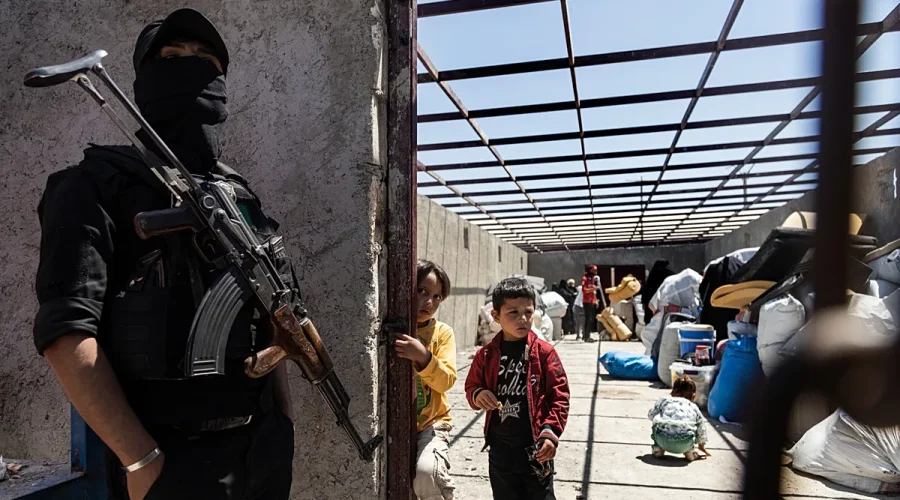
According to the preliminary police investigation, the woman — a Finnish-Russian national residing in Finland — first brought her children into Syria in 2014, the year IS exercised territorial control across large parts of eastern Syria and western Iraq. Over subsequent years the family was relocated to the Al-Hol camp in Hasakah province, a sprawling displacement site in northeast Syria that at its peak sheltered tens of thousands of people, including thousands of foreign nationals and their children.
Life at Al-Hol was widely documented as austere. Families occupied temporary shelters with unreliable access to clean water, medical care, and schooling. For children who arrived as toddlers or young school-age kids, those years constituted an entire childhood shaped by conditions far removed from any European welfare standard.
Prosecutors Frame the Case Around Children’s Rights
Detective Chief Inspector Jan Aarnisalo, who supervised the investigation through its completion last year, described the situation in terms that go beyond simple displacement. He stated that the children had been subjected to a life in which their
“rights to a safe upbringing could not be met.”
That framing matters legally. Finnish aggravated-trafficking law does not require a commercial transaction or a third-party buyer; it reaches situations in which one person exercises control over another under circumstances that strip away fundamental protections. By bringing her children into a conflict zone and leaving them in a camp environment where basic developmental needs went unmet, the woman’s conduct — as prosecutors interpret it — satisfied the elements of the offense on two separate occasions, one per child.
A Staggered Return and the Question of Accountability
The family’s time in Syria did not end in a single departure. By the close of 2021, the woman and one child had made their way back to Finland; the second child returned at a later date, though the prosecution’s public statement did not specify the precise interval. Both children are now adults, their exact ages undisclosed. Each spent roughly seven to eight formative years outside Finland — years in a camp setting rather than in a Finnish school or community.
The fact that the woman returned alongside one child in late 2021 while the second remained behind raises questions about the sequence of decisions she made during the final phase of the ordeal. Prosecutors treated the two children’s experiences as distinct counts, consistent with the two-charge structure of the indictment.
What Happens Next
The charges have been lodged with the Eastern Uusimaa District Court, which handles criminal matters for the Helsinki metropolitan area and surrounding regions. Under Finnish procedure the case will now move through pre-trial preparation before a trial date is set. The woman will have the opportunity to respond to each count, present evidence, and call witnesses. Given the span of years under investigation and the international dimensions of the facts, proceedings are likely to involve testimony from camp administrators, Finnish consular staff, and possibly the children themselves, now adults able to give direct accounts of their experiences.
This prosecution is not an isolated curiosity. Across Europe, a small but growing number of cases have emerged in which parents who took children to join IS or similar groups have faced civil or criminal scrutiny upon their return. Finnish courts have previously dealt with custody disputes and welfare interventions involving families linked to Syrian camps. The current indictment signals that prosecutors are willing to treat prolonged exposure to a conflict-zone camp as a form of trafficking when the parent exercised decisive control over the children’s movements and living conditions.
Frequently Asked Questions
What exactly are the charges? Two counts of aggravated human trafficking under Finnish criminal law. Each count corresponds to one child and alleges that the mother exercised control over the child in circumstances that deprived the child of fundamental protections for roughly seven to eight years.
Where will the trial take place? The Eastern Uusimaa District Court, which covers the Helsinki metropolitan area and surrounding regions. A trial date has not yet been announced; the case is in the pre-trial preparation phase.
Do the children need to testify? It is possible but not confirmed. Both children are now adults and could give direct accounts. Prosecutors have not indicated whether they will call them as witnesses.
Is this the first case of its kind in Finland? Finnish courts have previously handled custody disputes and welfare interventions involving families linked to Syrian camps, but a criminal trafficking indictment of this specific structure — two counts tied to a parent’s decision to bring children into a conflict zone — appears to be novel.