Brussels Quietly Tracking Unidentified Phenomena in the Sky Since 2023
Usagevpn.com – The European Commission has been paying closer attention to unidentified anomalous phenomena in Earth’s upper atmosphere and beyond than its public statements suggest. A letter from the Commission’s defence department, obtained by journalists, reveals internal monitoring of sky and space observations linked to Malaysia dating back to at least 2023. The correspondence indicates that EU officials are actively tracking the phenomenon and expressing a desire to deepen their investigative capacity, even though no formal EU-wide UAP programme has been announced.
A Malaysian Father and Son Bring the Question to Brussels
The trail begins in October 2022, when a Malaysian father and son — both amateur astronomers whose 2020 discoveries of lunar surface features and activity earned international recognition from space agencies — sent a formal letter to the Commission. Titled “UAP captures in the airspace and deep space using our UV infrared telescope,” the submission included 37 images of sky and space footage, some of which the pair identified as possible UAPs. They directed their questions to Commission President Ursula von der Leyen, asking for an explanation of what they had recorded.
In their letter, the astronomers noted a pattern they found troubling: the objects appeared to fly in close proximity to aircraft and critical infrastructure, including military installations and nuclear facilities.
“All governments simply have no opinions” of these UAPs when confronted about them, the pair wrote, adding that they appear to be flying “very near to aircraft and important targets, such as military and nuclear facilities.”
The duo also reported detecting anomalous signals through local Wi-Fi frequency networks, suggesting the phenomena may interact with or emit electromagnetic signatures detectable at ground level.
Brussels Responds: Limited Authority, but a Willingness to Look
The Commission’s reply acknowledged that, because the sightings occurred over Malaysian airspace, it had no direct jurisdiction to investigate. Nevertheless, it signalled intent to propose to its 27 member states an expansion of its capacity to detect objects in the space environment surrounding Earth.
“This is partly to help us better identify the UAPs that you have seen and the many pieces of space debris that endanger the many uses of space,” the Commission stated. “We do not claim that in the future this will solve all cases like those you have reported, but maybe some of them.”
Internally, the Commission’s defence department went further. A subsequent letter, pertaining to the same Malaysian observations, stated:
“We are getting better at seeing it (UAPs) and better identifying it as our technological capacities improve, but we need to get even better.”
That phrasing — “even better” — suggests an ongoing internal effort to refine detection and classification methods, well beyond what has been communicated publicly.
From UFO to UAP: A Terminological Shift with Political Weight
The label “unidentified anomalous phenomenon” replaced the older “unidentified flying object” in August 2020, when the Pentagon stood up a dedicated UAP Task Force to examine inexplicable occurrences in restricted US airspace. The rebranding was deliberate: officials wanted to shed decades of pop-culture stigma attached to “UFO” and to broaden the scope of what investigators would examine, including non-aerial anomalies.
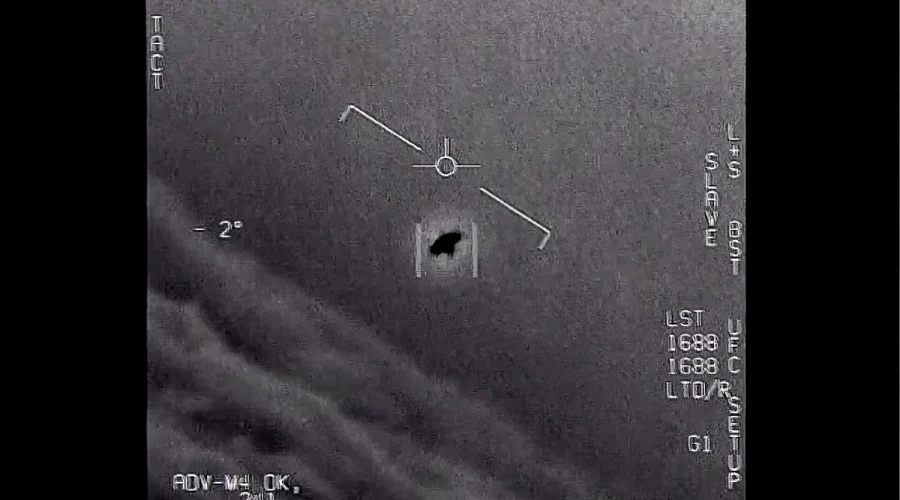
The topic gained serious institutional momentum after a 2017 New York Times report disclosed that US defence department files contained UAP footage from military flights, subsequently released by the US Navy. Since then, Washington has declassified multiple confidential files and established a UAP Science Council chaired by Avi Loeb, a theoretical physicist specialising in astrophysics and cosmology at Harvard University.
A landmark hearing before the US House Oversight Committee’s National Security Subcommittee took place on 26 July 2023. Testimony centred on national security implications and explosive allegations of classified government programmes that retrieve and reverse-engineer UAPs, according to the US government.
France Leads in Europe; the Rest of the Bloc Lags
Within the EU, discussion of UAPs remains circumscribed and carries a residual stigma. France stands alone among member states with a dedicated, state-funded monitoring and investigation body: the Study Group and Information on Non-Identified Aerospace Phenomena, commonly called GEIPAN. Operating since 1977, GEIPAN has analysed more than 3,300 cases. Exactly 106 investigations have been classified as unexplained after thorough analysis, while another 1,014 remain unresolved due to insufficient data.
The contrast with the United States is stark. Where Washington has released confidential files, convened congressional hearings, and created a science council, the EU has yet to articulate a comparable institutional framework. The Commission’s internal correspondence now suggests that framework may be taking shape, at least in embryonic form, driven partly by external pressure from citizen astronomers and partly by the practical need to manage an increasingly crowded orbital environment.
Wider Implications for European Space Policy
The Commission’s stated interest in improving detection of objects in Earth’s space environment dovetails with existing EU priorities around space debris mitigation and orbital sustainability. A growing catalogue of unexplained objects — whether natural, technological, or otherwise — complicates collision-avoidance planning for satellites, crewed missions, and launch operations. If even a small fraction of reported UAPs represent untracked hardware or novel propulsion systems, the implications for European space infrastructure and defence readiness would be significant.
The Malaysian astronomers, for their part, also reached out to NASA, the director general of the Malaysian Nuclear Agency Abdul Rahim Harun, the Malaysian Ministry of Science, Technology & Innovation, and the Canadian Department of Defence. All entities politely declined to engage with the appeal. Former Canadian MP Larry Maguire, who was individually approached by the pair, offered encouragement in a June 2022 email:
“I suspect that more and more people around the world will be turning their attention to the skies and will be collecting even more data and recordings in the coming year. At the end of the day, the skies aren’t classified, and as more information is collected, it will lead to more public awareness of the issue.”
Whether Brussels moves from quiet internal monitoring to a visible, structured programme remains to be seen. What is clear from the documents is that the question is no longer being ignored at the highest levels of the EU executive — and that the Commission believes its own technological trajectory is, incrementally, making the skies easier to read.
Related Reading
Frequently Asked Questions
What is Exclusive?
Exclusive is the main topic of this guide. The article explains the context, practical details, and next steps readers should understand.
Why does Exclusive matter?
Exclusive matters because readers are looking for a useful answer, not just a short summary. Good content should match search intent and help them decide what to do next.