Rajoy’s “Without Frenchmen” Remark Ignites Debate Over French Football Identity
A Controversial Column Stirs International Discussion
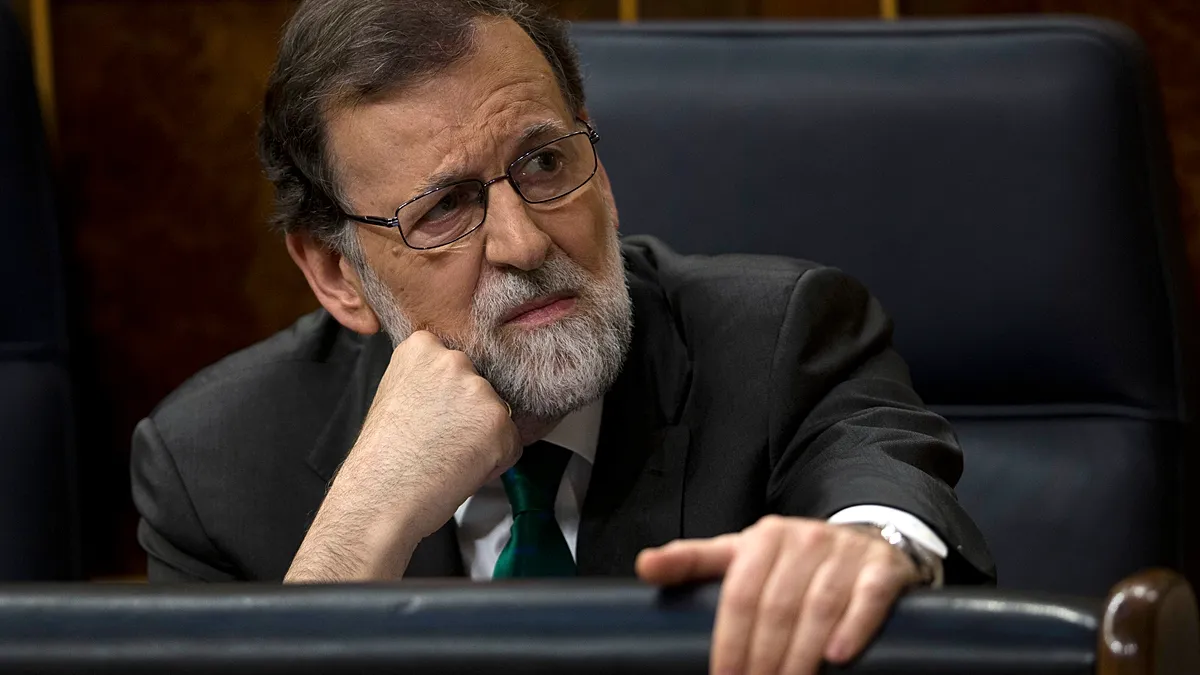
Ex Spanish PM Rajoy – Mariano Rajoy, the former leader of Spain’s government, has generated significant discussion following his assertion that the French national football squad competes without native-born players. The observation appeared in his newest World Cup analysis published by El Debate, a newspaper where he has contributed commentary after each of Spain’s tournament fixtures. His piece, bearing the title “Hoy llegó el desquite” which translates to “today was the day for revenge,” examined Spain’s 2-1 quarterfinal triumph against Belgium while previewing the upcoming semifinal clash against Didier Deschamps’ French side scheduled for Tuesday evening at 9 pm Central European Time.
The former conservative politician, who governed Spain from 2011 through 2018, delivered his observation within this competitive framework. Having first recognized France’s status as two-time world champions and their perfect record of winning every match at the current tournament, Rajoy praised their “top-tier squad” before appending the provocative statement “but without Frenchmen.” This remark clearly alluded to the considerable number of French squad members who possess immigrant heritage or originate from territories that once belonged to the French colonial empire.
Despite the perception that France lacks native players, statistical evidence reveals a different picture. Among the twenty-six athletes selected by Deschamps for the championship, merely three were born outside French borders. Michael Olise entered the world in London, son of a British-Nigerian father and a French-Algerian mother. Marcus Thuram was born in Parma, Italy, while his father, the celebrated French footballer Lilian Thuram, was competing in Italian leagues. Brice Samba, the third non-native-born player, hails from the Democratic Republic of the Congo.
Political Reactions Span Continents
The response to Rajoy’s column came swiftly from both sides of the Channel. On Spanish television, José Cepeda, a Member of the European Parliament representing the ruling left-wing PSOE Party, characterized the comments as “racist and xenophobic,” expressing that it was “shameful” for Rajoy to speak in such a manner. French social media platforms experienced a wave of responses, with numerous political leaders offering their perspectives.
Aurore Bergé, France’s Minister Delegate for Equality between Women and Men and for the Fight against Discriminations, took to the social media platform X to declare that “the repeated racist outbursts are intolerable. It’s time they stop and that sports return to being sports: a space where we are judged on our talent and no other criterion.” Meanwhile, Fabien Roussel, the national secretary of the French Communist Party, demanded that Rajoy be “condemned” in his own X post. Roussel drew parallels between Rajoy’s statements and recent remarks made by a Paraguayan politician regarding France’s premier striker, Kylian Mbappé.
Those earlier comments concerning Mbappé prompted the Paris prosecutor’s office to initiate an investigation for “aggravated public insult” following a formal complaint submitted to Paris’s National Center for Combating Online Hate. Roussel wrote, “They just can’t help but spout vile racism in a bid to rile up our wonderful French team.” The Élysée Palace did not provide an immediate response when contacted by Euronews for comment.
A Long-Standing National Conversation
Rajoy’s observations connect to an enduring dialogue concerning French football and immigration that traces its roots to France’s inaugural World Cup victory in 1998. That celebrated squad included Zinedine Zidane, Lilian Thuram, Marcel Desailly, and Patrick Vieira, all of whom contributed to Les Bleus’ championship success. The team showcased numerous athletes with immigrant backgrounds or relatives from former French colonies, earning recognition as a powerful emblem of French multiculturalism.
At that time, Jean-Marie Le Pen’s National Front contended that the team failed to genuinely represent France, arguing it was “artificial” to incorporate foreign-born players and present them as the French national team. These positions, broadly dismissed as racist during that era, have periodically resurfaced within French political discourse, frequently linked to broader conversations regarding immigration and national identity.
The current controversy arrives at a particularly significant moment. Spanish Prime Minister Pedro Sánchez is scheduled to travel to Paris on Tuesday for the traditional 14 July Bastille Day celebrations. This visit coincides with the World Cup semifinal between France and Spain, which will be contested in Dallas on the same day.