EU Still Can’t Prove €43 Billion in Home Renovation Funds Actually Saved Energy
EU still can t prove 43 billion – The European Union’s post-pandemic recovery program has allocated €43 billion to enhance the energy efficiency of private homes, yet a critical report from the European Court of Auditors (ECA) reveals that this initiative has not achieved its primary goal of maximizing energy savings. Published on Tuesday, the report criticizes the Recovery and Resilience Facility (RRF) for its lack of effectiveness in tracking results, ensuring cost-efficiency, and delivering tangible environmental benefits. According to the ECA, the program’s design has allowed funds to flow toward projects that are easier to implement rather than those with the greatest potential to reduce energy use. This has raised concerns about whether the money is being spent wisely to meet Europe’s climate targets.
Audit Report Highlights Key Failings
The European Court of Auditors’ findings underscore a systemic issue: while the RRF expanded investment in home renovations, it prioritized politically expedient solutions over transformative projects. Nikolaos Milionis, a lead auditor, emphasized that the program should target renovations with the highest energy-saving potential, such as deep retrofits or comprehensive insulation. However, the report notes that many projects were approved based on eligibility criteria alone, without evaluating their long-term impact. This approach has led to a situation where funding is not always directed toward the most impactful initiatives, according to Milionis.
“EU renovation funding for private homes should go to those projects with the greatest potential for cutting energy use. However, we saw all too often that Recovery and Resilience Facility (RRF) funds went where they were easiest to spend, not where they would make the biggest difference,” said Milionis.
The ECA’s analysis also points to a lack of rigorous monitoring. Despite the program’s official focus on performance-based outcomes, the Commission and participating governments failed to systematically track how much energy was saved per euro invested. This oversight has created a gap between the program’s goals and its actual results. For instance, the report highlights that some countries used standard assumptions about energy consumption to estimate savings, which may not reflect real-world behavior. Such discrepancies have led to significant overstatements in reported energy reductions, raising questions about the accuracy of the program’s claims.
Raised Concerns About Long-Term Climate Goals
The RRF’s design has been criticized for favoring short-term, less complex projects over the deep renovations necessary to achieve Europe’s climate ambitions. While the initiative has boosted overall renovation activity, it has delayed more ambitious efforts that could significantly cut energy use. These include comprehensive insulation of buildings and retrofitting measures capable of reducing energy consumption by over 60 percent. The ECA warns that the current approach may not be sufficient to decarbonize the EU’s housing stock, which accounts for 25 percent of the bloc’s total energy consumption.
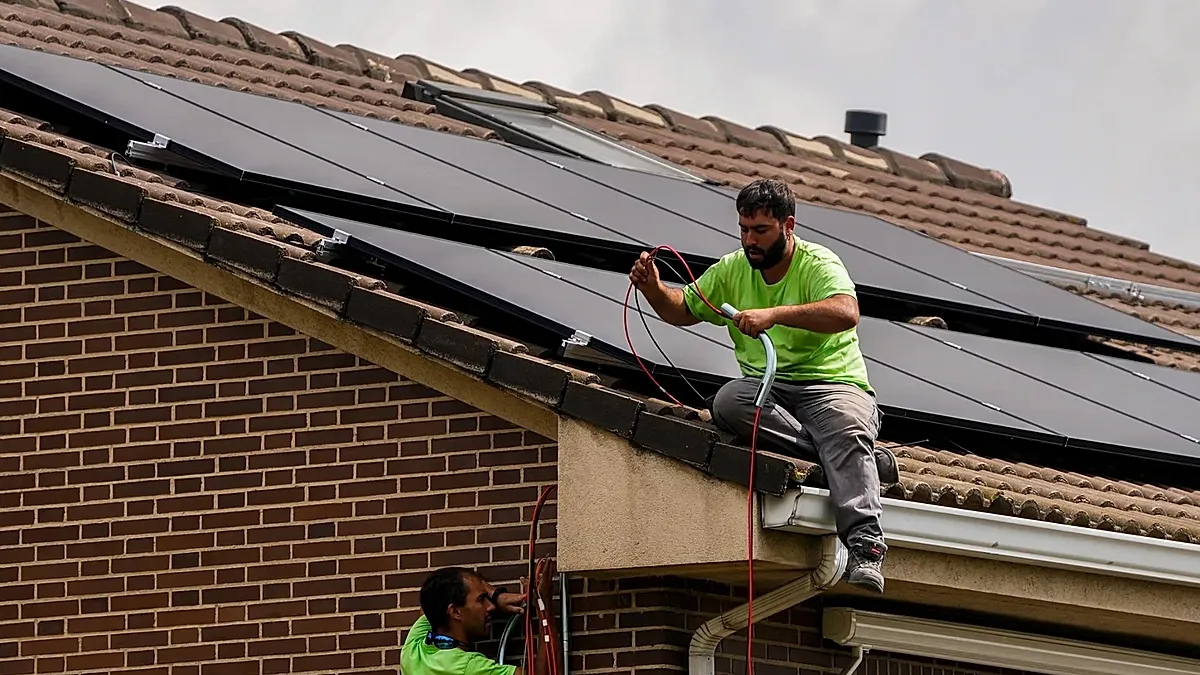
Heatwaves in recent years have exposed the vulnerabilities of Europe’s aging housing stock, turning many structures into energy traps. The report suggests that the RRF’s structure has unintentionally pushed governments to prioritize projects that can be completed by the 2026 deadline, such as solar panel installations or boiler upgrades. These projects, while beneficial, are not as impactful as deeper energy-saving measures that require more time and resources. As a result, the program has not fully addressed the structural inefficiencies that contribute to the EU’s energy challenges.
Measurement Challenges and Performance Gaps
The ECA report also challenges the Commission’s reliance on Energy Performance Certificates (EPCs) to assess the success of renovation efforts. These certificates, designed to estimate energy savings, are based on standard assumptions about building usage rather than actual consumption patterns. The auditors argue that real household behavior varies widely, leading to a substantial “performance gap” between theoretical estimates and actual outcomes. This gap has been particularly evident in the four EU countries reviewed: Belgium, Italy, Cyprus, and Lithuania.
“Projects were often approved based on eligibility criteria alone, without comparing them to prioritize those with the highest energy savings,” Milionis added.
In some cases, theoretical energy consumption figures exceeded real-world usage by hundreds of percent, suggesting that reported savings may be inflated. For example, in Italy, the widely publicized Superbonus scheme reimbursed homeowners for up to 110 percent of renovation costs, creating a surge in demand. However, this approach has also led to inflated expenses, with taxpayers facing an estimated €123 billion in additional costs. The report warns that such discrepancies could distort spending decisions and reduce public accountability for the program’s outcomes.
Impact on EU’s Electrification Ambitions
Green groups have pointed out that the RRF’s shortcomings contrast with the EU’s broader electrification goals. While the Commission aims to increase clean electricity production, the report suggests that it has overlooked the importance of reducing overall energy demand. This focus on supply rather than demand could undermine long-term climate strategies, as energy consumption in buildings remains a major challenge. The ECA’s findings indicate that without better monitoring of cost-effectiveness and energy-saving potential, the program may not align with the EU’s vision for a sustainable energy future.
The audit also highlights the need for more transparent reporting mechanisms. Currently, there is no standardized way to measure how efficiently funds are being used to achieve energy savings. The ECA’s independent calculations reveal significant variations between countries and schemes, with some projects offering greater returns than others. This lack of uniformity has made it difficult to assess the program’s overall effectiveness and to identify areas for improvement.
As the EU moves forward with its recovery efforts, the ECA’s report serves as a wake-up call. It underscores the importance of refining the RRF’s framework to ensure that it not only stimulates renovation activity but also delivers the structural improvements necessary for long-term energy efficiency. By addressing these gaps, the Commission can better align its investments with the climate objectives that are critical for Europe’s sustainability goals.
Call for Systemic Reforms
Experts and stakeholders have called for systemic reforms to the RRF’s design and implementation. Key recommendations include shifting the focus toward more comprehensive renovations, adopting real-time monitoring of energy savings, and revising the criteria for project selection. The report also stresses the need for greater transparency in how energy performance data is collected and analyzed. Without these changes, the EU risks investing billions in initiatives that fail to produce the desired environmental impact.
The findings of the ECA report are particularly relevant as the EU seeks to meet its climate targets. By prioritizing projects that are easier to implement, the RRF may have created a short-term solution that does not address the deeper challenges of energy consumption. The Commission now faces the task of re-evaluating its approach to ensure that future investments in home renovations are both effective and efficient. This will require a more rigorous assessment of energy-saving potential and a commitment to long-term sustainability over immediate political gains.