EU energy independence strategy faces mounting implementation gaps
Usagevpn.com – The European Union has sharply reduced its purchases of Russian fossil fuels since Moscow’s full-scale invasion of Ukraine, but a major effort to turn that break into lasting energy independence is struggling to meet its objectives. A new audit by the European Court of Auditors finds that REPowerEU, launched in 2022, has not delivered progress at the scale envisioned when the programme was created.
The plan was designed to end the bloc’s reliance on Russian energy while speeding up renewable deployment, energy savings and the construction of a more connected European power system. Its strategic importance has only grown amid geopolitical uncertainty and volatile energy markets. Yet auditors conclude that the gap between the programme’s ambitions, financing and practical delivery remains substantial.
Russian imports have dropped, but causes are broader than policy
Russian oil imports have fallen steeply following EU sanctions, while gas imports have also declined. The European Commission says REPowerEU helped cut EU imports of Russian natural gas from 152 billion cubic metres in 2021 to 36 billion cubic metres in 2025. Over the same period, Russia’s share of EU gas imports dropped from 45% to 12%.
However, the auditors warn that this reduction should not be treated as the direct result of REPowerEU alone. Lower demand was also influenced by unusually mild winters and by households and companies reducing consumption in response to high energy prices.
“In our view, other factors also contributed to lower gas consumption – and consequently imports – which are not causally linked to the REPowerEU plan. These include mild winters, as well as reduced consumption by households and businesses in response to high energy prices,” the audit states.
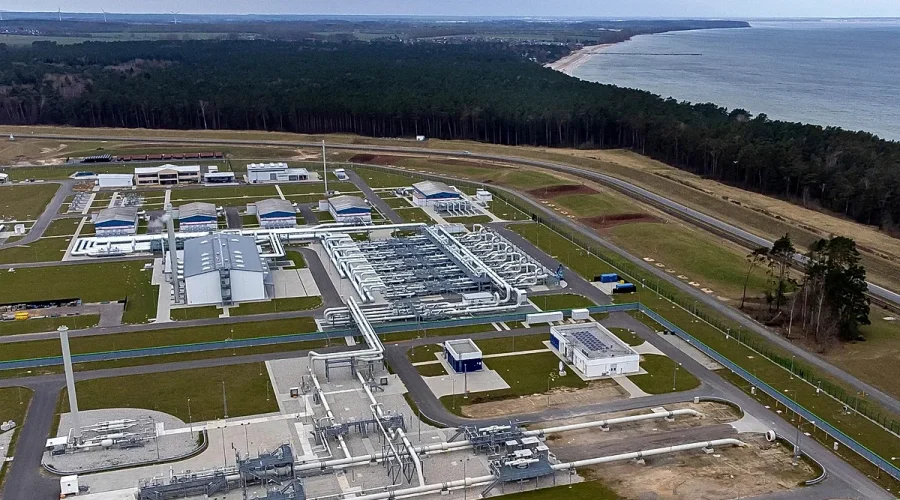
The 2022 sabotage of the Nord Stream pipelines added further urgency to Europe’s effort to diversify supplies. The attack disrupted a key route for Russian gas and underlined the exposure of fossil-fuel infrastructure to geopolitical risks. It also reinforced the case for building an energy system less dependent on any one external supplier.
The EU has retained limited exceptions under its restrictions, but the remaining phase-out timetable is approaching. Russian liquefied natural gas imports are set to end on 1 January 2027, followed by Russian pipeline gas in September 2027.
Renewables and electricity grids remain the central weakness
For the EU, ending purchases from Russia is only part of the challenge. A durable shift requires enough domestic clean electricity generation, storage, flexibility and transmission capacity to replace imported fossil fuels without creating a new vulnerability elsewhere.
The audit identifies renewable capacity and grid infrastructure as the most serious shortcomings. REPowerEU included a goal of 103 gigawatts of additional renewable energy capacity, yet the auditors describe the capacity directly attributable to its measures as negligible in comparison with that target.
This comes despite a rapid wider expansion of solar and wind across the bloc. More than 200 GW of solar and wind capacity was added between 2022 and 2024, demonstrating strong momentum in the energy transition. But the auditors distinguish between overall market and policy developments and the specific contribution of the REPowerEU programme.
Electricity interconnections between member states are another concern. Cross-border grids allow countries to share power when renewable generation is high in one region and demand is stronger elsewhere. Without sufficient links, surplus electricity can be curtailed — meaning available renewable output is switched off — while prices can fall sharply or even turn negative.
Portugal and Spain, alongside the Commission, have repeatedly highlighted grid development as a barrier to a fully integrated European energy market. The issue matters for consumers and businesses as well as climate goals: renewable projects cannot deliver their full value if power cannot reach the areas where it is needed.
Funding available, but much of it remains unused
Financial uptake has also been slower than expected. REPowerEU made €300 billion in additional funding available through the EU recovery fund. Member states have committed €54.3 billion, less than one-fifth of the investment initially considered necessary to fulfil the programme’s goals.
Auditors said some national governments find it less attractive to use EU loans when they can borrow independently. Administrative complexity has also affected decisions, while grants can be more appealing because they do not add to national debt in the same way as loans.
The Commission maintains that the financing has been essential to advancing REPowerEU priorities. Yet the audit raises a broader question about whether available money can deliver meaningful change if national plans do not translate it into precise projects, targets and deadlines.
National energy and climate plans were intended to turn the EU-level strategy into action inside each member state. The auditors found that many countries included few, or no, specific measures and targets linked to the programme’s clean-energy objectives. That weakens accountability and makes it harder to measure whether public funding is producing the intended results.
Pressure grows to turn strategy into infrastructure
REPowerEU sits alongside the European Green Deal, the EU’s wider strategy to reach climate neutrality by 2050. Brussels used the rupture with Russia as an opportunity to move away from cheap imported fossil fuels and accelerate the transition to cleaner energy. The audit suggests that this opportunity is at risk unless implementation catches up with political commitments.
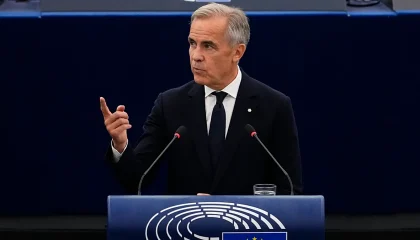
“Four years after its launch, REPowerEU has stalled, even though several hundred billion euros have been made available”, said Mihails Kozlovs, the ECA auditor leading the report.
“We must learn the right lessons now, as the new geopolitical tensions and their impact on energy markets underscore the need to accelerate diversification and prevent future over-reliance on a single supplier.”
The central implication is clear: reducing Russian imports does not automatically guarantee energy security. The EU must pair its supply diversification with faster construction of renewable generation and the grids that connect it. Otherwise, Europe could replace dependence on Russian fossil fuels with reliance on other imported energy sources, imported technologies or fragmented national electricity systems.
For the bloc, the next stage will be less about setting targets and more about delivering permits, transmission lines, interconnectors and investable national plans. The success of that effort will determine whether REPowerEU becomes a lasting transformation of Europe’s energy system or an unfinished response to a crisis.
Related Reading
Frequently Asked Questions
What is EU s plan to gain independence?
EU s plan to gain independence is the main topic of this guide. The article explains the context, practical details, and next steps readers should understand.
Why does EU s plan to gain independence matter?
EU s plan to gain independence matters because readers are looking for a useful answer, not just a short summary. Good content should match search intent and help them decide what to do next.