Ukraine’s Air-Defence Gap Widens as Brussels Weighs Multi-Billion-Euro Patriot Purchase
Usagevpn.com – The skies over Ukrainian cities have grown increasingly dangerous in recent weeks, with Russian forces unleashing barrages of up to 30 ballistic missiles in a single night. Each salvo drains an already exhausted reserve of interceptor missiles, and Kyiv’s most urgent need now centres on replenishing its stock of US-made PAC-3 Patriot systems. In response, the European Commission is reviewing a fresh payment application from Ukraine valued at several billion euros, earmarked specifically for air-defence procurement.
A New Derogation Under the €90 Billion Loan
The mechanism at play is the Ukraine Support Loan, a €90 billion facility that channels European funds into Kyiv’s war effort. A key condition of that loan caps non-European sourcing at 35 percent of any defence product’s value, unless no European alternative exists. Because the Patriot interceptor is manufactured exclusively in the United States, Ukraine must obtain a formal derogation — a waiver from that sourcing restriction — before the Commission can release funds for the purchase.
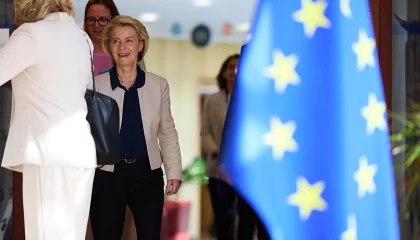
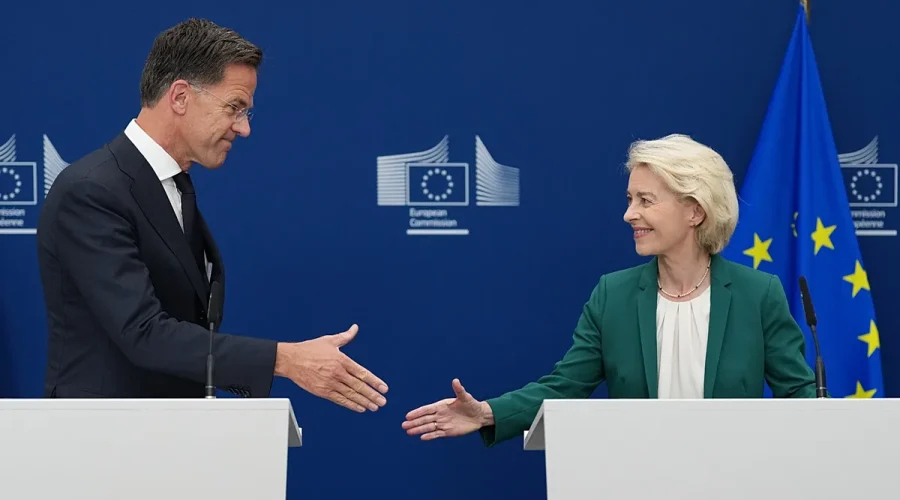
European Commission President Ursula von der Leyen confirmed the existence of the request during a joint press conference alongside NATO Secretary General Mark Rutte:
“We have received a new payment request. It is worth several billion euros and would cover Ukraine’s air defences, including the highly advanced PAC-3 Patriot air defence systems.”
She deliberately withheld the precise figure. A Commission official, speaking on condition of anonymity, explained that publishing the exact sum could have created political pressure on member states to approve the full amount Kyiv sought. The official also noted that no derogations beyond the Patriot-related one were included in this particular payment request.
Why the Patriot Shortage Is So Acute
The Patriot system sits at the top of the global hierarchy for intercepting ballistic missiles, and its production cycle is lengthy. More than four years of sustained combat over Ukraine have consumed vast quantities of interceptors, while the US-Iran conflict earlier this year forced Gulf states to expend large numbers of their own Patriot rounds. The combined effect has left global inventories dangerously thin at precisely the moment Moscow has escalated its missile campaign.
In July, Ukrainian President Volodymyr Zelenskyy quantified the shortfall, stating that Ukraine would require at least 140 Patriot interceptors to counter a single Russian salvo of roughly 70 ballistic missiles. Ukrainian media have since reported that Kyiv has asked the Commission to authorise approximately €2 billion specifically for Patriot interceptor missiles, though the number of rounds purchasable at that price depends on the final contract terms.
NATO’s Potential Role and the Irish Lobbying Effort
A portion of the funding could potentially flow through NATO channels, although bilateral discussions on that point were still under way at the time of reporting. Separately, EU officials used an informal gathering of defence ministers held in Ireland earlier this week to press member states holding meaningful residual stockpiles to share interceptors with Kyiv. So far, that diplomatic push has not yielded the transfers Ukraine needs.
“Member states are currently looking at Ukraine’s request, but I can say it’s going in the right direction,” von der Leyen told reporters.
Political Friction Over Non-European Procurement
The derogation question is not purely technical. France has been ramping up pressure within the bloc to phase out non-European suppliers from European defence contracts, a stance that sits in tension with Ukraine’s immediate operational requirement for American-made interceptors. Ukraine already holds one derogation under the loan for US Patriots and a second permitting the procurement of Chinese drone components — both of which have drawn criticism from member states favouring a more Europe-centric supply chain.
Timeline and Next Steps
National representatives are scheduled to debate the request on Monday, with approval potentially landing as early as the following week. Even after political sign-off, however, the Commission cannot disburse funds until signed procurement contracts are in hand. The administrative pipeline thus adds further weeks to a timeline already compressed by the pace of Russian strikes.
Freya: A Longer-Term European Answer
While the Patriot question addresses the acute gap, von der Leyen also highlighted Freya, a pan-European anti-ballistic-missile defence initiative led by Ukraine’s Fire Point company and involving several European industrial partners. The project is positioned as a structural remedy to Europe’s chronic shortfall in layered air-defence capability, reducing future dependence on single-source American systems.
“Since June, we have issued €8.5 billion for drones and missiles for Ukraine from this loan. And this money would also buy fighter jets from European industry,” she added.
For now, though, the immediate question remains whether Brussels can move quickly enough to keep pace with the missile barrages falling on Ukrainian cities each night.
Related Reading
Frequently Asked Questions
What is EU readies fresh cash for Ukraine?
EU readies fresh cash for Ukraine is the main topic of this guide. The article explains the context, practical details, and next steps readers should understand.
Why does EU readies fresh cash for Ukraine matter?
EU readies fresh cash for Ukraine matters because readers are looking for a useful answer, not just a short summary. Good content should match search intent and help them decide what to do next.