Usagevpn.com – Italy has still not decided how much it will draw from its low-interest defence loans, as domestic factors hold up the decision. Brussels and other capitals are growing impatient, with the clock ticking to reallocate any unspent money elsewhere. Security Action for Europe (SAFE) is the EU's defence financing programme, offering European governments low-interest loans to fill critical gaps in military capacity, including support for Ukraine's war effort.
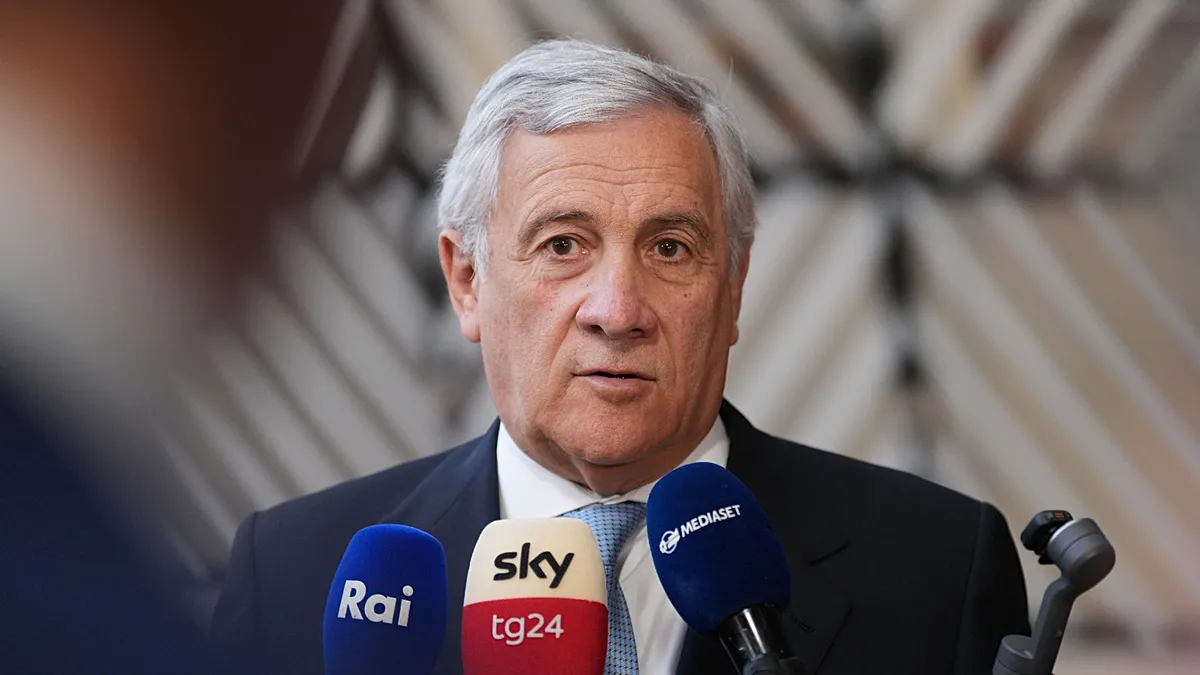
Italy requested €14.9bn in loans under SAFE, swiftly approved by the Commission and the Council. But Rome has yet to sign the loan agreement, unable to decide whether to confirm the full amount. On Tuesday, Foreign Minister Antonio Tajani caused confusion by initially saying Rome would request the full amount, then retracting to clarify that Italy had "reserved" €14.9bn as the maximum it might need.
"SAFE: we booked €14.9bn. How much we will actually use, we will decide at the end of the year. Probably it will be less — six, seven, eight or nine [billion], as [Defence Minister Guido] Crosetto said," Tajani told reporters.
"We have no time to lose. That's the clear position of the European Commission when it comes to SAFE and the SAFE implementation," Commission spokesperson for defence Thomas Regnier said at a press conference on Tuesday. The consternation is testing patience across Brussels and other European capitals.
Seventeen EU countries have finalised their SAFE loans with the Commission, most recently the Czech Republic in July. That leaves Italy the outlier, effectively holding the remaining member states hostage, since they cannot tap into the unspent funds until Rome finalises the paperwork. It also leaves the leftover SAFE funds potentially earmarked for Ukraine clouded by doubt.
Several EU countries, mostly on the eastern flank, have signalled an appetite for additional low-interest loans. Poland and Lithuania, in particular, had both requested more funding than they ultimately obtained under the instrument. The irritation stems from the tight technical timeline left to reallocate unspent funding by year's end, as required under SAFE's legal framework.
Italy would need to submit a revised operational plan based on the new amount — a classified list detailing exactly what it plans to spend the money on. The Commission would then have to launch a second call for the unspent money, estimated at around €10bn, to be reassigned. Frustration is mounting among interested member states, who need clarity on how much funding will be left unspent before deciding where to direct their own requests.
The more time Italy takes to make up its mind, the less they will have to define their own plans. The situation could come to a head in September, when the Commission may be forced to tell Italy it can only reserve a set amount and recommission the rest, to avoid missing the legal deadline. Several factors explain Italy's hesitation.
The country has been grappling with some of the highest energy prices in Europe, its heavy reliance on fossil fuels leaving it especially exposed to the supply shock triggered by the closure of the Strait of Hormuz. As a result, Prime Minister Giorgia Meloni wrote to Commission President Ursula von der Leyen, asking that the energy crisis be granted the same fiscal flexibility as defence spending. The Commission obliged, broadly interpreting the National Escape Clause — which lets governments exceed normal fiscal rules — to also cover spending on structural energy resilience, though not all the emergency measures Rome had sought.
With the situation in the Middle East still volatile — after the US and Iran appeared to reach a framework for a peace deal before hostilities resumed — Italy has not yet requested activation of the clause for energy spending. Rising energy costs could hurt support for Meloni's government, especially if Gulf supply routes remain closed by winter, with Rome heading toward national elections next year. At the same time, the right-wing governing coalition is under pressure as Roberto Vannacci, a former army general and current MEP, has launched a competing hard-right party questioning the government's rise in defence spending.
Deputy PM Matteo Salvini, from whose League party Vannacci recently exited, has requested the matter be discussed in parliament. As a result, the Italian Defence Ministry has a somewhat clear idea of where they want to spend the funding, and Italy's defence contractors are waiting for this money, but there is no final political decision on the total amount. "Should something change budget-wise, then we're in an even more urgent situation, because that money has to be reallocated through a new call to other member states who may wish to take additional loans under SAFE," Commission's Regnier added.
Related Reading
Frequently Asked Questions
What is EU grows impatient over Italy s hesitancy?
EU grows impatient over Italy s hesitancy is the main topic of this guide. The article explains the context, practical details, and next steps readers should understand.
Why does EU grows impatient over Italy s hesitancy matter?
EU grows impatient over Italy s hesitancy matters because readers are looking for a useful answer, not just a short summary. Good content should match search intent and help them decide what to do next.