EU considers stronger tools to counter Russia’s hybrid pressure
Usagevpn.com – European Union officials are considering new ways to respond when Russia applies pressure below the threshold of open military attack, following a series of incidents that have heightened security concerns across Europe’s eastern border.
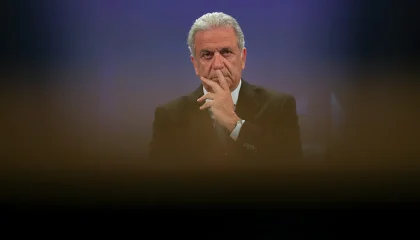
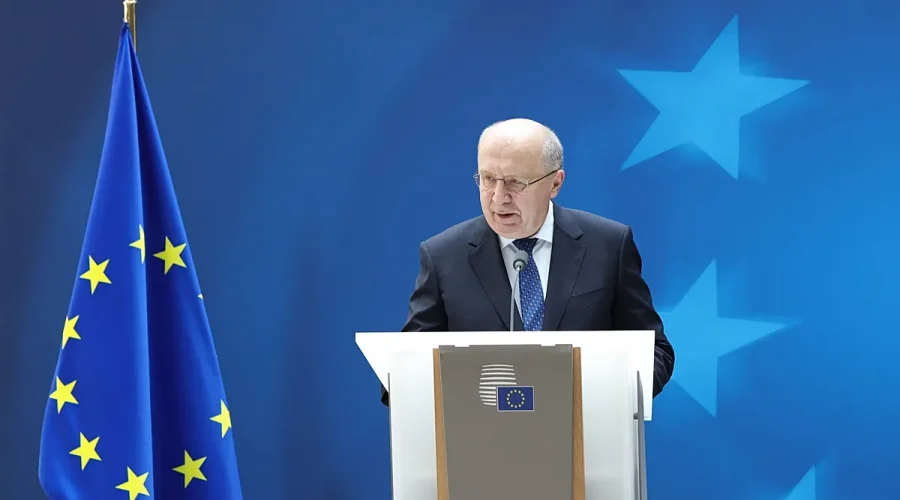
Andrius Kubilius, the European Commissioner for Defence, said the EU should be able to impose real costs on Moscow for actions that fall within the increasingly contested space of hybrid warfare. His comments came as the European Commission develops proposals intended to help member states facing such threats.
“We can find ways for how Russia will pay quite a painful price for their provocations.”
Kubilius said this approach reflects the direction set out by European Commission President Ursula von der Leyen during her State of the European Union speech on Wednesday. She argued that Europe needs a reliable framework for dealing with hostile acts that do not amount to armed aggression but can still endanger national security.
Threats beyond the battlefield
Recent drone incursions have unsettled countries on the EU’s eastern flank. They form part of a wider pattern of threats that can be difficult to classify as conventional warfare. Damage to undersea cables and the use of migration as a means of political pressure have also been cited as examples of activity taking place in this grey area.
Such incidents can test borders, infrastructure, public confidence and the ability of governments to coordinate quickly. They may not trigger the same response as a direct military strike, yet they can still create serious economic and security consequences for individual countries and for Europe as a whole.
During the previous month, the volume of incidents prompted five European Commissioners from the Baltic region to call for a firmer response from the EU executive. Their concern was that countries closest to Russia could face repeated pressure without a sufficiently clear European mechanism for collective action.
Kubilius said the Commission is examining how it can support those countries most exposed to hybrid challenges.
“The European Union is a solidarity union.”
That principle is central to the debate. A hybrid threat aimed at one member state may have consequences beyond its national borders, particularly when it affects transport links, critical infrastructure, energy networks or regional stability. The Commission’s proposed response is designed to make it easier for EU governments to act together rather than treating each event as an isolated national problem.
An Emergency Security Protocol
One of von der Leyen’s proposals is an Emergency Security Protocol, described as a European mechanism that would complement NATO’s Article 4 process. Under NATO rules, Article 4 allows allies to request consultations when they believe their territorial integrity, political independence or security is under threat.
The EU proposal would create its own route for rapid political coordination. If a single member state activated the protocol, all EU countries would gather to organise a joint response, with the aim of limiting the impact of the incident and discouraging additional escalation.
“When triggered by one member state, all member states would convene to coordinate a European response, to deter further escalation and to mitigate the impact.”
The practical value of such a protocol would depend on how quickly it can be used and what measures governments agree to take once it is activated. The proposal is intended to fill a gap created by actions that are hostile and disruptive but do not clearly meet the definition of an armed attack.
European officials are also focused on the changing character of the war in Ukraine. Valdis Dombrovskis, the European Commissioner for the Economy, pointed to the growing importance of drones in modern conflict and the need for Europe to improve its ability to defend against them.
“We see the war in Ukraine has been turned into a drone war and Russia is producing millions of drones a year. We need to strengthen our drone defence capabilities.”
Drone defence has become a major concern because unmanned systems can be relatively inexpensive, difficult to detect and capable of reaching targets far from a conventional front line. Better detection, protection of critical sites and closer coordination between governments are likely to be part of the wider European security discussion.
A proposed European Security Council
Von der Leyen also raised the possibility of establishing a European Security Council, a leaders’ forum that would bring together EU countries and selected partners outside the bloc. Ukraine, the United Kingdom, Norway and Canada were identified as like-minded countries that could participate.
The proposed body would offer a regular setting for leaders to address major security questions affecting the continent. These include Russia’s increasingly assertive conduct and uncertainty surrounding the United States’ role in Europe’s security architecture.
“For a long time, we have discussed a leaders’ format focused on the security of our continent. This is even more urgent now, given the nature and scale of the risks at play.”
Ukrainian President Volodymyr Zelenskyy already attends European Council meetings on a frequent basis. A dedicated council could formalise that type of engagement and provide a more consistent structure for high-level security discussions with partners.
Its relationship with NATO will be closely watched. NATO has existed for 77 years, and 23 EU member states are also NATO allies. Any new European format will need to demonstrate that it strengthens rather than duplicates the alliance’s work.
Dombrovskis said the proposed council should reinforce NATO, not rival it. A NATO official similarly welcomed greater efforts by European allies and partners to contribute to shared security, while stressing that the alliance remains the foundation of collective defence.
“NATO is the bedrock of our collective defence and we will continue to work closely with the EU in pursuit of our shared agenda – including to ramp up defence industrial production and to ensure continued support to Ukraine.”
The emerging proposals signal a broader effort to make Europe more prepared for security challenges that are harder to identify, attribute and deter than traditional military attacks. Whether through rapid consultations, support for exposed member states or a new leaders’ forum, the central objective is to ensure that hybrid pressure does not go unanswered.
Related Reading
Frequently Asked Questions
What is EU defence chief says a painful?
EU defence chief says a painful is the main topic of this guide. The article explains the context, practical details, and next steps readers should understand.
Why does EU defence chief says a painful matter?
EU defence chief says a painful matters because readers are looking for a useful answer, not just a short summary. Good content should match search intent and help them decide what to do next.