Iceland’s Narrow No Sets the Stage for a Continent-Wide Question: Should Europe Keep Growing?
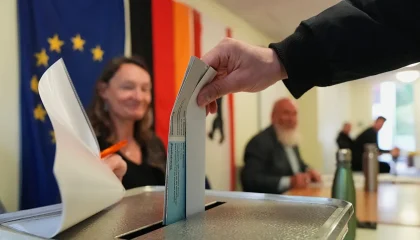
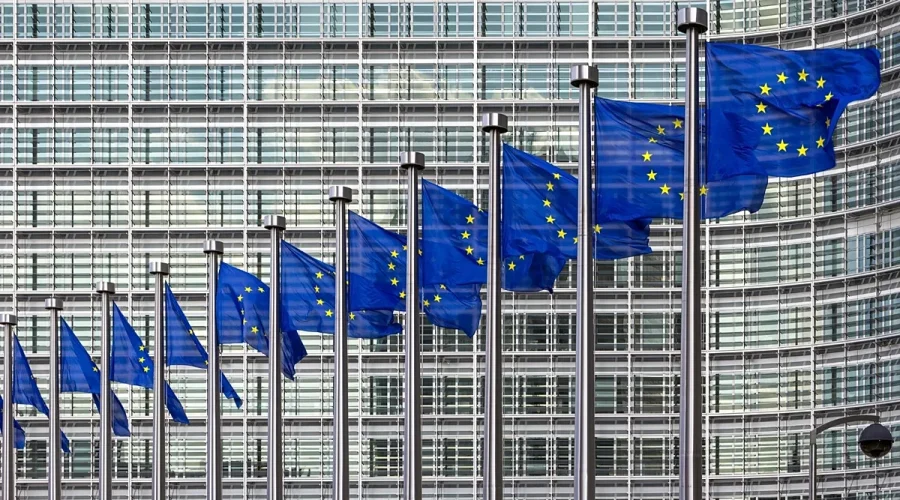
Usagevpn.com – Icelanders have spoken, and the margin was razor-thin. In a referendum that split the island nation almost perfectly down the middle, 52.8 percent of voters rejected membership in the European Union while 47.2 percent voted in favour. The result, delivered in a climate of economic anxiety and sovereignty debate, lands at a moment when Brussels is pushing harder than ever to widen the bloc’s borders.
The timing is not accidental. Since Russia launched its full-scale invasion of Ukraine in February 2022, the geopolitical calculus surrounding European integration has shifted dramatically. What once looked like a slow, bureaucratic expansion exercise now carries the weight of continental security. Nine countries hold official candidate status — among them Ukraine, Moldova, Albania, Montenegro, and several Western Balkan states — while Kosovo is treated as a prospective candidate awaiting formal designation. For Kyiv and Chisinau in particular, the prospect of eventual EU membership has become both a political anchor and a wartime morale instrument.
Why Brussels Wants More Neighbours Inside
The European Commission frames enlargement on two tracks simultaneously. On the economic side, each new member enlarges the single market, deepens trade flows, and extends the reach of common regulatory standards. On the political side, accession is treated as a lever for democratic consolidation: candidates must adopt acquis requirements spanning rule of law, judicial independence, minority rights, and environmental protection before they can sit at the table. In this reading, enlargement is not merely about territory or GDP; it is a mechanism for exporting and entrenching liberal democratic norms across a neighbourhood that has, in recent years, seen authoritarian backsliding accelerate.
Public appetite appears to back the ambition. A majority of European citizens — roughly 56 percent in recent pan-European surveys — express support for further enlargement. Yet that support coexists with a well-documented scepticism about the practical costs. Every additional member state dilutes voting weight, stretches the budget, and multiplies the number of veto points in a system already strained by unanimity requirements.
The Machinery of Accession: 33 Chapters, Six Clusters, One Unanimous Vote
The path from candidate to member is neither short nor simple. Applicants must bring their national legislation into conformity with EU law across 33 policy chapters, organised into six thematic clusters covering everything from agriculture and fisheries to justice, freedom, and security. Negotiations proceed chapter by chapter, with each area opened and provisionally closed only after the Commission and member states judge the candidate sufficiently aligned. The process can take a decade or more; Croatia, the most recent entrant, completed its accession in 2013 after roughly a decade of negotiations that began in 2004.
Even after all chapters are closed, the final gate belongs to the member states themselves. Accession treaties require unanimity across all 27 current members. A single national veto — whether driven by bilateral friction, domestic electoral politics, or strategic calculation — can stall an enlargement round indefinitely. This structural feature means that enlargement is never purely a technocratic exercise; it is always also a test of political will among existing members.
The Costs Nobody Can Ignore
Expansion is not without friction. The EU budget, already under pressure from cohesion-funding commitments to older, poorer members, would absorb additional net contributors and net recipients simultaneously. Decision-making in a 30-, 35-, or 40-member council grows exponentially harder, particularly in areas requiring unanimity. Disputes over agricultural subsidies, structural-fund allocations, and the balance of institutional influence between capitals tend to intensify as the table grows. Critics argue that the bloc risks becoming ungovernable; proponents counter that a larger, more integrated Europe is better positioned to compete with the United States, China, and emerging powers in trade, technology, and defence.
The question of capacity is equally pressing. Can the European Parliament, the Commission’s directorates, and the Court of Justice absorb the legislative and judicial workload of several additional member states without degrading the quality of oversight? Can the single market’s regulatory architecture — built over decades of incremental harmonisation — absorb new economies with very different levels of development, without creating permanent structural distortions? These are not hypotheticals; they are the daily arguments inside trilogue negotiations and intergovernmental conferences.
What Happens Next
Iceland’s vote does not close the door permanently — the country retains the option to reapply — but it does illustrate the fragility of public consent in a single nation. Enlargement cannot proceed on the basis of elite commitment alone; it requires sustained domestic majorities in both candidate and member states. That requirement makes the political environment in each country, from Bucharest to Bratislav to Brussels, a variable that no treaty text can eliminate.
As Europe confronts the strategic challenges of the coming decade — from securing its position in the age of artificial intelligence to managing energy transition and demographic decline — the question of whether to admit new members will not fade. It will sharpen. The answer, ultimately, rests not with technocrats in Luxembourg or negotiators in Kyiv, but with voters in every capital, Icelandic and otherwise, who must decide whether the project of shared governance still earns their trust.
Should the EU open its doors for more countries to join? Is the accession process strict enough? Our poll is anonymous and takes only a few seconds to complete. The results will be featured across our EU-wide coverage — in videos, articles, and newsletters — and will help shape our reporting as we examine how Europe can secure its position in the age of artificial intelligence.
Participation is open to all readers. No account is required; responses are aggregated and published without attribution. Your answer, however brief, becomes part of a continental conversation about the shape of Europe’s future.
Related Reading
Frequently Asked Questions
What is Does the EU need more member?
Does the EU need more member is the main topic of this guide. The article explains the context, practical details, and next steps readers should understand.
Why does Does the EU need more member matter?
Does the EU need more member matters because readers are looking for a useful answer, not just a short summary. Good content should match search intent and help them decide what to do next.