Numbered Stones in Ceuta: The Quiet Burial of 18 Men Who Never Got Their Names Back
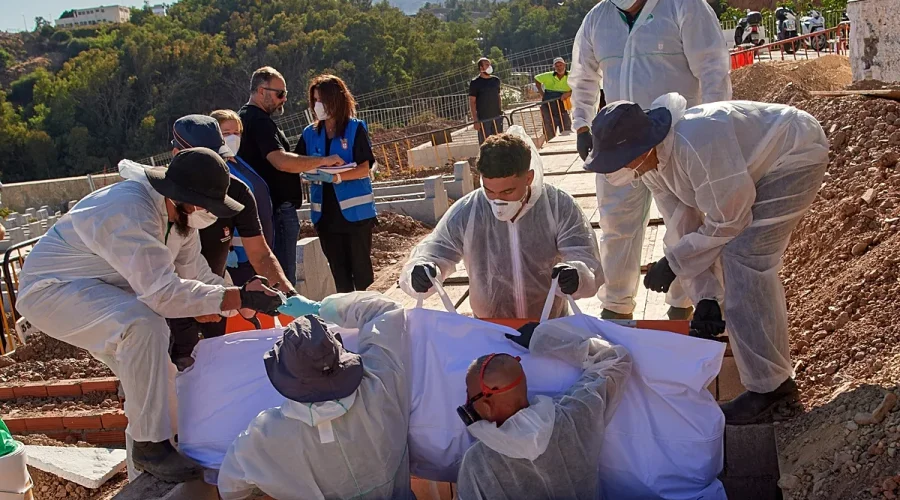
Usagevpn.com – Three weeks after the most lethal border incident in Spain’s modern history, the Muslim cemetery in Ceuta received its first batch of the dead. Eighteen men — all unidentified, all wrapped in plain white shrouds — were lowered into the earth on Friday, their final resting places distinguished only by engraved numbers rather than names. The ceremony followed Islamic rite: a cleric recited prayers over the graves while workers oriented each body toward Mecca before covering them with soil. Interim cemetery director Said Mohammed explained that the numbered markers exist so that, should relatives eventually come forward, the remains can be located and claimed.
The burials mark a grim milestone in the aftermath of what began at the end of July, when more than 72,000 people surged across the narrow strait separating Morocco from Spain’s autonomous city of Ceuta. Over 90 people lost their lives in the chaos. Many drowned in the waters surrounding a breakwater near one of the border crossings; others were killed in a stampede as thousands pressed forward simultaneously. The event stands as the deadliest single incident ever recorded along Spain’s frontier.
A Cemetery Without Names
The decision to inter the bodies without identification has drawn sharp criticism from human-rights advocates. The Moroccan Association for Human Rights publicly called for all burials in Ceuta to be halted until every avenue of identification and repatriation has been fully explored. The organisation urged Morocco’s Foreign Ministry to act:
“The bodies are returned to the families so they can be buried with dignity.”
The NGO characterised the interments as a “new human tragedy” layered atop what it called the “disaster of displacement and missing people.” For families in Moroccan coastal towns who lost sons, brothers, or husbands in the stampede, a numbered stone in a foreign cemetery offers no closure — only a placeholder for a grief that cannot yet be named.
The Repatriation Standoff
A spokesperson for the Ceuta municipal government stated last week that all administrative procedures required to send the bodies back to Morocco had already been completed. Yet, the spokesperson added, Rabat had not accepted them. Questions posed to the Moroccan Foreign Ministry regarding the Friday burials and allegations that the government is blocking the return of already-identified migrant bodies went unanswered.
The diplomatic silence deepens the humanitarian knot. Ceuta, a Spanish enclave on the North African coast with a population of roughly 85,000, was never designed to absorb tens of thousands of arrivals overnight. Most of the more than 72,000 who crossed at the end of July turned back almost immediately. But thousands did not. Local officials estimate that as many as 10,000 migrants — including women and children — may still be in the city, while Spain’s central government places the figure closer to 5,000. Either way, the numbers strain municipal capacity to provide shelter, food, medical care, and basic assistance.
Why the Crossing Happened
Spanish and Moroccan authorities have attributed the mass arrival to a combination of rumours circulating on social media and the machinations of people-smuggling networks that organised the timing and logistics of the crossing. Migrants themselves, however, point to more structural drivers: chronic unemployment, wages that barely cover subsistence, and a sense that the border represented a last available avenue toward work and survival.
Ceuta’s geography makes it a natural choke point. The city sits on a promontory overlooking the Strait of Gibraltar, separated from Morocco by a stretch of water barely a few hundred metres wide at its narrowest. A low breakwater and a series of fences mark the land border. Under normal conditions, crossings are orderly and regulated. On the day of the crisis, those controls were overwhelmed almost instantly.
What Comes Next
More burials are expected in the coming days as additional unidentified bodies are processed. Each will receive a number, a prayer, and a handful of earth. The question of whether those remains will ever be repatriated to Moroccan soil — where families can mark a grave with a name, a photograph, and a story — remains unresolved, caught between bureaucratic inertia and diplomatic silence.
For now, the cemetery holds its numbered stones in quiet rows, waiting for relatives who may never come, or who may arrive years later to ask: whose son was buried under stone number forty-three?
Related Reading
Frequently Asked Questions
What is Ceuta buries first 18 migrants who died?
Ceuta buries first 18 migrants who died is the main topic of this guide. The article explains the context, practical details, and next steps readers should understand.
Why does Ceuta buries first 18 migrants who died matter?
Ceuta buries first 18 migrants who died matters because readers are looking for a useful answer, not just a short summary. Good content should match search intent and help them decide what to do next.