Madrid Reaffirms Ceuta and Melilla as Integral Spanish Territory Amid Moroccan Claims
Usagevpn.com – The Spanish government has issued a resolute declaration regarding the status of its North African enclaves, asserting that sovereignty over Ceuta and Melilla remains unquestionable. This firm stance comes as Morocco’s Justice Minister has reignited territorial discussions, suggesting the autonomous cities remain part of an ongoing diplomatic debate. The Spanish position emphasizes that these territories form an inseparable component of national integrity, a principle that has historical roots and international recognition.
Government Response to Recent Crisis
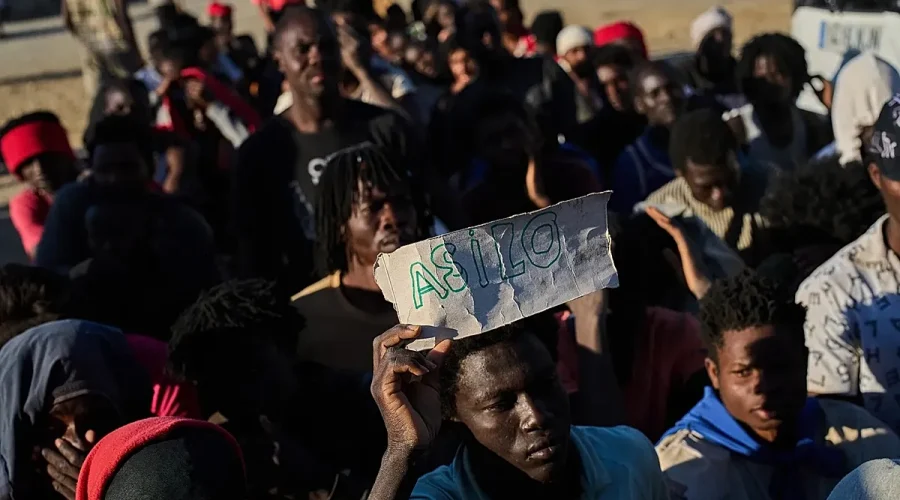
Defense Minister Margarita Robles has been actively engaging with residents of Ceuta following a significant migration event that occurred on August 30. During her visits, she has consistently communicated that neither enclave will face changes to their current status. Robles emphasized the continued presence of military forces, noting that troops have been deployed for eleven days to support local populations and maintain stability.
“Ceuta and Melilla are utterly Spanish,” Robles declared during her appearance, before highlighting the ongoing work of deployed personnel. She assured residents that armed forces would remain alongside the community, stating, “We are not going to abandon them.”
The minister’s message served dual purposes: calming local anxieties about potential renewed migration pressures while simultaneously signaling Spain’s resolve to Moroccan counterparts. Robles stressed that the circumstances of late August must not be permitted to recur, reinforcing the government’s commitment to maintaining order and territorial integrity.
Moroccan Territorial Assertions
Complicating the situation, Morocco’s Justice Minister Abdellatif Ouahbi has publicly characterized the status of Ceuta and Melilla as unresolved. In an interview broadcast by the Saudi Arabian network Asharq News on Tuesday, Ouahbi described the matter as a “pending issue” that continues to surface during bilateral discussions between Spanish and Moroccan representatives.
“The question of Ceuta and Melilla remains on the table in meetings between representatives of Spain and Morocco,” Ouahbi stated, indicating that Rabat has not abandoned its historical claims to the territories.
While Morocco has reopened this contentious topic, the government has yet to revise casualty figures from the recent migration crisis that occurred within Moroccan borders. Ouahbi has also criticized Madrid’s approach to irregular arrivals, arguing that Spain accepts and regularizes migrants while Rabat actively works to prevent departures from Moroccan territory.
Broader Diplomatic Implications
The timing of Ouahbi’s statements carries additional significance. Nearly two weeks have passed since the migration crisis in Ceuta, yet several issues remain unresolved between the two nations. Among the most pressing concerns is the status of Moroccan minors who remain in the Spanish enclave. Ouahbi has explicitly called for their repatriation, insisting that children must be reunited with their families in Morocco.
“We do not abandon our children. We want and demand that our children return to Morocco,” Ouahbi emphasized, framing the issue as both a humanitarian and diplomatic priority.
Earlier statements from the Moroccan minister suggested that Rabat might suspend its extradition agreement with Spain, potentially affecting future cooperation on migration management. This possibility adds another layer of complexity to bilateral relations during an already sensitive period.
Denial of Migration as Political Tool
Addressing speculation that Morocco might be leveraging migration flows as leverage against Spain, Ouahbi maintained that territorial claims are pursued through dialogue rather than pressure tactics. He rejected the characterization of migration as an instrument of coercion, asserting that Morocco seeks resolution through established diplomatic channels.
“We continue to assert our territorial claims and we want to resolve the problem through dialogue,” Ouahbi explained. “We have never used this issue as a tool of pressure.”
The minister also dismissed suggestions that Moroccan children should remain in Spain to address demographic challenges. He argued that Morocco does not need to serve as a solution for other nations’ population needs, stating, “We are not a state whose purpose is to solve any other country’s demographic problem.”
Context and Significance
Ceuta and Melilla represent Spain’s only land borders with Africa, situated on the Mediterranean coast of Morocco. These autonomous cities have been under Spanish administration for centuries, with Ceuta incorporated in 1668 and Melilla in 1497. Their strategic location makes them significant both symbolically and practically for Spain-Morocco relations.
The current diplomatic exchange reflects broader tensions in the region, including migration patterns, historical territorial disputes, and evolving bilateral cooperation frameworks. Spain’s firm position contrasts with Morocco’s renewed interest in revisiting territorial questions, creating a dynamic where both nations must navigate competing priorities while maintaining essential relationships.
The deployment of armed forces and the government’s public reassurances demonstrate Spain’s commitment to addressing both immediate security concerns and longer-term diplomatic challenges. As discussions continue between Madrid and Rabat, the status of Ceuta and Melilla remains central to understanding the future trajectory of Spain-Morocco relations in the region.
Related Reading
Frequently Asked Questions
What is Ceuta and Melilla s Spanish status?
Ceuta and Melilla s Spanish status is the main topic of this guide. The article explains the context, practical details, and next steps readers should understand.
Why does Ceuta and Melilla s Spanish status matter?
Ceuta and Melilla s Spanish status matters because readers are looking for a useful answer, not just a short summary. Good content should match search intent and help them decide what to do next.