EU weighs a new renewable-energy framework as power networks face mounting strain
Usagevpn.com – European policymakers are preparing for a post-2030 overhaul of renewable-energy rules, with the next phase expected to concentrate less on adding regulatory obligations and more on financing, electricity networks, storage and flexible energy use.
A draft impact assessment from the European Commission indicates that the present legal framework may not be sufficient to support the European Union’s 2040 climate objective: cutting net greenhouse-gas emissions by 90% from 1990 levels. EU lawmakers agreed that target last November, placing additional pressure on every sector needed to reach climate neutrality by 2050.
The Commission is expected to bring forward a proposal before the end of 2026 to reshape the bloc’s renewable-energy framework after 2030. Its central challenge is not only producing more low-carbon electricity, but ensuring that the system can move, store and use that electricity when and where it is needed.
Targets remain within reach, but progress is uncertain
Clean energy represented 26.2% of final energy consumption across the EU in 2025. National plans currently point to a renewable share of roughly 41% by 2030, leaving the bloc short of its legally binding 42.5% objective.
Even that lower projection may prove difficult. Progress differs substantially among the EU’s 27 member states, and the pace of deployment does not yet provide confidence that the projected 41% share will be achieved.
“While the situation varies from one member state to another, the current trajectory for renewable energy deployment suggests that even the projected 41% share may be difficult to achieve with current progress at member state level,” reads the draft document.
Rather than responding by introducing a broad set of fresh mandatory targets, Brussels appears inclined to prioritise implementation of rules already adopted. The draft pushes back against additional binding measures for self-consumption, renewable-energy communities, regional cooperation, joint projects and further permitting requirements.
The reasoning is that regulatory certainty matters, while earlier reforms have not yet been fully put into practice across the bloc.
“The stakeholder feedback received at stakeholder workshops emphasised the importance of regulatory stability in this area and pointed at insufficient implementation of the current framework as the key issue to tackle,” reads the draft document.
More renewable power is exposing grid bottlenecks
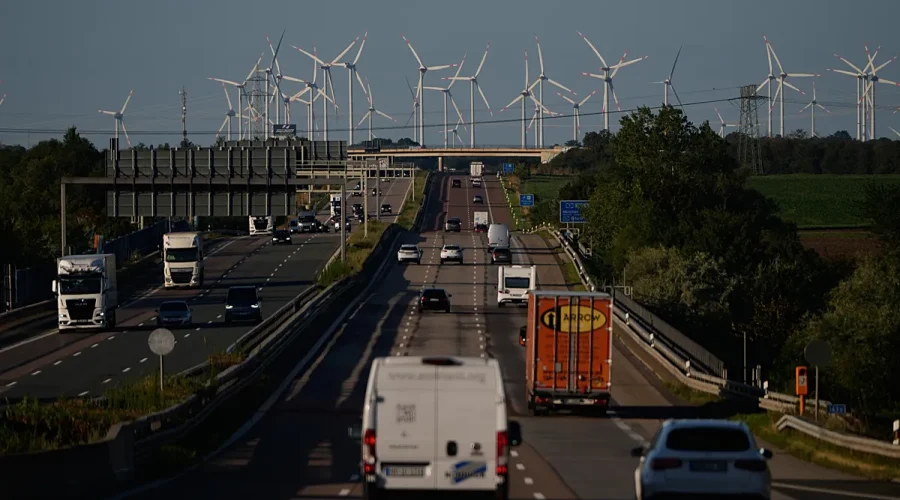
Europe’s electricity mix is becoming cleaner at a rapid pace. Renewable sources supplied nearly half of EU electricity generation in 2025. Yet expanding wind and solar capacity does not automatically mean that every available megawatt can reach homes, businesses or industrial users.
Network congestion, limited storage capacity and electricity demand that cannot easily shift to times of abundant supply are increasingly causing negative wholesale prices and renewable curtailment. Curtailment occurs when generators must reduce output because the grid cannot absorb or transport the electricity available.
In 2024, more than 10 terawatt-hours of renewable electricity could not be used because of congestion and inadequate cross-border transmission capacity. That volume would have been enough to supply about 2.85 million European homes for a year.
The issue is especially significant because renewable generation can be plentiful in one region while demand is high elsewhere. Stronger interconnections between countries can help transfer power across borders, but gaps in that infrastructure remain a major obstacle.
The European Court of Auditors recently concluded that renewable-capacity gains connected to REPowerEU were “negligible” when measured against the Commission’s 103-gigawatt goal. REPowerEU was launched in 2022 to reduce dependence on Russian energy imports and strengthen Europe’s energy autonomy. The auditors identified electricity-grid infrastructure, particularly cross-border links, as the programme’s clearest weakness.
The cost of an inflexible system
When cheaper renewable electricity cannot be delivered to consumers, system operators may have to turn to more expensive generators elsewhere. This process, known as redispatch, cost an estimated €4.3 billion in 2024. Without effective intervention, annual redispatch costs could climb to €26 billion by 2030.
Those figures underline why the next stage of the energy transition cannot focus on generation capacity alone. Additional wind and solar farms remain essential for the EU’s climate plans, but their value is reduced when transmission lines, batteries, demand-response tools and electrified consumption fail to develop alongside them.
The Commission’s draft identifies several possible areas for action. These include improved monitoring of renewable curtailment, more clearly defined arrangements for projects that combine renewable generation with storage, and stronger investment signals for technologies that make the system more flexible.
Electric vehicles and smart charging could also become more important. If charging can be shifted toward periods when renewable electricity is plentiful, vehicles may help smooth demand instead of adding pressure during peak hours. Such flexibility can reduce waste, make better use of clean generation and limit the need for costly backup capacity.
Calls for accountability alongside ambition
Environmental advocates argue that a post-2030 framework still needs a binding renewable-energy objective, even if the policy approach places greater emphasis on delivery mechanisms. Veerle Dossche, renewable energy programme manager at Climate Action Now Europe, said the assessment provides a “compelling case” for an ambitious and binding target beyond 2030.
Her position is that headline ambition must be matched by practical national commitments, defined pathways and reliable enforcement. Measurable performance indicators would be needed to identify early when a country is falling behind and to prompt corrective action before gaps become entrenched.
The emerging debate therefore reaches beyond the amount of renewable capacity Europe installs. It concerns whether the EU can build an energy system able to use clean electricity efficiently, connect regions with different supply and demand patterns, and keep the transition affordable for consumers and businesses. The forthcoming proposal will test how far Brussels is willing to shift its focus from targets alone to the infrastructure and market conditions needed to make those targets work.
Related Reading
Frequently Asked Questions
What is Brussels prepares post 2030 renewable overhaul?
Brussels prepares post 2030 renewable overhaul is the main topic of this guide. The article explains the context, practical details, and next steps readers should understand.
Why does Brussels prepares post 2030 renewable overhaul matter?
Brussels prepares post 2030 renewable overhaul matters because readers are looking for a useful answer, not just a short summary. Good content should match search intent and help them decide what to do next.