Belgium Blocks Fresh Push to Unlock Frozen Russian Funds for Ukraine
Usagevpn.com – Brussels once again found itself at the centre of a heated European debate over how to finance Ukraine’s war effort, as Belgian officials rejected a renewed campaign to draw on the vast pool of immobilised Russian central bank assets parked inside the eurozone. The confrontation played out at an informal gathering of EU foreign ministers held in Ireland on Tuesday, where a bloc of northern and eastern member states pressed for a mechanism to convert frozen sovereign wealth into fresh aid for Kyiv.
The sum at stake is enormous: roughly €210 billion in Russian central bank reserves sits locked within European financial infrastructure, the overwhelming majority of it held at Euroclear, the international securities depository headquartered in central Brussels. For over a year, these funds have been effectively frozen under sanctions, and their eventual fate has become one of the most politically charged questions in European diplomacy.
Who Is Pushing, and Who Is Resisting
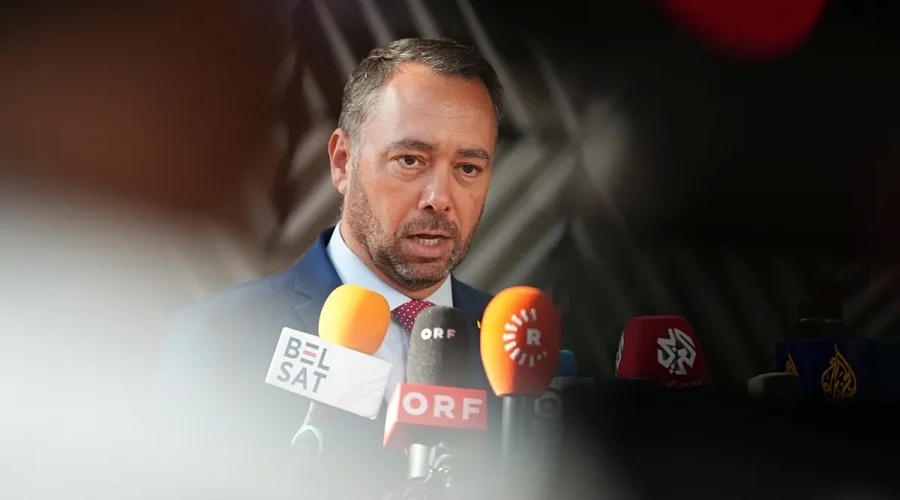
Sweden, the Netherlands, Spain, and Poland spearheaded the latest offensive, having dispatched a joint letter to their counterparts the previous week urging action on the immobilised balances. Baltic states added their voices in favour of tapping the funds. Yet the Belgian delegation, led by Foreign Minister Maxime Prévot, pushed back with what insiders described as little appetite among other ministers for the scheme.
“I made sure to reiterate Belgium’s position, which has remained unchanged for a year. The reasons behind our opposition have not magically disappeared in the meantime,” Prévot said in remarks shared at the close of the Irish talks.
Prévot warned that any process amounting to confiscation of sovereign assets would carry “very significant risks,” echoing arguments his government had laid out a year earlier when the European Commission floated a proposal to channel the €210 billion into a zero-interest credit line for Ukraine. At that time, Belgium demanded full mutualisation of risks and uncapped guarantees as a shield against what it characterised as Russia’s no-holds-barred retaliation. The country also flagged the prospect of a financial and reputational catastrophe rippling through the entire eurozone.
The December Summit That Changed the Calculus
The Commission’s original plan ultimately collapsed at a contentious European Council summit in December, when leaders chose instead to finance a €90 billion loan through joint debt issuance. Around the same period, the Russian central bank filed suit against Euroclear, adding a layer of legal uncertainty that continues to hang over any future use of the immobilised balances. Belgium has maintained since then that the assets should remain untouched until peace negotiations conclude, preserving the bloc’s diplomatic leverage over Moscow.
“There had previously been broad agreement that it was preferable to keep these amounts immobilised until Russia has compensated Ukraine for all the damage it has caused,” Prévot stated on Tuesday.
A Shrinking Window of Financial Cover
The renewed debate arrives at a moment of acute fiscal pressure. Growing doubts have emerged over whether the €90 billion loan will stretch to its intended horizon at the end of 2027. In their joint letter, the four leading member states cautioned that the instrument “will not be enough” given Russia’s relentless escalation of the conflict.
“While we should be proud of our achievements, we cannot afford to rest on our laurels,” the letter read. “As each day passes, the cost of the war is rising as Russia’s relentless attacks continue unabated.”
Moscow has shifted tactics in recent months, launching sustained waves of drone strikes designed to disrupt Ukraine’s daily economic activity and instil fear across civilian populations. Simultaneously, it has intensified naval and missile strikes along the Black Sea littoral to choke off Ukraine’s grain exports. With export revenues declining and defence costs climbing, Kyiv has asked its allies to close a €23 billion shortfall in the Ministry of Defence budget, needed to cover military salaries and weapons procurement.
As a stopgap, Ukraine has proposed that the EU front-load a portion of the €45 billion earmarked under the loan for next year, effectively pulling forward funds and leaving less available in 2027. The European Commission has not yet formally received the request, though officials are tracking the trajectory of the political discussion closely.
Political Fault Lines and Legal Uncertainty
The money crunch has emboldened advocates of the immobilised-assets route, who never abandoned the idea after last year’s defeat at the summit. Their argument is straightforward: the frozen balances would furnish the bloc with substantial financial firepower while sparing national taxpayers and domestic budgets from further strain.
“This is a fair approach to start a serious discussion on how we can use the immobilised assets,” Ukrainian Foreign Minister Andrii Sybiha said on Tuesday.
Italy’s Antonio Tajani, whose country had sided with Belgium during last year’s debate, struck a more cautious note. He stressed that outstanding legal objections must be properly resolved before any mechanism moves forward.
“We’re not opposed in principle, but we need to see whether there is a legal basis for doing so,” Tajani said.
Commission officials, meanwhile, remain hesitant to draft a new legislative proposal without a realistic guarantee of success among member states. Capitals are already locked into fraught negotiations over the next multiannual EU budget, making the political space for another high-stakes financial instrument narrow. Prévot, for his part, framed the broader stakes in stark terms.
“Public opinion is growing weary of this support, yet it remains more essential than ever. The security outlook for the European continent is bleak for the years ahead. International solidarity with Ukraine is therefore more necessary than ever.”
The standoff underscores a deeper structural dilemma: Europe must sustain military and economic support for Ukraine over a potentially multi-year conflict, yet the instruments available to do so are running out. Whether the immobilised Russian balances ultimately become a source of funding or remain locked in limbo until a negotiated settlement will depend on whether member states can reconcile their legal anxieties, fiscal constraints, and diplomatic calculations — a balance that, as of Tuesday’s meeting, remains firmly unresolved.
Related Reading
Frequently Asked Questions
What is Belgium pushes back against new attempt?
Belgium pushes back against new attempt is the main topic of this guide. The article explains the context, practical details, and next steps readers should understand.
Why does Belgium pushes back against new attempt matter?
Belgium pushes back against new attempt matters because readers are looking for a useful answer, not just a short summary. Good content should match search intent and help them decide what to do next.