‘Once we were like you’: Budapest Exhibition Brings Romans to Life
Once we were like you – that is the invitation extended to visitors exploring a remarkable new exhibition in Budapest. The Aquincum Museum has transformed ancient skeletal remains into lifelike faces, allowing modern audiences to connect with individuals who lived nearly two millennia ago. Through the “Once we were like you” exhibition, visitors encounter three remarkable reconstructions: a peasant girl, a military soldier, and an enslaved person. Each face represents a real person whose skull was discovered at the archaeological site, now given new meaning through scientific reconstruction and creative storytelling.
From Bones to Faces
Traditional archaeological displays often leave visitors disconnected from the past. Dr. Lóránt Vass, archaeologist and co-curator, explained the challenge: “During the excavations we find the skulls, the skeletons, we document them, we roughly can tell whether they belonged to a man or a woman and the findings end up in the appropriate storage room, but that’s it. The bodies have no weight, no life, no soul.” The “Once we were like you” project directly addresses this disconnect by breathing vitality into ancient remains.
The reconstruction process combines multiple scientific approaches. Researchers examined skull morphology and structural characteristics, then cross-referenced these findings with archaeological evidence and DNA analysis. This comprehensive methodology enabled experts to estimate facial architecture, potential ancestral origins, and specific physical features including hair texture, skin pigmentation, and eye coloration. The result is a scientifically grounded yet emotionally resonant presentation.
Science and Storytelling United
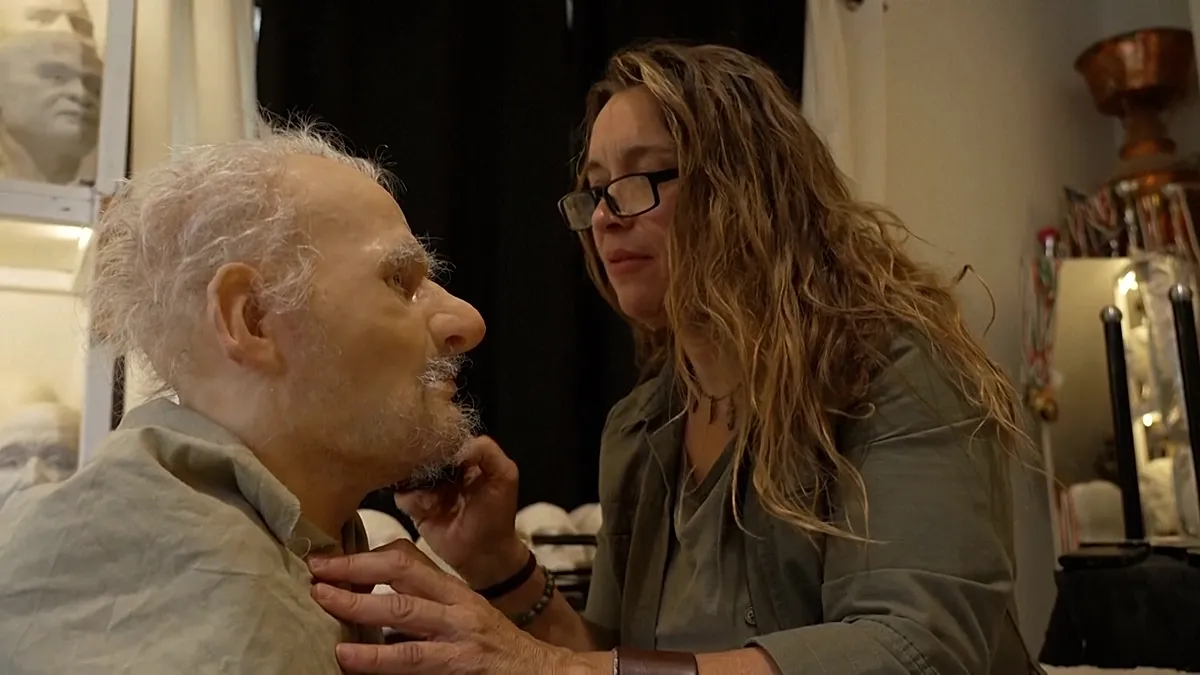
Emese Gábor, a facial reconstruction specialist from her Budakeszi studio near Budapest, created the most visually striking reconstructions. Working with three-dimensional printed replicas of the original skulls, Gábor rebuilt each face layer by layer. Her meticulous process involved extensive study of bone structure before modeling muscles and facial features, ensuring every detail maintained scientific accuracy.
“In connection with this exhibition, we thought what happens if we bring these people closer to the visitors by using archaeological findings, information provided by inscriptions, results of anthropological studies and results of archaeogenetics,” Dr. Vass explained, describing the conceptual foundation behind “Once we were like you.”
While the physical reconstructions rest on solid scientific evidence, the identities and personal histories assigned to these faces are deliberately fictional. Dr. Péter Vámos, archaeologist and exhibition co-curator, clarified: “It’s all fiction. We don’t even know the real names of these people, unfortunately. We tried to incorporate into their imagined life stories everything that anthropology and genetic studies have offered. But no matter what, it’s still fiction. In fact, we can not say that they lived like that, it happened that way, but they could have been living that way.”
The curators constructed plausible names, professions, and backgrounds drawing upon established knowledge about daily existence in Roman Aquincum. Historical naming conventions, ancient inscriptions, and anthropological research all contributed to creating believable scenarios for these individuals. Visitors are encouraged to understand the distinction between documented fact and educated speculation within the “Once we were like you” narrative.
More Than Faces
Beyond the facial reconstructions, the exhibition offers additional archaeological treasures. A reconstructed burial site provides context for Roman funerary practices, while a genuine Roman-era mummy offers a tangible connection to ancient preservation techniques. These complementary displays enrich the visitor experience by situating the facial reconstructions within their broader archaeological framework.
The “Once we were like you” exhibition remains open to the public at the Aquincum Museum in Budapest through October 31, 2027. This extended run allows ample time for visitors to encounter these remarkable faces and reflect on the shared humanity that connects us across centuries.