Here Comes the Sun: A Stunning Amaterasu Show Marks 160 Years of Belgium-Japan Cultural Ties
Here comes the sun – In the heart of Brussels, a remarkable theatrical experience unfolded as a retelling of an age-old Japanese myth illuminated the 15th-century Town Hall. The performance, titled Amaterasu, served as a centerpiece for commemorating the 160th anniversary of diplomatic and cultural ties between Belgium and Japan. This immersive event not only showcased the richness of Japanese folklore but also highlighted the enduring bond between the two nations through artistry and storytelling.
The production drew inspiration from one of Japan’s most revered mythological tales, centering on the sun goddess Amaterasu, a pivotal figure in Shinto tradition. According to the legend, Amaterasu’s retreat into a cave after a fierce argument with her brother, Susanoo, the storm god, plunged the world into an eternal night. To coax her back into the light, the other deities orchestrated a spectacle of music, dance, and mirth outside the cave, gradually drawing her out. The show reinterpreted this ancient narrative, blending myth with modern performance to create a visually striking and emotionally resonant experience.
At the core of the production was the vision of Eiko Kobayashi, a renowned dress designer and performance artist. Her work transformed traditional kimonos into wearable art, weaving themes of memory and cultural identity into each piece. The event was part of a broader initiative by the cultural non-profit Be-Japon, which has been instrumental in promoting cross-cultural exchanges. Kobayashi’s Amaterasu has already captivated audiences across 12 countries, proving its universal appeal and artistic significance.
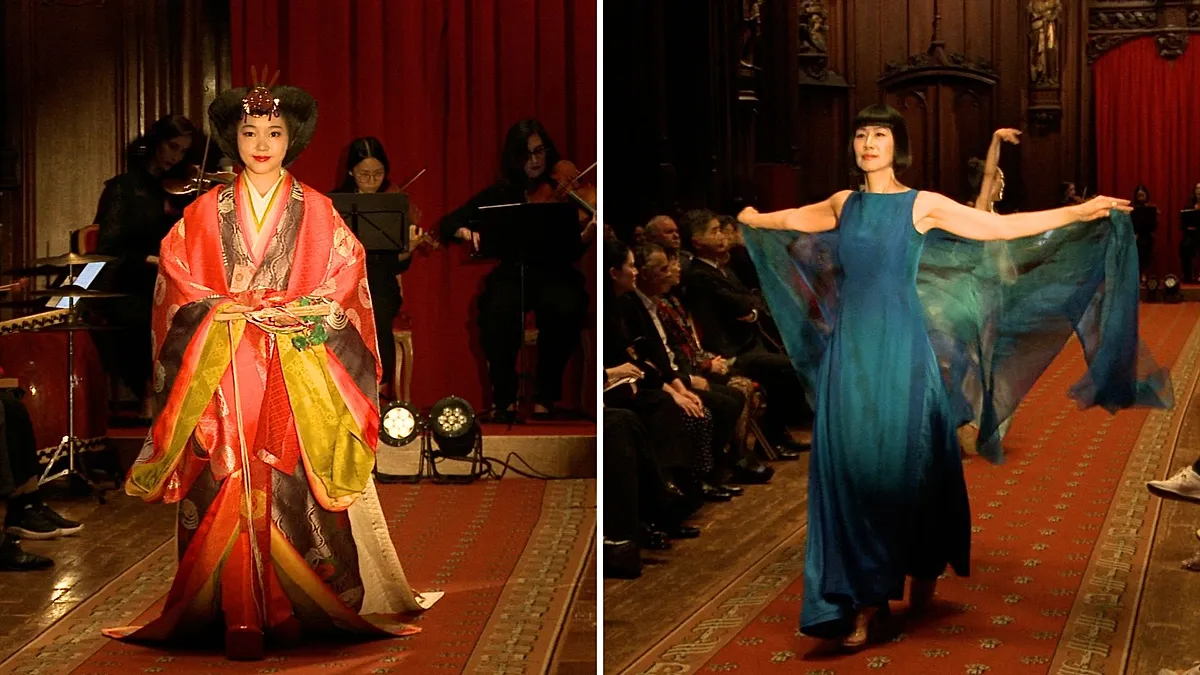
The performance’s unique fusion of fashion, choreography, and narrative was evident throughout. Each kimono-inspired runway presentation was meticulously crafted to reflect both the mythological story and the intricate heritage of Japanese textiles. The audience was treated to a series of movements that echoed the grace of traditional dance, while the costumes themselves became a medium for storytelling. As the performance unfolded, the interplay of light, fabric, and motion created a sensory journey that honored the past while embracing innovation.
During the show, one of the most memorable moments occurred when a performer stood center stage and addressed the Brussels audience. “The costume of the sun goddess, Amaterasu, is truly exceptional,” they explained. “It features a linen jacket dating back over a century, handcrafted with silk from Fukushima—considered the thinnest silk in the world.” This line underscored the attention to detail and the symbolic importance of the materials used, bridging centuries of craftsmanship with contemporary artistry.
The choice of the Town Hall as the venue added historical depth to the event. This 15th-century structure, with its ornate architecture and centuries of tradition, provided the perfect backdrop for a performance that celebrated a myth as old as Japan’s own history. The setting amplified the sense of timelessness, inviting the audience to reflect on the shared human experience of creation, conflict, and reconciliation.
Kobayashi’s collaboration with Be-Japon exemplified the power of cultural diplomacy. The organization, dedicated to fostering connections between Belgium and Japan, has long supported initiatives that bring their traditions together. This show, however, went beyond mere celebration—it became a testament to how art can transcend borders and foster mutual understanding. The 160-year milestone was not just a nod to historical relations but a chance to reexamine the evolving nature of cultural exchange in the modern era.
As the performance reached its climax, the audience witnessed a powerful metaphor for the restoration of light and hope. The deities’ efforts to entice Amaterasu out of her cave mirrored the ways in which Belgium and Japan have worked together to overcome challenges and illuminate new paths. The show’s creators emphasized that this was more than a theatrical display; it was a celebration of resilience, creativity, and the enduring human spirit.
The international acclaim for Amaterasu is a reflection of its universal themes and innovative execution. Its success in diverse cultural contexts underscores the shared appreciation for narratives that explore the interplay between nature, divinity, and human emotion. By reimagining a Japanese legend for a European audience, the production not only honored its roots but also introduced a new generation to the depth of Shinto mythology and its relevance today.
The event’s impact extended beyond the immediate audience, sparking conversations about the role of art in preserving and evolving cultural heritage. In a world where globalization often blurs traditional boundaries, Amaterasu reminded attendees of the value in celebrating distinct identities while finding common ground. The collaboration between Belgian and Japanese artists in this project highlighted the symbiotic relationship between the two cultures, where each contributes to the other’s artistic growth.
As the final act concluded, the Town Hall’s historic walls seemed to echo with the memory of past performances and the promise of future collaborations. The show’s creators envisioned it as a starting point for continued dialogue between the two nations, using the language of art to weave a tapestry of shared history and aspirations. The 160-year anniversary, while a significant milestone, also served as a reminder that cultural connections are not static but dynamic, requiring constant nurturing and innovation.
The production’s success in Brussels marked a pivotal moment for both Belgium and Japan. It demonstrated how a single performance could encapsulate the essence of their relationship, drawing from ancient stories to create a modern narrative of unity and artistic exchange. For those who attended, the event was not merely an evening of entertainment but an opportunity to engage with a story that transcended time and geography.
Amaterasu’s journey from darkness to light resonated with the broader theme of the anniversary celebration. The two nations, though separated by vast distances, have found ways to connect through shared values and creative expression. The performance served as a visual and emotional reminder of this connection, using the language of fashion and theater to convey messages of hope and continuity.
As the audience departed the Town Hall, the lingering memories of the show underscored the power of storytelling to bridge cultures. Eiko Kobayashi’s work, while deeply rooted in Japanese tradition, also invited reflection on the ways in which art can be a universal language. The 160-year anniversary was not just a commemoration of past efforts but a celebration of the future, where art continues to play a vital role in strengthening ties and fostering mutual respect.
From the first light of the performance to its final act, Amaterasu captured the imagination of all who witnessed it. The blend of myth, fashion, and choreography created a unique experience that honored tradition while embracing the possibilities of the present. As the sun goddess emerged from her cave, so too did the spirit of collaboration between Belgium and Japan, shining a light on the potential for cultural connections to thrive across generations.
The event’s significance lies not only in its artistic merit but also in its role as a cultural ambassador. By bringing Japanese mythology to the forefront of Belgian cultural life, Amaterasu encouraged a deeper appreciation for the nuances of Japanese heritage. It also highlighted the importance of preserving such traditions through innovative means, ensuring their relevance in an ever-changing world.
In the end, the show left a lasting impression, proving that even the most ancient tales can find new life in contemporary settings. The collaboration between Belgian and Japanese artists exemplified the kind of creative synergy that can emerge when two cultures come together. As the 160-year anniversary marked a new chapter in their relationship, Amaterasu stood as a symbol of what can be achieved when history and imagination intersect.
The success of this performance is a testament to the enduring power of art. Whether through the delicate craftsmanship of kimonos or the choreographed movements that reenacted the goddess’s return, each element was carefully designed to evoke emotion and provoke thought. The audience, both local and international, was invited to see the story not just as a relic of the past but as a living narrative that continues to evolve with each new interpretation.
As the sun goddess’s light filled the Town Hall, it symbolized the renewed energy and hope in the bilateral relationship. The performance’s ability to captivate and inspire spoke volumes about the strength of the cultural ties that have been cultivated over decades. With its blend of tradition and innovation, Amaterasu offered a glimpse into the future, where artistry will continue to play a central role in shaping the bonds between nations.
The event also sparked a renewed interest in the deeper layers of Japanese mythology, prompting discussions about its contemporary relevance. For many, the show served as a gateway to understanding the philosophical and artistic dimensions of Shinto beliefs, illustrating how stories can carry profound meaning across time and space. The collaboration between Belgium and Japan in this endeavor reflected a shared commitment to exploring and celebrating cultural diversity.
Amaterasu’s tale, though ancient, resonated with modern themes of resilience and creativity. The performance’s ability to translate this myth into a visual and emotional experience demonstrated the power of art to connect people through shared narratives. As Belgium and Japan look ahead to their next 160 years of partnership, Amaterasu stands as