Genius of the Renaissance: Leonardo da Vinci Exhibition Unveiled in Astana
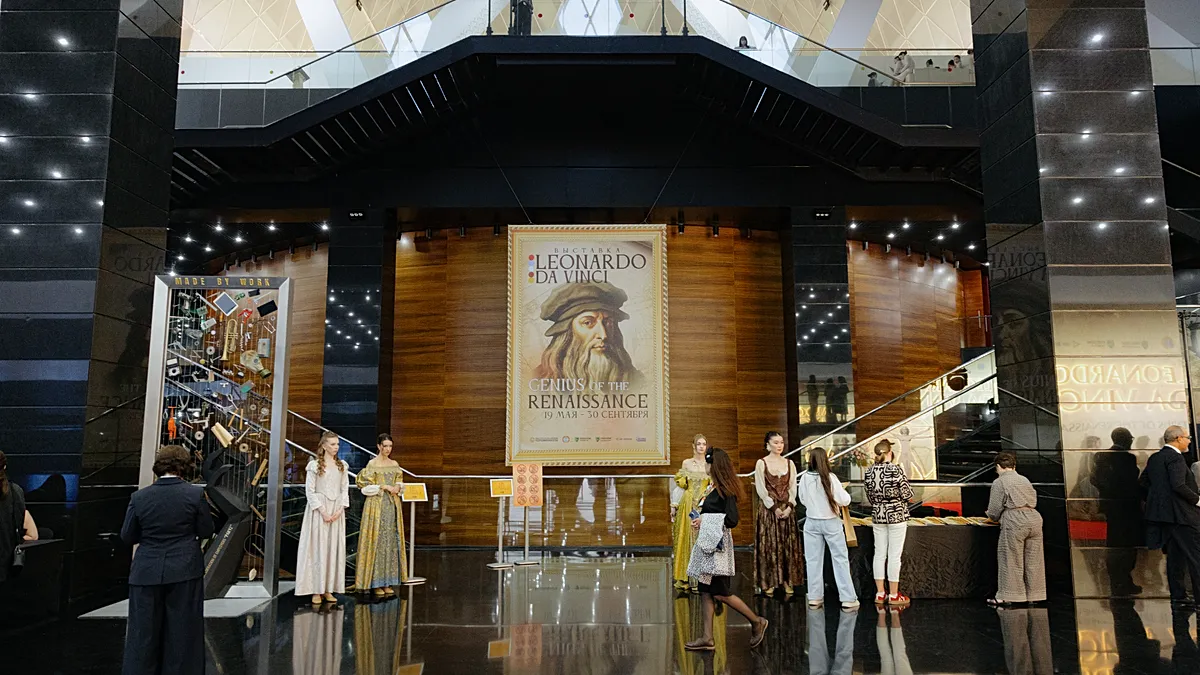
Genius of the Renaissance – The Palace of Peace and Reconciliation in Astana has become the epicenter of a groundbreaking cultural initiative with the launch of the exhibition “Leonardo da Vinci: Genius of the Renaissance.” This immersive display features over 40 full-scale mechanical replicas, meticulously crafted from the Renaissance master’s original sketches and notes. The collection, sourced from esteemed institutions in Rome and Florence, offers a rare opportunity to witness the genius of da Vinci through tangible, interactive models. These exhibits are based on the Vinci Codices, a series of surviving manuscripts that form the backbone of his engineering legacy.
Preserving the Past: The Legacy of Surviving Manuscripts
As the director of the exhibition, Narima Mukhambetalina emphasizes the importance of these preserved writings. “Leonardo da Vinci spent his life documenting ideas across more than 20,000 pages of manuscripts,” she explains. “Of these, around 7,000 have endured the test of time, allowing us to bring his visionary designs to life.” The codices, which include detailed diagrams and annotations, serve as a bridge between da Vinci’s mind and the modern world, enabling specialists to reconstruct intricate mechanical devices with remarkable precision.
“These preserved writings have allowed specialists to reconstruct mechanical devices based on his drawings,” Narima Mukhambetalina said. “It’s incredible to see how his concepts, once confined to parchment, now move and function in real space.”
Exploring Nature’s Forces: A Thematic Journey
Spanning nearly 3,000 square meters, the exhibition is divided into four thematic zones—air, water, earth, and fire—each designed to reflect da Vinci’s deep fascination with the natural world. The layout not only showcases his technical brilliance but also illustrates how he transformed observations into practical engineering solutions centuries before their time. By categorizing his inventions, the exhibition highlights the interconnectedness of his ideas, from aerodynamics to hydraulics, offering visitors a structured yet engaging exploration of his multidisciplinary genius.
Highlights of the Exhibition: From Flight to Warfare
Among the most captivating displays are da Vinci’s early designs for flying machines, which have long been admired for their pioneering approach to aviation. His parachute prototype, for instance, demonstrates an intuitive understanding of air resistance, while the aerial screw—a precursor to the modern helicopter—reveals his mastery of rotational mechanics. The military section of the exhibition is particularly striking, featuring an armored vehicle inspired by the shape of a turtle shell. This design, envisioned as a mobile fortress, exemplifies his ability to merge artistic creativity with functional engineering, ensuring soldiers could navigate battlefields with protection and mobility.
Other standout exhibits include a self-propelled cart, often regarded as an early concept of the automobile, and mechanisms such as ball bearings and transmission systems that remain foundational in contemporary engineering. The exhibition also delves into da Vinci’s interest in automation, with interactive models allowing visitors to witness how these innovations might have operated in his era. “People are often amazed by the fire zone, where military machines like the turtle shell armor dominate the space,” notes Dilnaz Zholdaskhanova, a tour guide. “The air zone, with its parachute and aerial screw, is equally popular, as it makes visitors imagine how flight was conceptualized back then.”
“Another area that attracts a lot of interest is the air zone, including a parachute and the aerial screw,” Dilnaz Zholdaskhanova added. “It’s fascinating to see how these ancient designs still inspire modern technology.”
Modern Technology Meets Renaissance Ingenuity
The exhibition seamlessly blends historical accuracy with cutting-edge innovation. LED tunnels, digital projections, and holographic installations are used to visualize da Vinci’s inventions in action, helping visitors grasp their intended functions. These tools not only make the experience more dynamic but also highlight the timelessness of his ideas. Digitized versions of his renowned artworks, such as the Mona Lisa, are also on display, allowing guests to appreciate his artistic achievements alongside his engineering feats. This dual focus underscores da Vinci’s role as both a painter and a polymath, bridging the gap between art and science.
Visitors are encouraged to engage directly with the exhibits, from manipulating levers to observing digital recreations of his machines. The interactive format has proven especially effective in drawing younger audiences, who often find the hands-on elements more appealing. “The exhibition’s blend of historical and modern elements resonates strongly with students and tech-savvy visitors,” Mukhambetalina remarked. “It’s not just about seeing the past—it’s about understanding how it shapes the future.”
Connecting Cultures: A Renaissance Legacy in Kazakhstan
The exhibition’s presence in Astana marks a significant cultural exchange, bringing the Renaissance to a region with a rich but distinct heritage. By showcasing da Vinci’s inventions, it fosters a deeper appreciation for the universal principles of innovation that transcend time and geography. The combination of historical manuscripts and modern technology creates a narrative that is both educational and inspiring, inviting visitors to reconsider the origins of scientific progress.
With its vast scope and innovative presentation, the “Leonardo da Vinci: Genius of the Renaissance” exhibition has become a landmark event in Astana’s cultural calendar. The four thematic zones, each offering a unique perspective on da Vinci’s work, ensure that visitors leave with a comprehensive understanding of his contributions to human knowledge. Whether marveling at the turtle shell armor or stepping into a holographic simulation of his flying machine, the experience is designed to spark curiosity and admiration for the Renaissance polymath. As the exhibition runs through September 30, 2026, it promises to remain a vital link between past and present, celebrating the enduring legacy of a visionary whose ideas continue to influence the world today.
For those interested in the intersection of art and science, this exhibition is a must-visit. It not only honors da Vinci’s achievements but also invites visitors to explore the creative process behind his inventions. The use of modern technology to recreate his designs ensures that his genius is accessible and relatable, even in the 21st century. By immersing itself in the Renaissance spirit, Astana’s exhibition stands as a testament to the power of human ingenuity and the timeless appeal of da Vinci’s work.