Cannes 2026: Cristian Mungiu’s Political Drama ‘Fjord’ Claims the Palme d’Or
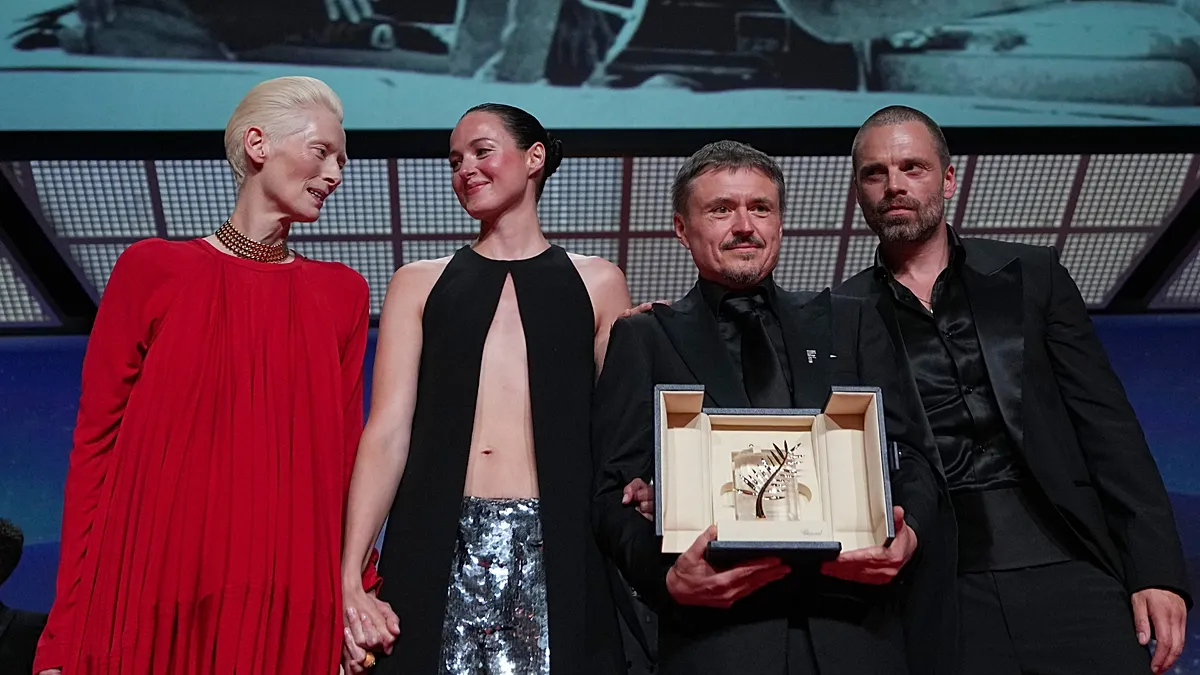
Cannes 2026 – The 79th Cannes Film Festival concluded on Saturday with the announcement of its winners, marking another pivotal moment for the world’s most anticipated cinematic event. The festival once again brought together a constellation of established filmmakers, emerging talents, and contenders for the awards season’s top honors on the French Riviera. Amidst the clamor of applause and the glimmer of red carpets, Cristian Mungiu’s political drama Fjord emerged victorious, securing the coveted Palme d’Or. This achievement follows Jafar Panahi’s A Simple Accident, which had won the same award in 2025, underscoring the festival’s enduring role in spotlighting socially charged narratives.
A Tale of Faith and Fracture in a Norwegian Fjord
Fjord, Mungiu’s latest work, delves into the ideological rifts that shape modern society. The film centers on the Gheorghiu family, a group of fervent Romanian evangelicals who relocate to a remote Norwegian town nestled at the edge of a fjord. Mihai, the family’s patriarch, is portrayed by Sebastian Stan, an actor best known for his role as Donald Trump in Ali Abbasi’s The Apprentice (2024). As a Romanian aeronautical engineer, Mihai marries a Norwegian woman named Lisbet, and the couple’s decision to return to her homeland sparks a journey that intertwines personal devotion with political undercurrents.
Upon settling into their new environment, the Gheorghiu family is warmly received by local institutions and neighbors. However, this initial harmony begins to unravel when a schoolteacher observes unexplained bruises on one of the daughters. The incident becomes a catalyst for tension, revealing the stark contrast between the family’s religious convictions and the secular norms of their adopted town. Mungiu’s film serves as a microcosm of broader societal divides, exploring how faith can both unify and isolate, and how cultural identity is tested in unfamiliar settings.
Political Echoes in the Grand Prize Ceremony
Meanwhile, Andrey Zvyagintsev’s Minotaur was awarded the Grand Prize, a title it holds for the second consecutive year. This follows Joachim Trier’s Sentimental Value, which had previously claimed the honor. Zvyagintsev, a Russian filmmaker renowned for his layered storytelling, used his acceptance speech to deliver a pointed message to Russian President Vladimir Putin. In a moment of dramatic intensity, he declared: “There is someone else I would like to address personally today, in my own name. He is not using a VPN to follow this ceremony live, but I am certain that he has other, much more important decisions to make at the moment.”
“Millions of people on both sides of the contact line dream of only one thing: that the massacres finally stop. And the only person who can put an end to this slaughter is the President of the Russian Federation putting an end to this carnage. The whole world is waiting for that.”
His words, delivered in Russian, resonate with the ongoing conflict in Ukraine, which has persisted for over four years. Zvyagintsev’s film, with its haunting imagery and symbolic tension, reflects the lingering scars of war and the moral complexities of leadership. The Grand Prize victory highlights the festival’s continued role as a platform for politically resonant cinema, even as its scope expands to embrace diverse cultural voices.
Best Director: A Shared Triumph of Art and Resistance
The Best Director Award was jointly presented to Javier Ambrossi and Javier Calvo for their film La Bola Negra, and to Pawel Pawlikowski for Fatherland. This marks the first time the prize has been split, a decision that underscores the festival’s growing emphasis on collaborative storytelling and genre-defying approaches. Pawel Pawlikowski, whose previous work L’Agent secret won the award in 2025, shared his thoughts on the political role of cinema. “Cinema must reflect the political situation, but not according to dictated conditions. It takes courage in this world to talk about what people really see. There must be a space of freedom for art,” he stated on stage, his voice steady yet impassioned.
Pawlikowski’s remarks came amid the backdrop of the anti-Bolloré platform affair, which has sparked debates about the festival’s governance and neutrality. The incident, involving the French media group Bolloré and its influence over Cannes’ programming, has intensified scrutiny of the event’s independence. Yet, the director’s message remains clear: art must persist as a voice of dissent, even in the face of institutional pressures. “Cinema must resist, which is why we made this film,” he concluded, a sentiment that echoes through the festival’s curated lineup.
A Tribute to Memory and the Human Condition
Before the Best Director award was announced, Quebecois filmmaker Xavier Dolan honored Palestinian poet Mahmoud Darwish, quoting him with profound reverence. “On this earth, there is what deserves life, the hesitation of April, the smell of bread at dawn, a woman’s opinions on men, the writings of Aeschylus. The beginning of love. Grass on a stone. Mothers, standing on a flute’s thread. And the fear that memory inspires in conquerors,” Dolan recited, his tone both poetic and political. The quote, drawn from Darwish’s body of work, underscores the festival’s role in celebrating voices that transcend borders and histories.
The Festival’s Thematic Evolution
The 2026 Cannes lineup reflects a deliberate shift in focus, emphasizing auteur-driven narratives and independent films over mainstream blockbusters. This trend is evident in the selection of 19 feature films for the main competition, all of which grapple with themes of war, displacement, and political turmoil. While Hollywood’s presence is subdued compared to previous years, the festival remains a vital hub for global cinema, showcasing stories that are deeply rooted in historical and cultural contexts.
Many of the films explore the psychological toll of conflict, identity crises, and the erosion of trust in institutions. These themes are not confined to fictional worlds but are drawn from real-life events, creating a sense of urgency and relevance. For instance, Fjord draws on recent incidents that highlight the growing polarization between progressive and traditional values. Similarly, Zvyagintsev’s Minotaur intertwines personal drama with geopolitical critique, offering a narrative that is as intimate as it is expansive.
The festival’s cultural influence is also expanding, with fashion, luxury, and technology receiving increased attention alongside cinematic achievements. This year’s event has become a multidisciplinary showcase, where the boundaries between art and industry blur. The inclusion of more historically grounded stories suggests a desire to connect contemporary issues with past struggles, fostering a dialogue that is both reflective and forward-looking. Critics have noted that the lineup leans heavily toward director-led projects, which often prioritize emotional authenticity over commercial appeal.
A Legacy of Resilience and Vision
As the festival draws to a close, its legacy as a crucible for cinematic innovation and political discourse remains unshaken. The Palme d’Or victory for Fjord and the Grand Prize for Minotaur signal a continued commitment to storytelling that challenges the status quo. From the Gheorghiu family’s journey to the haunting reflections of Zvyagintsev’s acceptance speech, Cannes 2026 reaffirms its role as a mirror to the world’s complexities. In a year marked by upheaval and introspection, the festival’s winners have not only captured the imagination of audiences but also ignited conversations about the power of film to shape and reflect societal change.