
30-year US Treasury yield hits highest level in 19 years
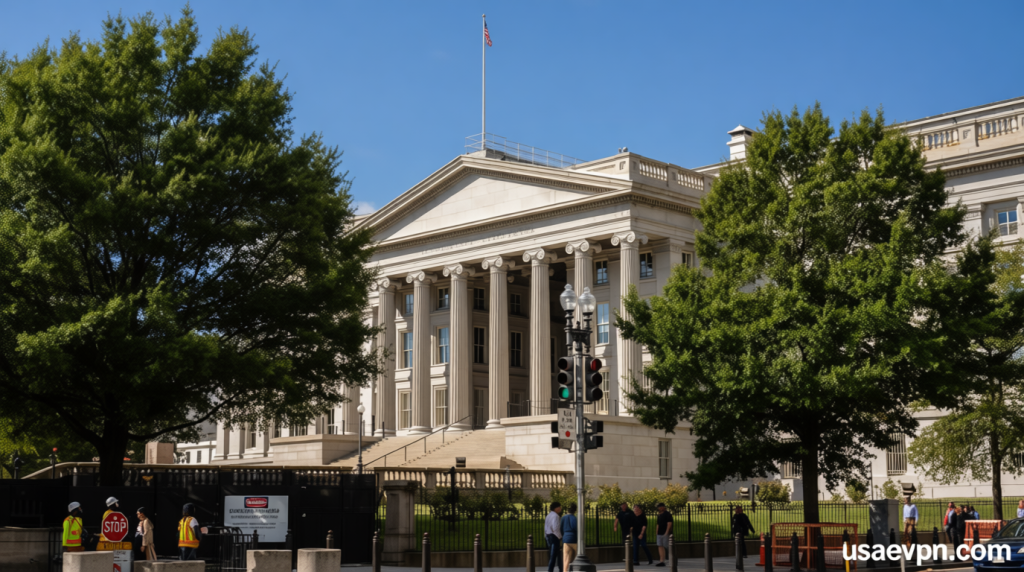
30-year US Treasury yield hits highest level in 19 years
30 year US Treasury yield hits – The Treasury market is facing mounting pressure as inflation anxieties intensify, pushing long-term bond yields to new heights. The 30-year US Treasury yield recently surged past 5.2%, marking its peak in nearly two decades. This upward trend is driven by concerns over prolonged price increases, exacerbated by the ongoing conflict with Iran. Investors are increasingly wary of the economic repercussions of this war, which has already triggered a global energy crisis and contributed to a spike in commodity prices.
Inflation Concerns and Market Reactions
As bond prices decline, yields tend to increase, reflecting heightened demand for returns amid uncertainty. The Iran war has disrupted oil supply chains, leading to a sharp rise in energy costs and fueling fears of inflationary pressures. This has begun to affect broader economic sectors, including food and airfare expenses. “Bond markets are signaling that inflation could be more persistent than many investors expect,” noted Nigel Green, CEO of deVere Group. His remarks highlight how financial markets are interpreting the current climate as one of growing risk.
Central to this shift is the expectation that inflation will remain stubbornly high. The Bureau of Labor Statistics reported that US consumer prices in April climbed at the fastest annual rate in three years, underscoring the urgency of addressing rising costs. Investors are demanding higher yields to offset the erosion of purchasing power, a trend that has led to a significant exodus from Treasury bonds. This movement is not limited to the US—governments worldwide are grappling with similar fiscal challenges, prompting a global shift in demand for long-term debt.
Global Implications of Rising Yields
The impact of these yield increases extends beyond the Treasury market. Higher borrowing costs can ripple through the economy, influencing mortgage rates, auto loans, and business financing. This, in turn, poses challenges for the stock market, as investors reassess the value of equities against the backdrop of increased interest rates. “The forces driving this sell-off—fiscal strain, defense spending, and inflationary pressures—are intensifying rather than easing,” added Thomas Tzitzouris, head of fixed income research at Strategas Research Partners.
Meanwhile, the 10-year Treasury yield, a critical indicator for mortgage rates, has climbed to 4.67%, its highest point in over a year. This benchmark yield now stands at 4.67%, signaling a shift in investor sentiment toward longer-term debt. The 30-year UK gilt yield has also reached a record high since 1998, while Japan’s 30-year bond yield is at its highest level ever. These developments reflect a broader global pattern of rising yields, driven by shared concerns about inflation and fiscal sustainability.
Stock Market Volatility and Central Bank Dynamics
Despite the stock market’s recent rebound to record highs, the bond market has not seen a similar recovery. In fact, the 10-year yield was once below 4% before the Iran war began, but it has now climbed toward 4.7%, indicating a sustained sell-off. This has heightened worries about global market volatility, as elevated yields complicate investment calculations. “Higher bond yields can divert capital from equities, creating headwinds for the stock market,” explained Green in a separate analysis.
The rise in yields also highlights the evolving stance of central banks. Investors are now anticipating more aggressive measures to curb inflation, which has led to a surge in demand for bonds offering higher returns. This dynamic is at odds with President Donald Trump’s long-standing advocacy for lower interest rates. However, with Kevin Warsh, Trump’s nominated Fed chair, poised to take over the central bank, the path of monetary policy remains unclear. “Even if immediate rate hikes are not the primary scenario, investors are seeking greater compensation for inflation risk and geopolitical instability,” Green emphasized.
While the bond market struggles, the stock market has experienced mixed performance. On Tuesday, US equities saw declines, with the Dow Jones Industrial Average falling 266 points, or 0.54%, and the S&P 500 dropping 0.8%. The Nasdaq Composite fell 1.15%, further illustrating the interconnectedness of financial markets. The sharp drop in stock prices has drawn attention to the role of rising yields in influencing investor behavior. As borrowing costs climb, companies face higher expenses, which can dampen profit margins and reduce stock valuations.
Fiscal Challenges and Investor Behavior
Amid these developments, concerns over government debt persist. The United States is not the only nation dealing with soaring deficits, but its fiscal situation has become a focal point for global investors. The Treasury market, which sets the foundation for borrowing costs across the economy, is under pressure as investors demand higher yields to account for the risks associated with long-term debt. “Deficits are rising rapidly worldwide, and the US remains a key player in this trend,” said Tzitzouris, underscoring the interconnected nature of global economic challenges.
For the 10-year yield, the 4.8% threshold has emerged as a critical marker. This level has only been breached a few times since 2007, making it a significant milestone. The recent surge in yields suggests that investors are no longer content with modest returns, pushing the market toward higher interest rates. This shift has far-reaching consequences, from increased mortgage costs to higher rates on corporate loans. The combination of inflationary pressures, fiscal imbalances, and geopolitical uncertainty is creating a complex environment for financial markets.
As the Iran war enters its 80th day, the economic fallout continues to unfold. Energy prices have reached their highest levels in four years, with the Strait of Hormuz effectively closed, amplifying fears of supply disruptions. These factors are reinforcing the bond market’s downward spiral, as investors seek safer assets amid heightened volatility. The situation also reflects a broader trend: as governments expand spending to address crises, the risk of unsustainable debt grows, further pressuring Treasury yields.
The interplay between bond yields and stock performance is a key concern for market analysts. Higher yields can make bonds more attractive compared to equities, especially when inflation risks are elevated. This dynamic has been evident in recent trading sessions, where the two-year Treasury yield—often seen as a barometer for Fed policy—has reached its highest level in over a year. This signals that investors are optimistic about future rate hikes, even as the current economic climate remains uncertain.
Despite the challenges, the bond market’s trajectory remains a central topic for policymakers and financial institutions. The Treasury market’s role as a barometer for economic conditions is undeniable, and its current state underscores the urgency of addressing inflation and fiscal sustainability. As the situation evolves, the 10-year yield will remain a focal point, with its movements likely to shape future monetary decisions and market expectations.
With the 30-year US Treasury yield hitting a 19-year high, the financial landscape is undergoing a significant transformation. Investors are adjusting their strategies in response to inflationary pressures and geopolitical risks, which are reshaping the dynamics of global markets. The bond market’s performance will continue to influence borrowing costs, stock valuations, and the overall health of the economy. As these factors converge, the path forward remains fraught with uncertainty, but the market’s response is clear: higher yields are here to stay.