Lula Secures Fourth Term in Closely Watched Brazilian Runoff
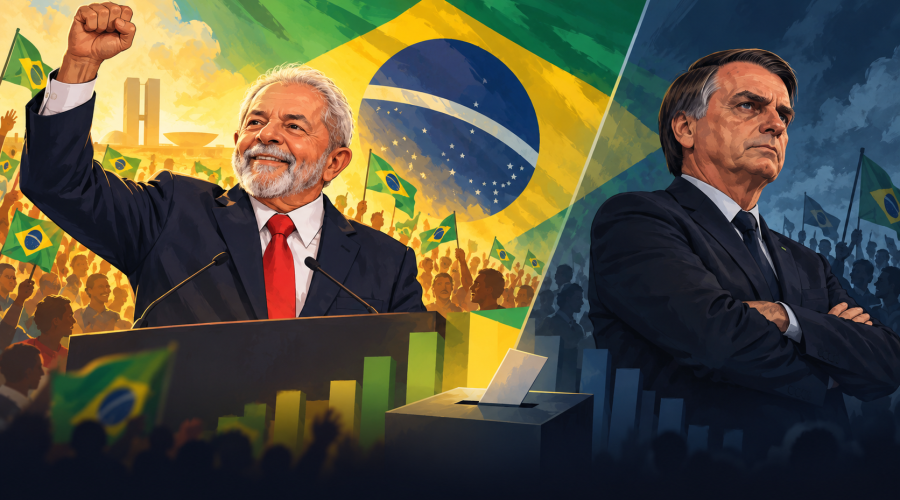
Usagevpn.com – Luiz Inácio Lula da Silva has won another term as Brazil’s president after a tense election night that underscored the country’s deep political divisions. Lula finished with 51.8% of the vote, defeating Senator Flávio Bolsonaro by a margin of almost 4.4 million ballots.
The result gives the 81-year-old left-wing leader an unprecedented fourth presidency. His victory came despite expectations that a wider conservative shift in South America could benefit his opponent. Countries including Argentina, Chile, Colombia and Peru have seen rightward political movements gain momentum, with US President Donald Trump backing that broader trend.
Flávio Bolsonaro, however, rejected the outcome soon after the count was confirmed. He said he would seek to have the election cancelled, following disruption at several voting locations during an extended voting period.
“It is impossible to recognise the results. I am going to request the annulment of these elections,” Bolsonaro said in Brasília.
Voting Extension Becomes a Point of Dispute
Authorities extended voting by two hours after Lula raised concerns that bus services had been removed in several cities, potentially preventing some voters from reaching polling stations. Bolsonaro had also called for additional voting time in areas hit by heavy rain, but sharply criticised the eventual decision.
He described the extension as “unacceptable” and called it a “dirty trick.” The dispute added uncertainty to an already highly charged contest, as polling places faced confusion late in the day.
Bolsonaro is the son of Jair Bolsonaro, Brazil’s former far-right president. Jair Bolsonaro is serving a 27-year prison sentence after being convicted over an attempted coup following his defeat by Lula in the 2022 election.
For Lula, the runoff represented a striking reversal after losing the first round. His supporters responded by staging large demonstrations, adopting the slogan “Never Again Bolsonaro,” and overhauling their social-media outreach. No Brazilian candidate had previously lost the opening round and then won the runoff since 1989, when the country held its first direct presidential election after military rule ended.
Turnout and Celebration
Voter abstention dropped between rounds, falling from 21% to 19%. Lula credited the lower rate to efforts aimed at persuading Brazilians that participating in the election was essential to protecting democratic institutions.
“People went to vote because we managed to convince them that voting was very important for ensuring democracy in the country,” Lula said after his victory.
Celebrations quickly spread through major cities. In Rio de Janeiro, fireworks lit the sky as horns and vuvuzelas sounded in the streets. In São Paulo, large crowds wearing red, the colour associated with Lula’s Workers’ Party, gathered to mark the result.
The divided mood was also visible in Rio, where Lula supporters in red confronted backers of Bolsonaro wearing yellow and green. As the result became official, a powerful cheer rose from the crowd. One woman shouted at four men drinking beer in Bolsonaro’s signature colours: “You lost! Cry harder!”
Sovereignty at the Centre of Lula’s Campaign
Lula’s campaign repeatedly focused on Brazilian sovereignty, particularly in response to commercial and diplomatic pressure from the United States under Trump. The message was designed to frame the election as a choice over Brazil’s independence as well as its domestic political direction.
“Either the homeland remains free, or we die for Brazil,” Lula told supporters. “This country will not accept being anyone’s backyard.”
That appeal helped Lula rally supporters after the first round, but his new mandate begins with nearly half of voters backing his rival. The close result points to a country where demands for economic security, lower living costs and stronger action on crime will remain central political pressures.
Lula first entered the presidency in 2003 after rising from poverty to become one of Brazil’s most prominent political figures. He won re-election in 2006, then returned to office in 2022 after spending more than 18 months in prison amid a corruption case. Those convictions were later annulled on procedural grounds.
During his third term, Lula’s government saw inflation and unemployment decline, while millions of people were lifted out of hunger. Yet many Brazilians remained frustrated by the cost of everyday life and concerns about public safety, creating an opening for Bolsonaro’s challenge.
His fourth term will run until 2030, when Lula will be 85 years old. The victory secures another remarkable chapter in his political career, but it also leaves him facing the difficult task of governing a nation where the election result has exposed profound and persistent disagreement over Brazil’s future.
Related Reading
Frequently Asked Questions
What is Brazil s Lula clinches election victory?
Brazil s Lula clinches election victory is the main topic of this guide. The article explains the context, practical details, and next steps readers should understand.
Why does Brazil s Lula clinches election victory matter?
Brazil s Lula clinches election victory matters because readers are looking for a useful answer, not just a short summary. Good content should match search intent and help them decide what to do next.