French unions set 5 November as next major date after inconclusive talks
Usagevpn.com – French trade union leaders left a lengthy meeting with Prime Minister Sébastien Lecornu on Wednesday saying they had received too few answers to the social demands driving recent protests. The gathering at the Matignon residence lasted almost two and a half hours, but union representatives said it did not produce the measures they had hoped for.
Sophie Binet, leader of the General Confederation of Labour, said the government had failed to offer a meaningful response to demonstrators and workers.
“No measures” were announced to answer the protests, and there was “no consideration of our demands”.
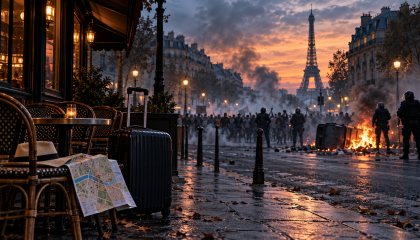
The CGT is preparing to join a further street mobilisation on Saturday, presented as the second stage of a cost-of-living campaign organised by a “yellow vest” coordination. That action follows demonstrations on 17 October, when unrest in several French cities led to clashes, damage and looting.
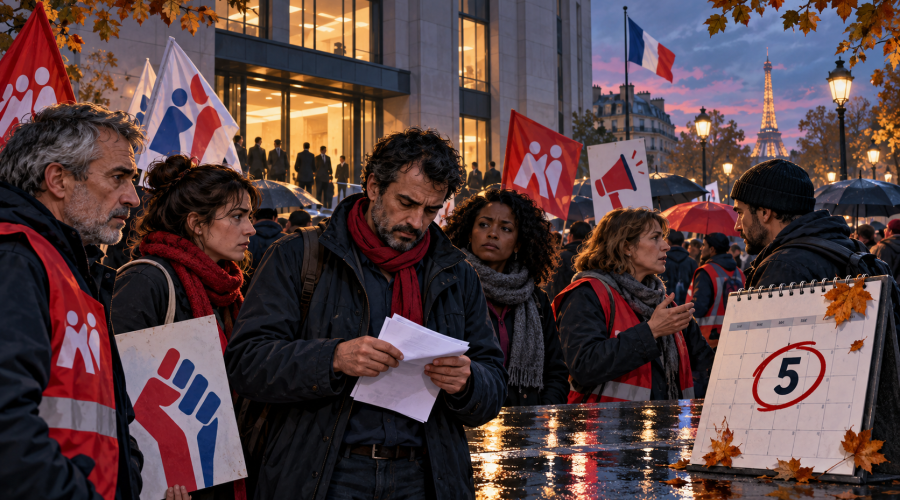
Unions focus on strikes from 5 November
For the main union organisations, however, the key date is 5 November. Nearly all of them have called on employees in both the private and public sectors to mobilise then, with the prospect of a more sustained strike movement.
Binet said the campaign now needed to intensify.
“The time has come to move the mobilisation up a gear; from that date strike action must take over.”
Marylise Léon, secretary-general of the French Democratic Confederation of Labour, France’s largest union, said workers expected concrete social measures before that date. The message from union leaders was that discussions alone will not be enough unless they are followed by decisions on everyday concerns.
There was nevertheless one possible opening in the talks. Cyril Chabanier, president of the French Confederation of Christian Workers, said the government had left room for discussion about an increase in the minimum wage. Lecornu has said progress on that matter should come quickly.
The issue has particular importance in a protest movement centred on purchasing power. Unions and demonstrators have pressed for policies that would ease pressure on households, while broader concerns have also emerged around public services and education funding.
School and university groups seek a place in talks
Union representatives also criticised the absence of secondary-school and student organisations from the Matignon meeting. Those groups are due to meet Education Minister Édouard Geffray again on Monday.
Geffray has promised initial steps in response to concerns submitted through a government platform. Secondary-school students, backed by university students, have been demonstrating for weeks over resources for education, the condition of school buildings and the replacement of absent teachers.
They are also demanding the withdrawal of Parcoursup, the platform used to manage access to higher education. Critics view the system as seriously flawed, making it a prominent target within the wider education campaign.
The student involvement gives the movement a broader social base than a dispute confined to workplaces. It also creates added pressure on ministers to address concerns extending beyond wages, including the daily conditions experienced by pupils, students and teachers.
Government stresses security after October unrest
President Emmanuel Macron, speaking while in Qatar, called for firmness against those responsible for violence during the 17 October mobilisation. He was due to meet intelligence services on Thursday to examine shortcomings linked to that day’s events.
Macron did not announce new measures addressing the protesters’ demands on purchasing power or the financing of schools and universities. After Qatar, he travelled to Saudi Arabia, where Crown Prince Mohammed bin Salman received him. The president said the French public would see a “fair return” from the Gulf trip, including in relation to diesel prices.
Opposition figures continued to attack the government’s handling of the crisis. Édouard Philippe, Horizons’ presidential candidate, criticised Macron’s decision to continue his Gulf visit. Former president François Hollande described the government as weak, while National Rally presidential candidate Marine Le Pen targeted what she called the country’s “waning power”.
Curfews renewed in Paris and Lyon
Authorities have maintained heightened restrictions in areas affected by the disorder. In Paris, the police prefecture ordered a new overnight curfew covering the surroundings of Place de la République and the Les Halles district.
The orders “ban the presence of adults and minors alike” in those zones from 11 pm on Wednesday until 6 am on Thursday.
In Lyon, the Rhône prefecture renewed both the curfew and a prohibition on gatherings. The measure runs from 11 pm until 6 am, later than the curfews imposed during the previous two nights, which began at 9 pm.
Justice Minister Gérald Darmanin said 2,500 people had been placed in police custody after violence and shop looting linked to the 17 October demonstrations. During a visit to Marseille, where weekend clashes were particularly severe and the town hall was vandalised, he said 917 people had been brought before prosecutors for immediate trial proceedings.
Darmanin pledged a firm judicial response and said the number of such cases had doubled or even tripled. In Paris, 557 people were detained after violence and looting, with 300 appearing before a magistrate by midday on Wednesday.
Paris prosecutor Laure Beccuau said on Tuesday evening that none of those involved had claimed a motive of a political nature. As unions prepare for 5 November, the government faces the difficult task of separating demands for social action from the security response to the unrest that accompanied the earlier protests.
Related Reading
Frequently Asked Questions
What is Disappointed after meeting French unions call?
Disappointed after meeting French unions call is the main topic of this guide. The article explains the context, practical details, and next steps readers should understand.
Why does Disappointed after meeting French unions call matter?
Disappointed after meeting French unions call matters because readers are looking for a useful answer, not just a short summary. Good content should match search intent and help them decide what to do next.