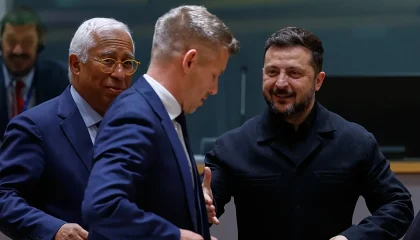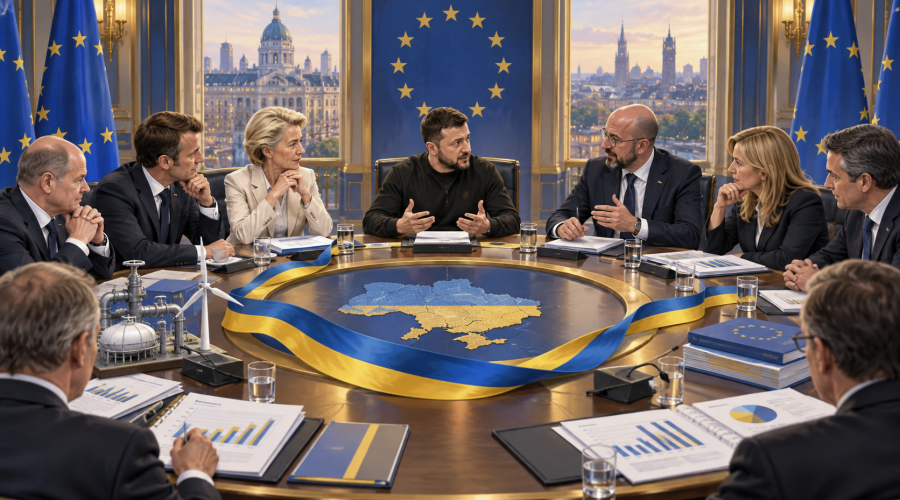
EU leaders face a packed Brussels summit as energy costs and Ukraine dominate the agenda
Usagevpn.com – European Union leaders are arriving in Brussels for a two-day summit shaped by renewed anxiety over energy markets, a difficult fight over the bloc’s next long-term budget and the continuing need to support Ukraine after Donald Trump’s latest outreach to Vladimir Putin.
The meeting begins early on Thursday with an urgent discussion on the sharp rise in energy prices. Conflict in the Middle East has pushed oil above $100 a barrel despite a coordinated release by G7 countries. Gas prices have also reached their highest point since the winter of 2022, while European underground gas reserves are below their usual level for this point in the season.
That combination has increased pressure on governments as colder weather approaches and household heating demand begins to rise. Energy-intensive companies are also watching closely, as higher fuel and electricity costs can weaken competitiveness and feed through into consumer prices.
Calls for temporary relief split member states
Italian Prime Minister Giorgia Meloni and Greek Prime Minister Kyriakos Mitsotakis have pushed for more flexibility in EU fiscal rules. Their position is that national governments should be able to fund temporary, targeted support aimed at reducing the impact of the energy shock.
Not every capital shares that view. Some member states fear looser budget constraints could prolong dependence on fossil fuels and weaken incentives to invest in cleaner energy. The dispute reflects a familiar European dilemma: offering immediate help to consumers and businesses while maintaining commitments to fiscal discipline and the green transition.
A separate proposal from Austria, Germany, Italy, Poland, Portugal and Spain would establish an EU-wide windfall levy on exceptional profits earned by energy companies during the price surge. The plan remains controversial and has yet to attract sufficient backing among member states.
For households, the summit matters because decisions on fiscal flexibility and possible market interventions could influence how readily governments can finance support schemes. For industry, the central concern is whether Europe can limit the economic damage from another period of unusually expensive energy without undermining investment in long-term resilience.
China trade relationship remains under scrutiny
Energy will be followed by a wider economic debate over China. The EU’s trade deficit with China stands at roughly €1 billion each day, intensifying concern in Brussels over persistent imbalances in trade and market access.
The Commission had set October as the deadline for Beijing to produce tangible results. During Trade Commissioner Maroš Šefčovič’s visit to Beijing last week, preliminary concessions were secured on hybrid and plug-in hybrid vehicles, rare earths, permanent magnets and access to the Chinese market for European companies.
“We’re satisfied with the results, but for us, it’s only a first step because imbalances are not specific to one sector – there are across the board.”
A senior diplomat stressed that implementation will determine whether the commitments bring meaningful change. The same diplomat described the logic behind Beijing’s new approach in blunt terms:
“Why is China agreeing to something that China has never agreed before? (Because) they’re starting to realise they’re killing their customers. We’re not naïve.”
The concessions have, for now, reduced the prospect of a full-scale trade confrontation. Leaders are expected to urge the Commission to continue a results-focused dialogue with China while strengthening the EU’s ability to respond if commitments are not honoured.
Germany and France have proposed a possible “kill switch” that could restrict China’s access to the EU market should the trade deficit remain unsustainable. The idea signals the growing willingness of major EU economies to consider stronger defensive trade measures, even as Brussels seeks to preserve dialogue.
Budget battle could test unity
The summit’s most divisive session is likely to take place on Thursday afternoon, when leaders turn to the next seven-year EU budget. Negotiations are unfolding amid elevated borrowing costs, a particularly sensitive issue for France, and competing demands for public spending across the bloc.
European Council President António Costa has urged capitals to move beyond fixed national positions and secure a deal before the end of the year. His timetable would allow the detailed legislative process to conclude before January 2028.
Ireland, which holds the rotating presidency, has presented a negotiating proposal that reduces the original draft by €141 billion. Agriculture and cohesion funding are largely protected, while deeper reductions would fall on research, technology, climate action, security and foreign policy.
The proposal has satisfied few participants. Austria, Denmark, Finland, the Netherlands, Sweden and Germany — often grouped as the “frugals” — argue that spending must be cut further and more evenly. The 17 countries known as the “Friends of Cohesion” take the opposite position, warning that the suggested reductions already go too far.
The European Commission has warned that its plan for a more modern and adaptable budget is at risk. There is also no agreement on which EU-wide taxes could generate additional income for the common budget, leaving leaders divided both over spending priorities and new revenue.
These differences complicate Costa’s aim of achieving unanimous approval in December. Spanish Prime Minister Pedro Sánchez’s unexpected decision to call snap elections adds another uncertainty to talks that already require difficult compromises.
“I don’t think there will be blood on the wall, but it’s important in these sorts of negotiations that leaders feel where the contradictions are.”
Beyond energy, trade and the budget, leaders are also expected to address EU enlargement, hybrid threats, weak economic growth, rising borrowing costs, irregular migration and continued support for Ukraine. The breadth of the agenda underscores how closely Europe’s security, economic stability and political cohesion are now intertwined.
Related Reading
Frequently Asked Questions
What is EU summit?
EU summit is the main topic of this guide. The article explains the context, practical details, and next steps readers should understand.
Why does EU summit matter?
EU summit matters because readers are looking for a useful answer, not just a short summary. Good content should match search intent and help them decide what to do next.