European lawmakers press Brussels to protect ICC from US sanctions
Usagevpn.com – A cross-party group of 58 Members of the European Parliament is calling on the European Commission to take action against US sanctions that could interfere with the work of the International Criminal Court.
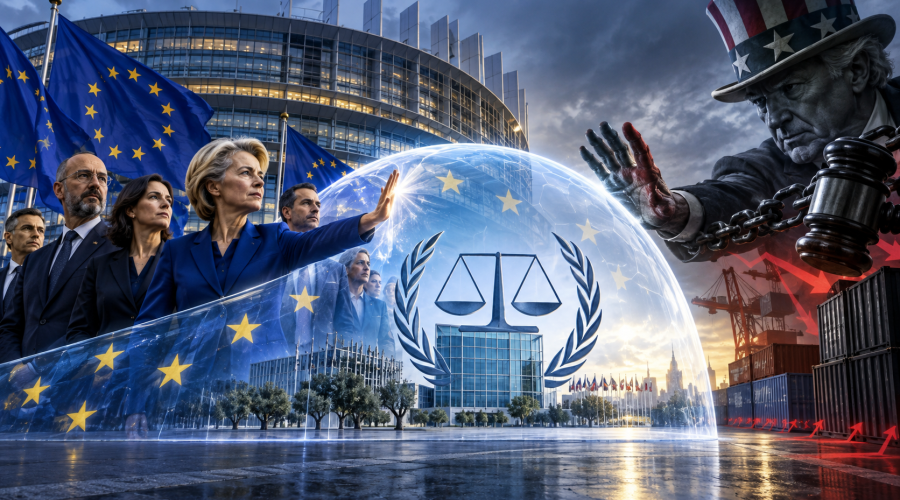
In a letter addressed to Commission President Ursula von der Leyen on Tuesday, the lawmakers urged the EU executive to safeguard the court, which is based in The Hague in the Netherlands. They argued that the measures represent an assault by an outside power on an institution operating within EU territory and warned that the consequences could be severe.
“An attack by a foreign power on an entity on EU territory”
The appeal follows an announcement by the administration of US President Donald Trump last Friday that it would impose sanctions on the ICC. Washington has repeatedly criticised the court over its arrest warrant for Israeli Prime Minister Benjamin Netanyahu and its investigation into the conduct of US troops in Afghanistan.
Financial and technological risks for the court
The sanctions are expected to include an initial six-month grace period. Once that window closes, the restrictions could make it far more difficult for the ICC to operate normally by preventing US banks and companies from maintaining business relationships with the court.
Some exceptions are expected to apply in areas including telecommunications, software and payment services. Even so, the court could face significant practical obstacles because US companies play an important role in international financial systems and technology infrastructure.
For an institution that must make payments, manage contracts and carry out routine financial transactions across borders, disruption to banking access could quickly affect day-to-day operations. A lack of access to essential technology or payment services could also complicate the court’s ability to communicate, administer cases and support its work.
The potential impact is not limited to American firms. European banks, insurers and other intermediaries that have commercial exposure in the United States could be caught in the middle. If they continue providing services to the ICC, they may fear secondary penalties or other legal and financial consequences.
The MEPs said the issue goes beyond the court itself, warning that the sanctions could weaken Europe’s ability to protect its institutions and citizens from external pressure.
Call to deploy the EU Blocking Statute
The lawmakers asked the Commission to use every available tool to reduce the effect of the US measures. Their central proposal is for Brussels to activate the EU Blocking Statute, a legal instrument designed to counter the extraterritorial reach of foreign sanctions.
The statute can stop certain foreign court decisions based on designated sanctions laws from being enforced inside the European Union. It also gives European companies a route to seek compensation for losses caused by the overseas application of such measures.
For the framework to apply, the Commission must place the relevant foreign laws within the statute’s scope. That move would be subject to examination by the European Parliament and EU member states.
Supporters of using the mechanism believe it could offer European businesses and service providers greater legal protection if they face pressure to cut ties with the court. Its effectiveness, however, would depend on how it is applied and on the willingness of firms to continue dealing with the ICC amid possible exposure to the US market.
Broad political backing in Parliament
The letter was prepared by Dirk Gotink of the European People’s Party and Aurore Lalucq of the Socialists and Democrats. It drew signatures from MEPs belonging to the EPP, S&D, Renew Europe and Greens/EFA groups.
That broad support reflects concern across several of Parliament’s major political families about the possible effect of the sanctions on international justice and on the EU’s institutional autonomy.
EU foreign policy chief Kaja Kallas had already criticised the prospect of sanctions in a statement issued last Saturday.
“Not acceptable”
Kallas also reaffirmed the European Union’s commitment to international law. Despite those political statements, the bloc has not yet announced a concrete protective measure for the ICC.
A court with global reach
The International Criminal Court is supported by 125 member states. It was created through the Rome Statute, the treaty that established the court’s legal foundation and jurisdiction.
The United States signed the Rome Statute but did not ratify it. Washington is therefore not a member of the court, while many European countries are among the ICC’s strongest institutional supporters.
The dispute now places the Commission under pressure to translate its support for international law into a practical response. For the signatories of the parliamentary letter, the question is not only whether the ICC can continue carrying out its work without disruption, but also whether European institutions can be shielded when foreign sanctions reach into the EU’s financial and legal space.
Related Reading
Frequently Asked Questions
What is MEPs urge EU to shield International?
MEPs urge EU to shield International is the main topic of this guide. The article explains the context, practical details, and next steps readers should understand.
Why does MEPs urge EU to shield International matter?
MEPs urge EU to shield International matters because readers are looking for a useful answer, not just a short summary. Good content should match search intent and help them decide what to do next.